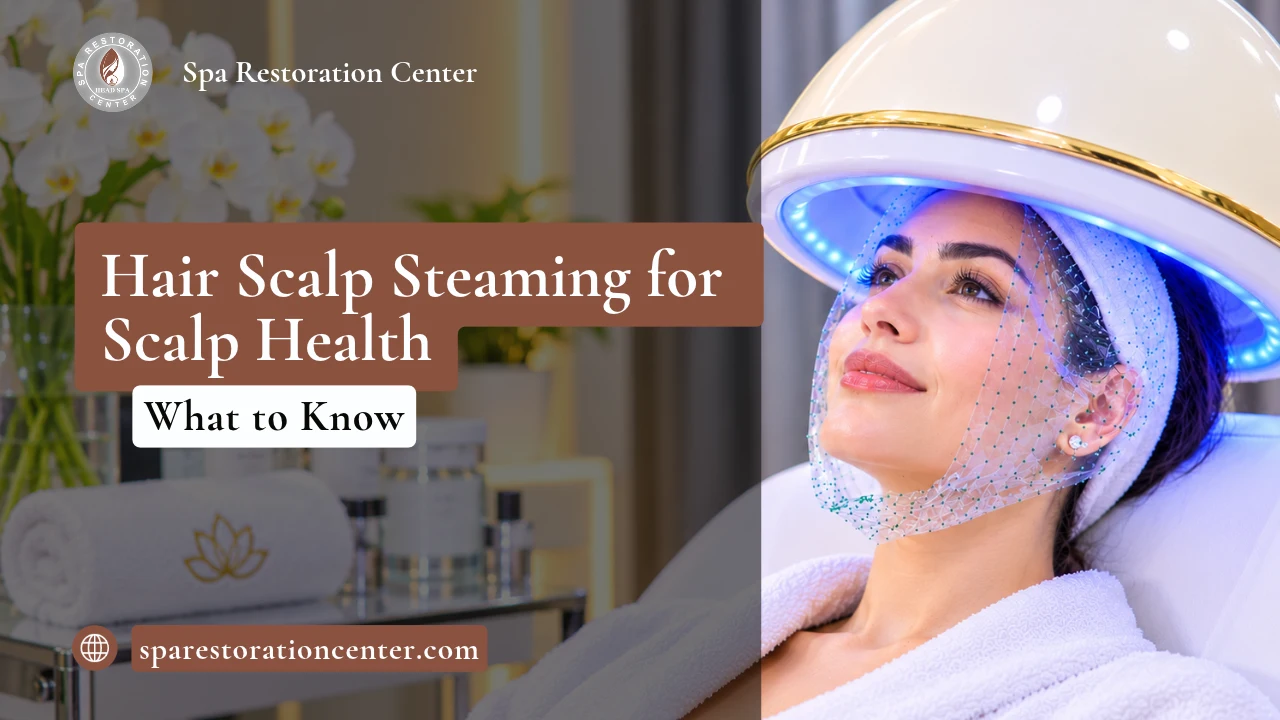
If you’ve scrolled through head spa videos lately, you’ve probably seen someone lying back under a hood while mist curls around their head. That’s scalp steaming: warm, damp heat aimed at the skin up top, not only the hair. It feels nice, and a few reviewers swear their scalp feels cleaner after. It isn’t quite the same as a regular hair steam, though, which is mostly about getting conditioner into your strands.
And the internet tends to oversell it. So here we’ll get into what it is and what it may or may not do. We’ll also cover who’s better off skipping it, home safety, and when an itchy, flaky scalp is really a doctor’s job.
What Is Scalp Steaming?
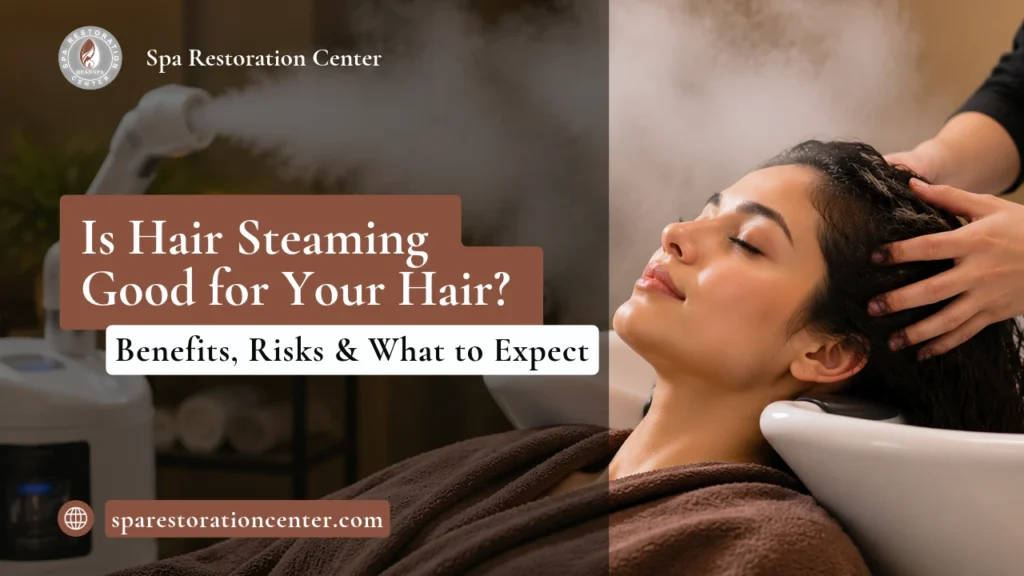
At its simplest, scalp steaming is warm mist or a warm, damp towel on your scalp for a little while. Sometimes your scalp has just been washed. If you use oils in your scalp-care routine, learn more about essential oils for scalp care.
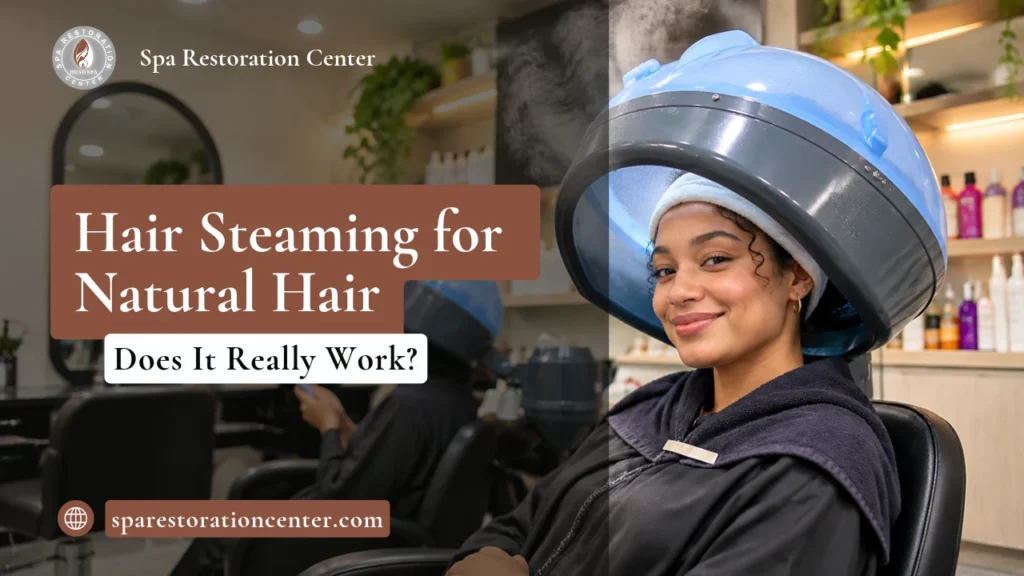
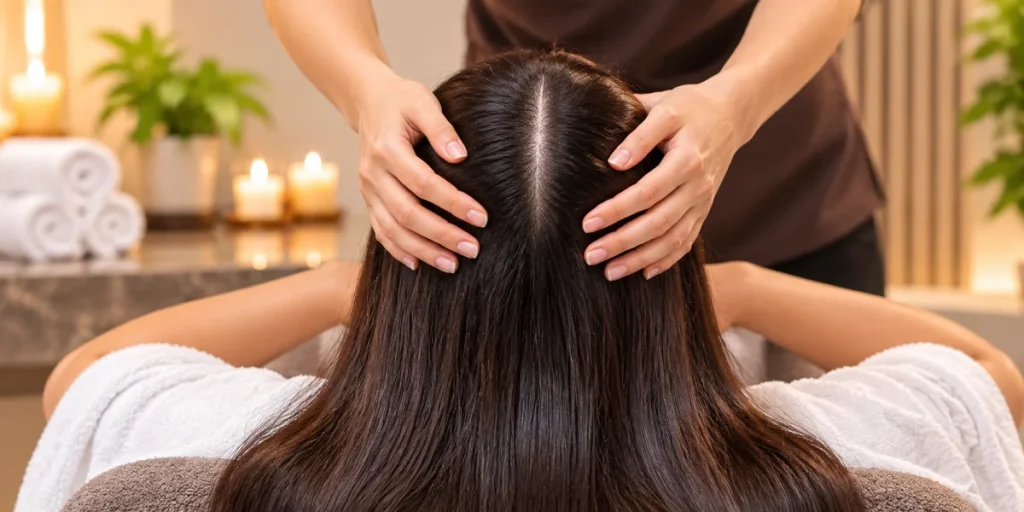
Sometimes there’s an oil or mask on it. Some salons use a hooded steamer. Plenty just wrap a towel around your head instead. And in a Japanese-style head spa, you might barely notice it, tucked between the massage and the rinse. Scalp massage is another part of many head spa routines. Explore the benefits of scalp massage to learn more.
Hair steaming is a slightly different thing. That one is all about the lengths, the hair hanging past your ears. You put a mask on, add steam, and hope the ends come out softer. Scalp steaming cares about what’s underneath, the skin that gets itchy, oily, or touchy. If your scalp gets oily quickly, read our guide to oily scalp and hair loss to understand common scalp concerns.
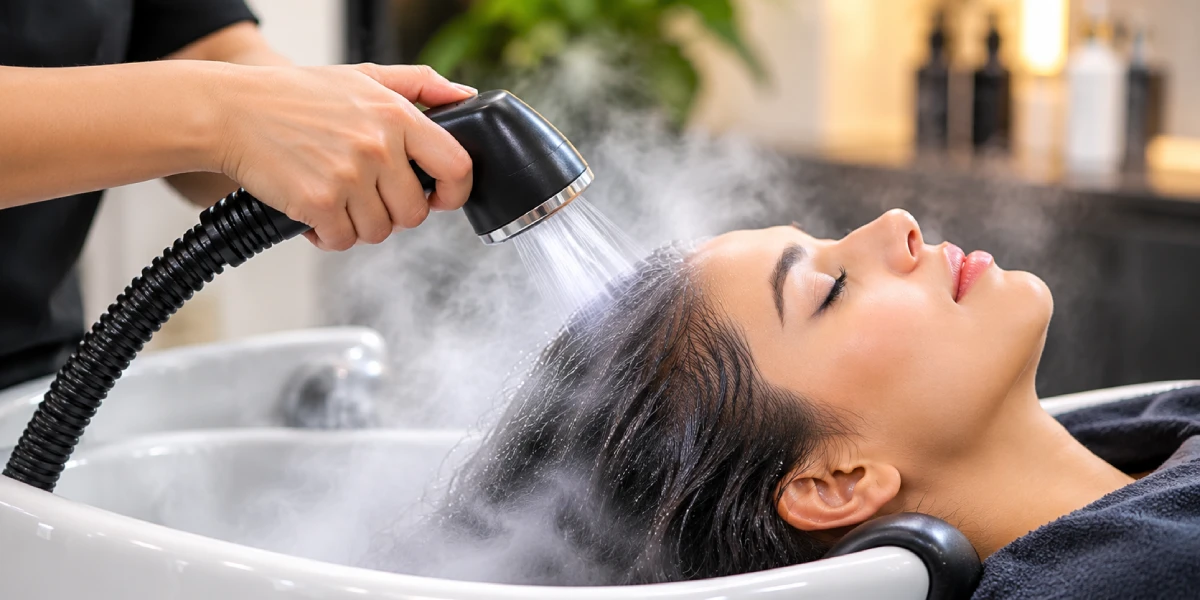
There’s no single correct way to do it, and every salon has its own routine. But no version of it actually cleans you. You still need shampoo, and you still need care that suits your scalp. If you want to learn more about scalp cleansing, explore our guide on what a scalp detox involves.
Steam is a side dish in a professional scalp treatment or a home routine. It’s never the meal.
Potential Benefits and Limitations of Scalp Steaming
Quick reality check. Most scalp-steam praise online comes from salons selling it, brands selling steamers, and people writing about one great afternoon. Clinical studies are hard to find. So read the benefits below as maybes. A lot rides on the method, the heat, your skin, and what products go on with it.
Honestly? The best part is the feeling. Lying under warm, humid air, or with a hot towel wrapped around your head, is a bit like holding a mug of tea on a cold day. For lots of people, that’s reason enough. Some salons also steam before a scrub or mask, as one piece of a bigger scalp care routine. You might leave with a scalp that feels fresher and calmer. Just know the shampoo and products are probably doing most of that work.
Still, a nice afternoon and a proven result are two different things. Plenty of sites claim steam gets blood moving, wakes up sleepy follicles, or pulls toxins out. We couldn’t find solid research showing that steam does those things for the scalp. A dermatology article from eMediHealth, written by Sarita Sanke, MD, mentions circulation, but it doesn’t point to a study that measured it. So we won’t promise it, and you should be careful with anyone who does.
And if your scalp itches or flakes week after week, steam won’t tell you why. Dandruff, a shampoo you’re reacting to, psoriasis, ringworm, and even lice all show up on the American Academy of Dermatology (AAD) list of itchy-scalp causes. A towel full of steam won’t sort those out.
Is Scalp Steaming Suitable for Everyone?
Nope. Your friend might love it while you can’t wait to get out from under the hood. Heat exposure just lands differently on different heads, and scalp sensitivity runs from “barely notices” to “stings after a hot shower.” Dr. Sanke points out that steam heat can bother a sensitive scalp. Got a scalp or hair condition already? She’d have you check with a dermatologist or trichologist before trying it.
Think twice, or pass on it entirely, if you have:
- A dry or irritated scalp
- Existing scalp inflammation
- Open, broken, or scratched skin
- Discomfort from heat
If you already experience scalp inflammation, additional heat may irritate your scalp further.
A scalp that’s already angry from a flare, a reaction to hair dye, or a sunburned part doesn’t need more heat on top. The same goes for scratches, cuts, or sores, since warm, damp skin and broken skin aren’t a great pairing. Some folks simply feel woozy or sweaty under heat. If that’s you, skip it. No prize for toughing it out.
Burning, pain, heavy redness, or any other scalp irritation means stop, wherever you are. Say so right away in a salon. More steam doesn’t mean better results, and not every scalp needs steaming at all. We also won’t give you a “safe” temperature or time limit here, because we haven’t found reliable research that sets one for the scalp.
Scalp Steaming at Home
You can try a gentle version at home, but keep safety first. The big risk with steam is a burn. In a BMJ report from a Dublin hospital, seven children were treated for scalds in six months after steam inhalation at home. Six got burned on the face, and two got hurt when the bowl tipped over. Those kids were treating colds, not scalps. Same steam, though. Hot water and steam can hurt you fast.
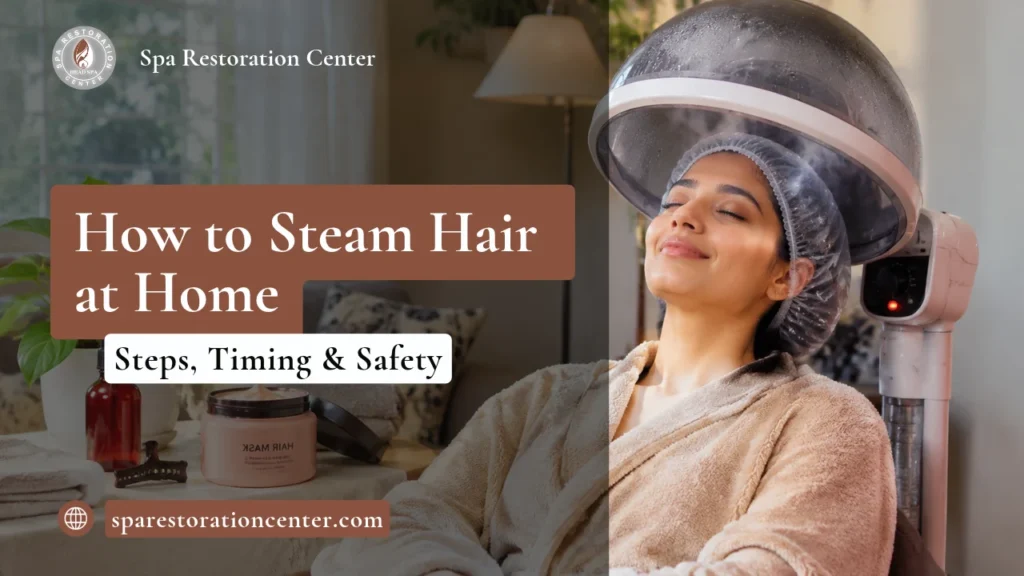
So a few basics. Don’t lean your head over a pot or bowl of boiling water. Leave the kettle and the clothes steamer out of this. They weren’t built for heads. Bought a gadget that uses steam for hair? Read the manual and do what it says. With a towel, press it to the inside of your wrist first. Warm is fine. Hot means wait. And if the heat feels uncomfortable at any point, stop.
For general steps, see our guide on how to steam hair at home. Just keep in mind that those tips are written for hair, and they aren’t automatically right for steam aimed straight at your scalp.
Scalp Steaming vs. Hair Steaming
The two get mixed up all the time, and they do overlap in some salon treatments. Even so, one’s about skin and the other’s about strands, and the risks aren’t the same. The table lays them out next to each other.
| Comparison point | Scalp steaming | Hair steaming |
|---|---|---|
| Main target | Scalp skin | Hair lengths and strands |
| Main discussion | Scalp comfort, sensitivity and safe heat exposure | Conditioning routine, hair feel and moisture management |
| Key caution | Avoid irritating or overheating the scalp | Avoid excessive heat or unsuitable treatment methods |
| Expected outcome | Depends on method; no promised scalp or hair-growth benefits | Looks and feel vary with hair type, products, and method |
(Salons mix these up and name them however they like. When in doubt, ask what’s included before booking.)
You might also see hair steaming listed as steam therapy for hair. Any hair steaming treatment like that is really a hair conditioning boost, aimed at how each hair shaft feels once the mask rinses out.
With the scalp version, the question is how your skin handles warmth. One isn’t better than the other. Pick based on your goal and your heat tolerance. For the strands side of things, read our article on hair steaming benefits and what to expect.
When to Seek Professional Advice
A spa visit can’t fix everything. Book a doctor or a board-certified dermatologist if one of these hangs on, gets worse, or just bugs you:
- Constant itching
- Flaking or scaling
- Redness, swelling or sores
- Scalp pain
- Hair loss you can’t explain
The AAD notes that an itchy scalp has a long list of possible causes, and some need prescription treatment, like scabies or scalp ringworm. Hair loss, too, can have many causes, and a dermatologist can work out which one applies to you. Stress can also play a role in some types of hair shedding. Read more about how stress impacts scalp and hair loss.
Steam won’t treat dandruff, dermatitis, an infection, or hair loss, so don’t wait it out with a hot towel. A quick visit gets you an actual answer.
Frequently Asked Questions About Scalp Steaming
What Does Steam Do for Your Hair?
So, what does steam do for your hair? It adds warmth and a bit of moisture. Paired with a conditioning mask, your ends may feel softer after. Results depend on your hair type and the products used. We cover this in more detail in our hair steaming guide.
Is Steam Good for Your Hair?
It can be, in moderation. If you’re asking is steam good for your hair or your scalp, the answers differ a bit. Many people find their hair feels softer after a steam with a mask. Dr. Sanke warns that steaming a lot, or with high heat, can leave hair dry and damaged, though.
For the scalp, the bigger question is comfort and sensitivity. So is steaming your hair good? It depends on your hair, your scalp, and the method.
Can Scalp Steaming Help Hair Growth?
There’s no good evidence that it does. Hair steaming for hair growth claims mostly come from brands and salons, not studies. If you’re losing hair, a dermatologist can look for the cause, since hair loss can come from many different things.
Is Scalp Steaming Safe for a Sensitive Scalp?
Maybe not. Sensitive skin and heat don’t always get along, so if you try it, keep it barely warm. Any burn, sting, or itch? Done. And a scalp that’s already red or puffy should get a break from steam until it calms down.
Can You Steam Your Scalp at Home?
Yes, carefully. A warm towel works, or a gadget built for hair, used the way the box says. Boiling pots are off-limits. Stop if it feels too hot. Our guide on how to steam hair at home has more general tips.
How Is Scalp Steaming Different From Hair Steaming?
Scalp steaming focuses on the skin on your head. Hair steaming focuses on the strands, usually with a conditioner. Some salon treatments mix both.
Curious about a head spa? Visit Spa Restoration Center to see our services and book a visit in Arlington.
Final Thoughts
Scalp steaming can be a pleasant, warm step in a head spa or a gentle home routine. That’s about as far as the evidence goes. Plenty of people just love lying there in the warmth. Growing hair, better circulation, curing scalp problems? None of that’s been shown. Go mild on the heat. Quit the second something stings, and sit it out if your scalp is sore or cut. Curious to try it with a pro? Our booking menu has a professional hair steam service, and you can ask our Arlington team anything first.