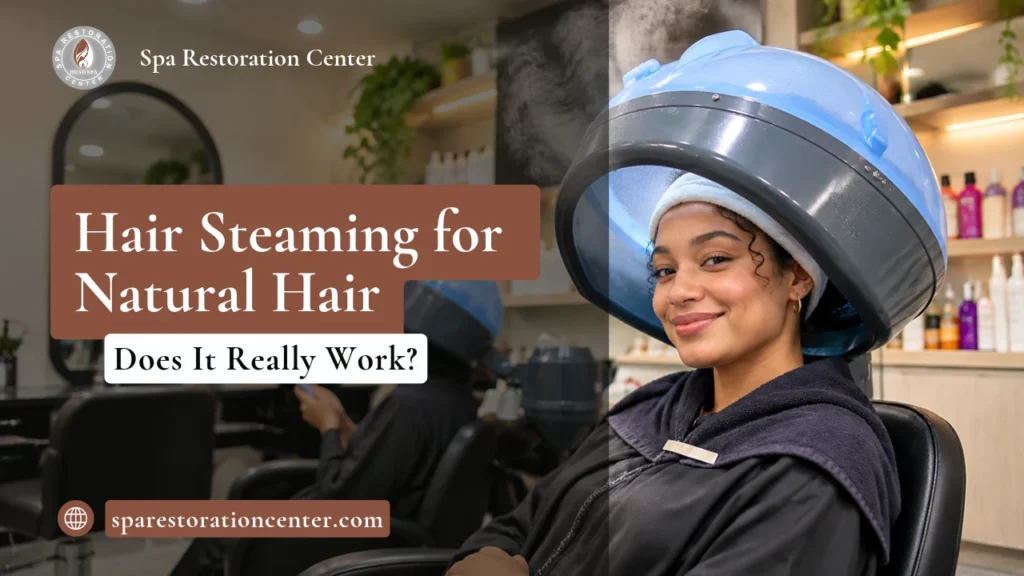
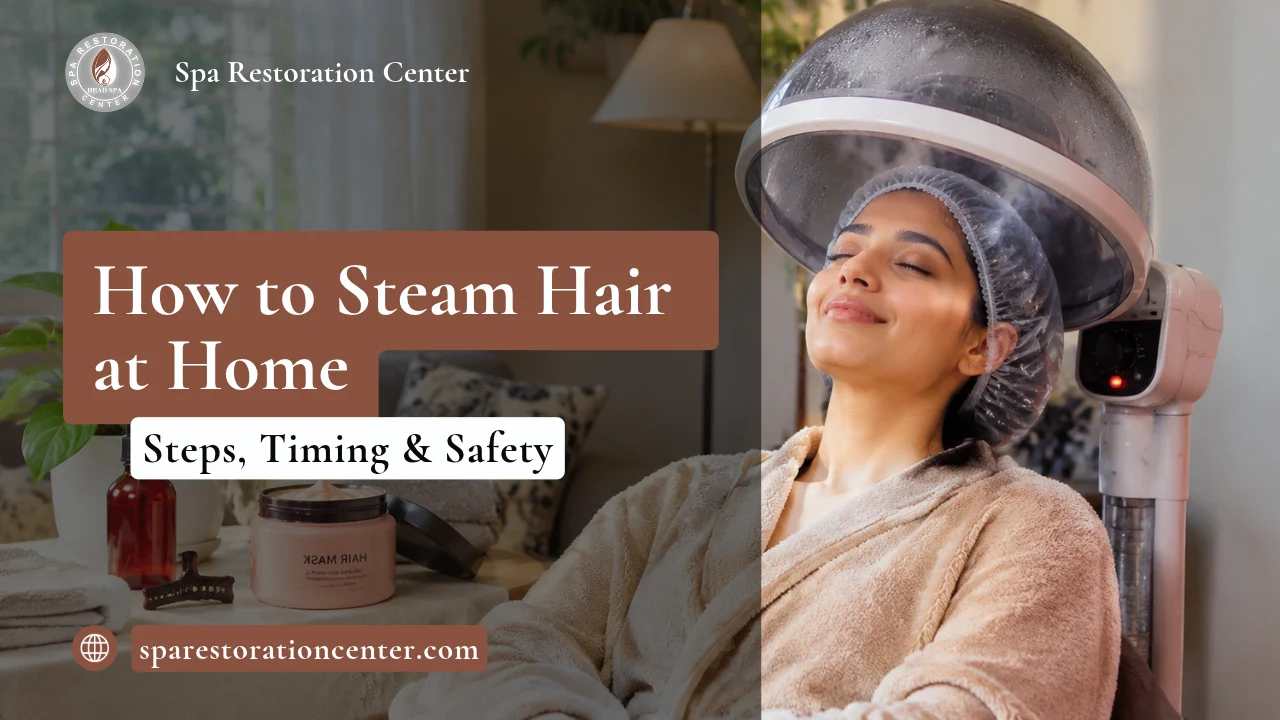
You bought the fancy mask. Now you’d like to steam it in without frying your scalp. Fair. If you’ve been searching how to steam my hair, here’s how to steam hair at home without guesswork. The idea is basic: warm mist hangs around your head while conditioner sits in your hair, usually on wash day.
Your steamer has its own rulebook, and so does your mask. Those rulebooks win over anything we say. Below you’ll get a gear list, six steps, and the timing question. There’s also a towel fallback, a word on frequency, notes for curly and dry hair, and the slip-ups that cause most burns.
What Do You Need to Steam Your Hair at Home?
Good news, hair steaming at home takes about four things, and you probably own three. Grab these before you start:
- A purpose-built hair steamer
- A suitable conditioner
- Clips or a wide-tooth comb
- A towel and your usual wash products
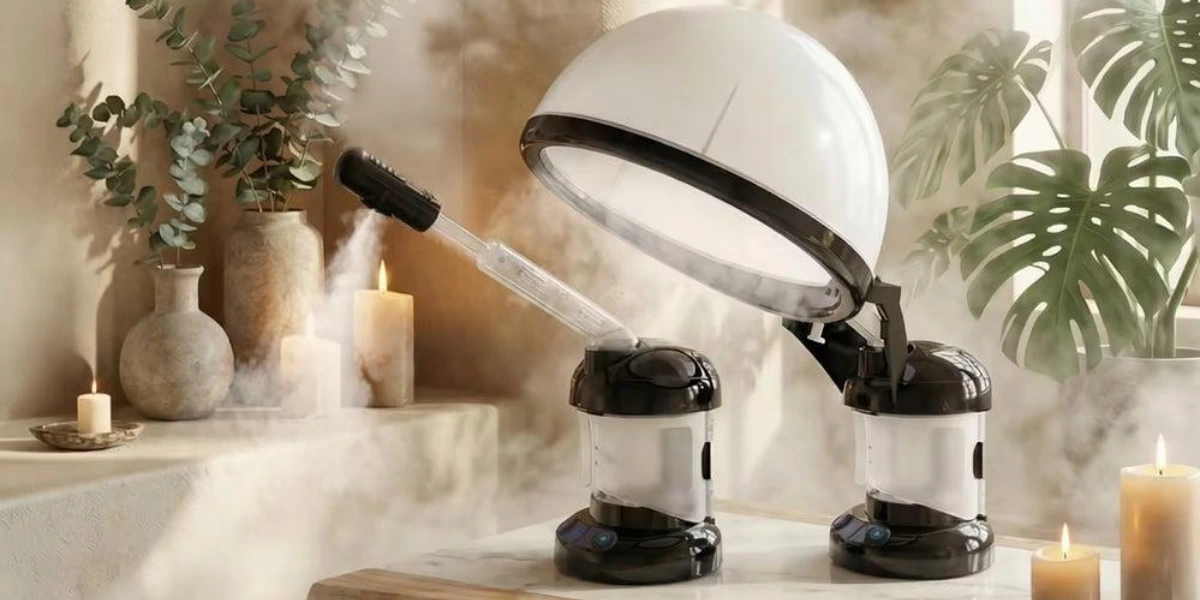
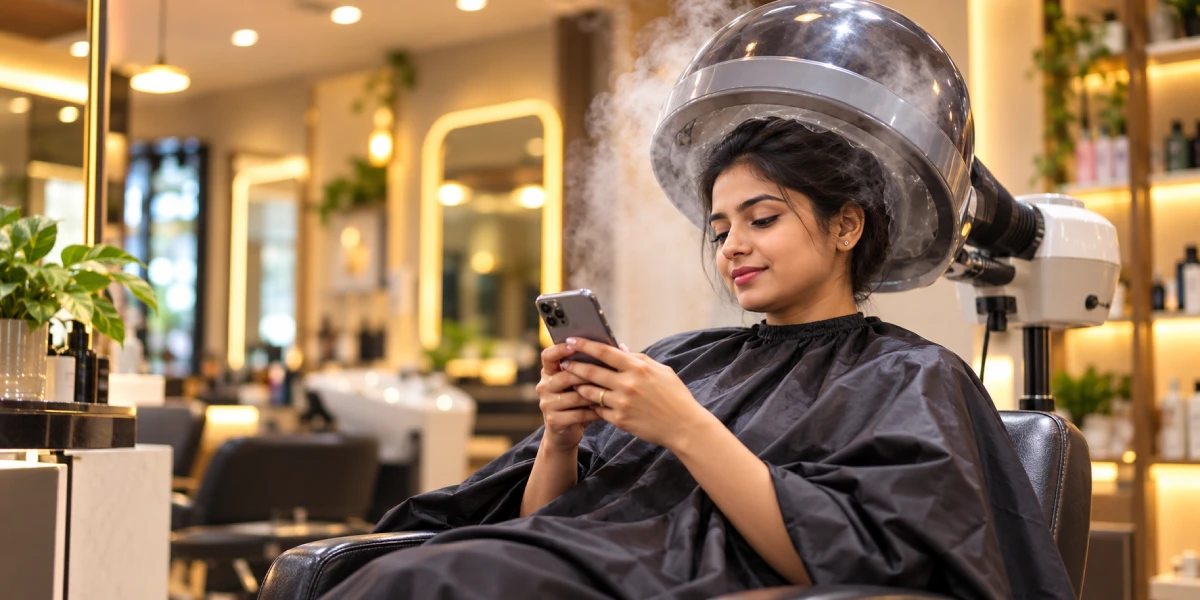
A purpose-built hair steamer. That might be a hooded hair steamer that sits over your head or a handheld hair steamer. Either way, it should be made for hair, with a manual you can follow.
A suitable conditioner. Whatever deep conditioner your hair already gets along with is a fine pick. Flip the tub over, though. Some say “use with heat,” and some say nothing.
Clips and a comb. Big claw clips keep thick sections out of the way. A wide-tooth comb handles the knots later. The American Academy of Dermatology (AAD) points out that hair is weaker when it’s wet, and brushes tend to tug more than combs do.
Towel and wash stuff. Whatever shampoo you normally use. For blotting, an old cotton tee or soft towel works.
Your prep might look different from your sister’s, and that’s okay. When a video online and your steamer’s booklet disagree, trust the booklet.
How to Steam Your Hair at Home Step by Step
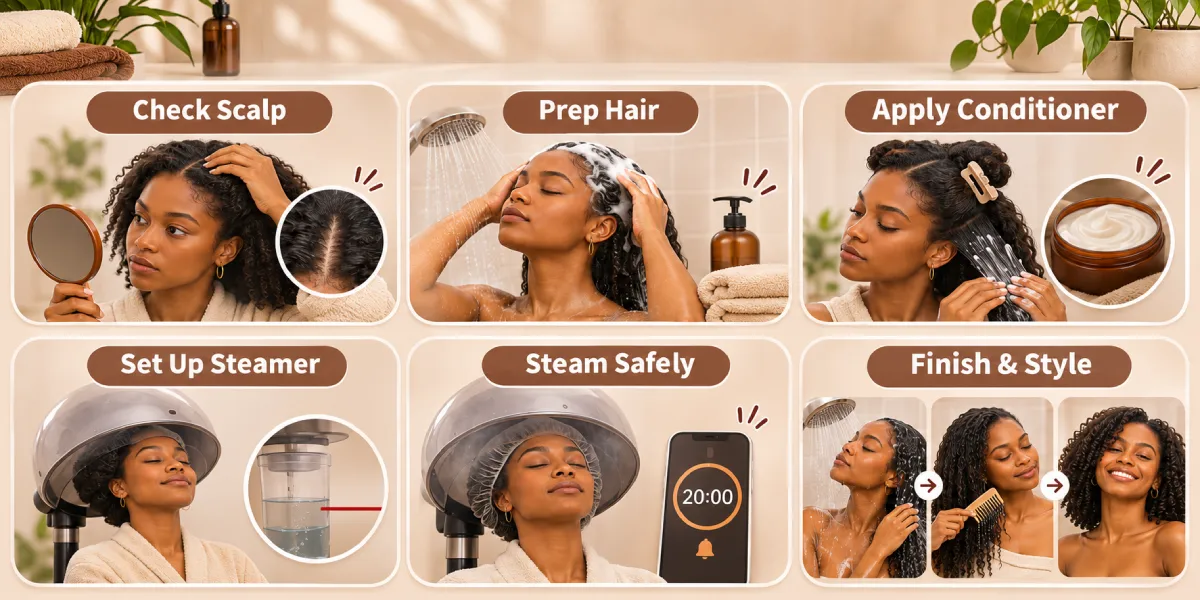
Here’s a simple, safe way to work through how to steam your hair from start to finish. We kept it to six steps. Your steamer’s booklet fills in the details. Too warm at any point? Stop there.
Step 1: Check Your Hair and Scalp
Grab a hand mirror and peek at your scalp along a few parts. You’re looking for pink spots, flaking, little cuts or sores. Also think back: any relaxer, dye or bleach recently? Dermatologist Sarita Sanke, MD, writes in an eMediHealth article that steam heat can irritate sensitive skin.
People with a scalp or hair condition, she says, should get a dermatologist’s or trichologist’s okay before steaming. Spot anything odd? Hold off for now.
Step 2: Prepare Your Hair
We’d start fresh out of the shower. Steam does nothing to last week’s gel or oil, so shampoo it out if your strands feel waxy. Then press the water out with your hands. Damp is the goal, not soaking. Got a product or device that says to start on dry hair? Steaming dry hair is fine in that case, so do what it says. Wet versus dry really depends on what you’re using.
Step 3: Apply a Suitable Conditioner
Rake the mask through with your fingers, all the way down. With thick hair, it’s easier in four or so sections. The mask brings the conditioning. The steam is more like a cozy blanket over it. And if the jar warns against heat, use a different one today.
Step 4: Set Up the Device
Water goes in up to the fill line. Some want distilled. Use whatever kind yours calls for. Position the hood or wand the way the pictures in the manual show. Set it on a flat counter or table, and sit in a chair that doesn’t rock. Kettles, stovetop pots, garment steamers and facial steamers stay out of this.
Step 5: Steam Within the Specified Limits
Check the booklet for a time, set your phone alarm, and grab a podcast. Skip the top setting unless the instructions call for it. If your scalp starts prickling or feels too warm, flip the switch off. Honestly, that’s all how to steam hair with a steamer comes down to: listen to the booklet and your scalp.
Step 6: Finish the Treatment
Once time’s up, let your hair cool for a moment. Rinse with lukewarm water, but leave-ins stay put. Work through tangles slowly, fingers first, comb second. Style like any other wash day.
How Long Should You Steam Your Hair?
Go by your steamer’s booklet and your mask’s label. That’s honestly the whole answer. Machines differ, products differ, and so do scalps, which is why we won’t hand you one magic number for how long should you steam your hair.
And extra minutes won’t buy you better results. Eva Proudman, a trichologist, told Refinery29 that hanging around under the steamer longer doesn’t help products work any better. Dr. Sanke adds that lots of steaming or high heat can actually dry hair out.
Your scalp has the final word. Hot, itchy, or pink before the timer dings? Off it goes, timer or not. If you remember one thing about how long to steam hair, make it this: comfort first, clock second.
Can You Steam Hair Without a Steamer?
Sort of. Search how to steam hair without a steamer and almost every result says the same thing: use a towel. Put on your mask, then a shower cap. Soak a hand towel in warm water from the tap, twist out as much as you can, and wrap it over the cap. Test it against the inside of your wrist first. Warm is fine. Hot is not.
It won’t feel like a real steamer, though. The towel goes cool in a few minutes, so you’re mostly just giving your mask some cozy time.
Whatever you do, don’t hunch over a pot on the stove, park your face near a kettle or aim a clothes steamer at your head. One Dublin hospital treated seven children for scalds in six months after steam inhalation at home, says a BMJ report, and most were burned on the face. Those were colds, not hair, but the risk is the same. Piling hot towels on hot towels under plastic is a bad idea, too.
How Often Should You Steam Your Hair?
Nobody’s studied this enough to hand out a real schedule. If someone promises “once a week is perfect,” that’s an opinion. So how often should you steam your hair? Look at how dry it feels, which mask you’re using, what its label says, and how your scalp has been acting.
Do it once and then just notice how your hair behaves through the following week or so. Hair softer, scalp calm? That pace probably fits your hair care routine.
Pull back if you notice:
- A scalp that’s itchy, pink, or tender
- Hair that feels limp or mushy
- Strands that seem drier or more brittle
- Steam sessions that just feel bad
Any of those? Skip steaming for a while. Scalp still irritated after some time off? Book a dermatologist.
Is Hair Steaming Suitable for Curly, Natural or Dry Hair?
For lots of people, yes. Natural hair steaming has a big following among folks with curly, coily, and Afro-textured hair, since those textures tend to feel dry and knot up easily. Your coil size doesn’t decide much on its own, though. Hair history and products count for more.
Funny enough, the AAD’s tips for Black hair never mention steam. They stick to conditioning each wash, being gentle, and keeping the heat down. If you add steam, add it on top of that. For hair steaming for natural hair, what you put on and how you comb it out will matter a lot more than which steamer you own.
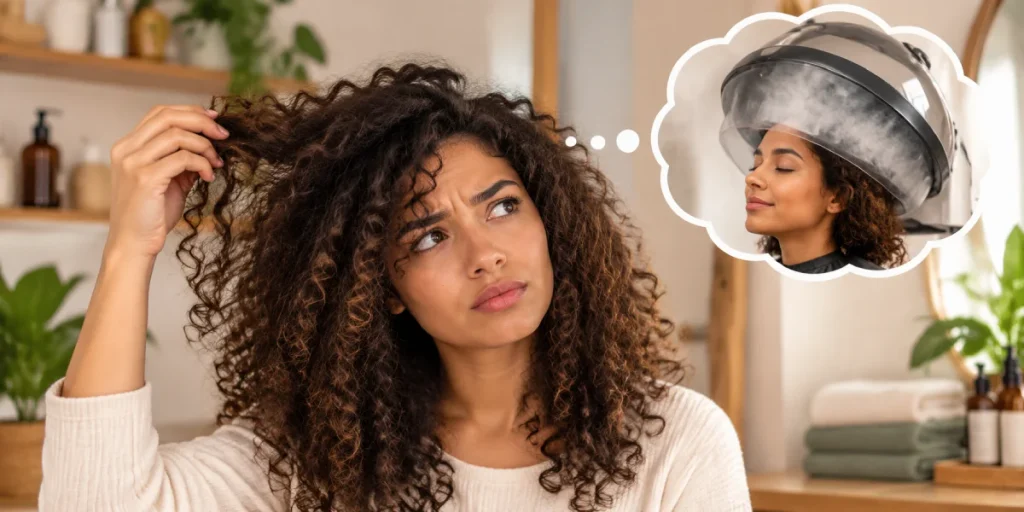
If your ends feel like straw, steaming dry hair under a thick mask might help them feel nicer. Credit the mask, mostly, and expect it to fade by the next few washes. Long-term dryness and hair breakage respond to everyday habits more than any single treatment.
Hair that’s been relaxed, dyed, or bleached, or that snaps easily, is already fragile. A sensitive scalp is in the same boat. Use the lowest setting, and check with your stylist before you start.
Does Hair Steaming Help Hair Growth?
Probably not, from what we can tell. Hair steaming for hair growth gets talked about a lot online, but steaming isn’t an established treatment for hair loss. We couldn’t find research showing that steam for hair growth works.
Hair that feels nicer is great. It just isn’t new hair.
Noticing hair piling up in the shower drain, a part that’s getting wider, smooth bald patches, or a sore, itchy scalp? Get in to see a board-certified dermatologist. The AAD warns that even a little thinning can be where hair loss starts, so don’t wait it out.
Common Hair-Steaming Mistakes to Avoid
Most hair-steaming problems come from a handful of habits. Avoid these, and your sessions will be a lot safer:
- Too much heat or time
- Equipment not made for hair
- Skipping the manual
- The wrong products
- Ignoring scalp irritation
- Thinking more steam means better results
More heat and time can dry hair out, and improvised gear is a burn risk. The manual’s water, distance, and timing rules are there for a reason. Heat plus the wrong mask can sting, or leave hair coated. Burning, stinging, and redness that sticks around don’t mean it’s working. They mean quit.
Run through this list first:
- Scalp is calm and unbroken
- Steamer is made for hair
- Manual has been read
- Product is suitable for heat
- Steamer is on a stable surface
- You’ll stop if it gets too hot
At-Home Hair Steaming vs. a Professional Hair Steam Service
At home, you can steam in sweatpants at 10 p.m. with a show on. You’re also the one filling the tank, timing it, and watching the heat. At a salon or spa, someone else sets everything up and applies the product, and your only job is sitting there.
We wouldn’t say a salon steam works better. What tips it one way or the other is money, time, and whether you enjoy doing it yourself. Want to hand the work to someone else for once?
Check out our professional hair steam service in Arlington. For more on what steam can realistically do, see our article on scalp steaming benefits.
Final Thoughts
Most of how to steam hair at home boils down to this: read the steamer booklet, read the mask label, and listen to your scalp. Stick with a steamer built for hair and a mask that’s okay with heat. Don’t go past the time in the booklet. Too hot or itchy? Turn it off. You’ll likely get softer hair for a bit. Repaired ends and new growth aren’t on the menu. Would you rather someone else did it? Our Arlington team can take care of the whole thing for you.
Frequently Asked Questions
How Do You Steam Your Hair at Home?
Shampoo, add a mask that’s okay with heat, then sit under a steamer made for hair for the time its booklet lists. Rinse or leave in the product as directed. The step-by-step section above covers how do I steam my hair at home in detail.
Is It Good to Steam Your Hair?
It can be, as part of a conditioning routine. A lot of curly and coily folks swear their hair feels silkier afterward. Overdo the heat or steam all the time, though, and you can end up drier than you started.
What Does Steaming Your Hair Do?
It wraps your hair in warm, damp air while the mask sits. According to chemist Michelle Wong, PhD, water nudges up the tiny scales on the outside of each strand. That’s part of why wet hair bends so easily. When your hair dries, the scales settle back down.
How Can I Steam My Hair Without Burning My Scalp?
Stick with a real hair steamer, and keep to the distance and minutes in its manual. Keep boiling water and clothes steamers far away. So, how can I steam my hair safely? Turn it off the second it feels too hot.
Thinking about trying a hair steam? Visit Spa Restoration Center to explore our head spa and hair care services.