Ask your curly-haired friends about hair steaming, and the reviews are all over the place. Some swear by it. One will shrug and say it did nothing her deep conditioner couldn’t. The setup is easy enough. Conditioner goes on, warm mist goes around your head, and you wait. Fans talk about softer strands and a comb that stops snagging. That can happen.
Damage, though, stays put, and no new hair shows up. Below we get into what the steam actually does and whose hair it suits. Then there’s the salon part, and the handful of ways a steam can go badly.
What Is Hair Steaming?
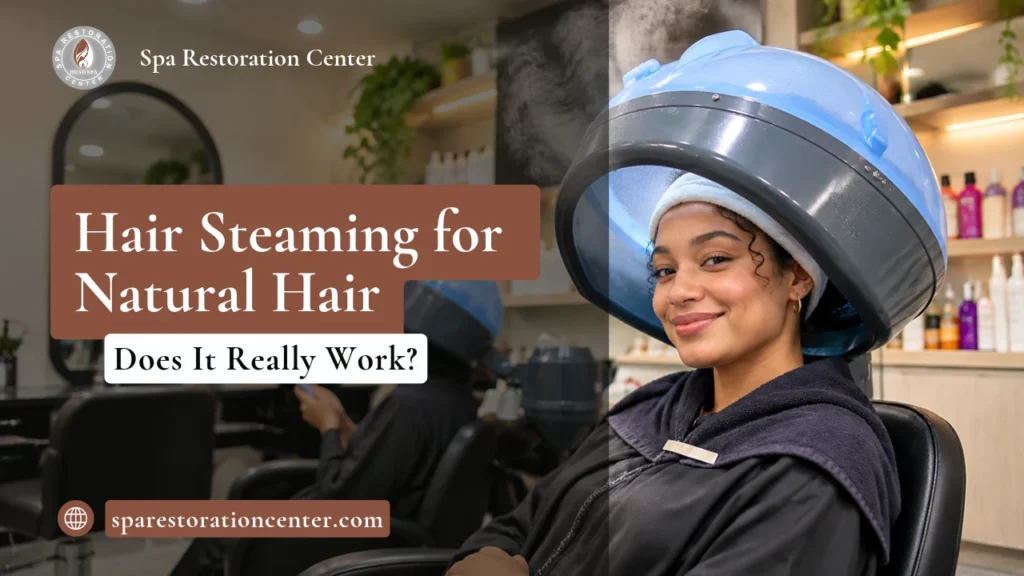
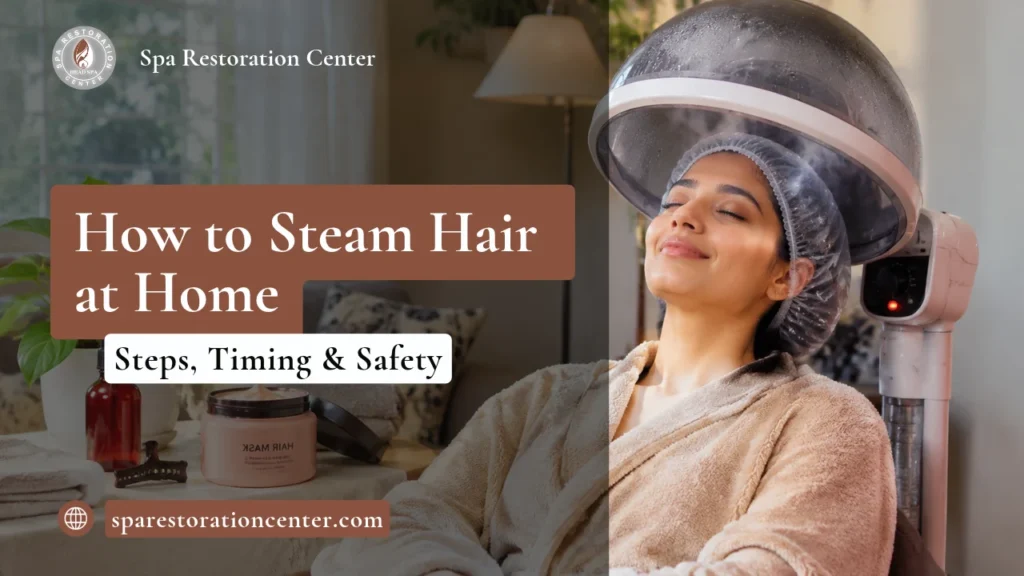
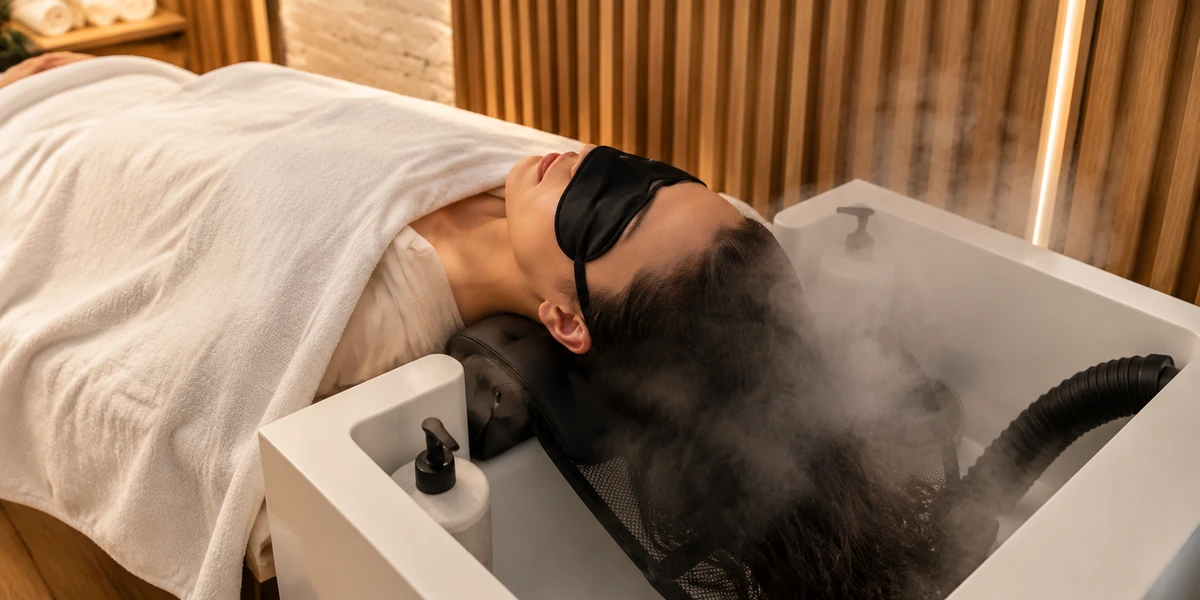
Hair steaming is just this: mask on, then a cloud of warm, wet air around your head for a while. Salons use a hood that looks like your grandma’s old dryer, only it puffs out mist. Home versions are scrappier. Think a little plug-in steamer on the bathroom counter, a heated cap, or a towel run under warm water and wrung out.
Why bother with a steam treatment for hair when your conditioner already sits there through the rest of your shower? The difference is heat and wet air, basically. The product is the same. The setting changes. It’s deep conditioning in a tiny sauna. You’ll see it listed as a hair steam treatment at one salon and steam therapy at the next. Same thing, different menu.
What Does Hair Steaming Do?
Here’s the honest version of what does steaming your hair do. It’s mostly about water. Anyone who’s brushed soaking-wet hair knows it acts different. Michelle Wong, PhD, a chemist who writes about beauty science, says water breaks some temporary bonds inside each strand.
On top of that, the outer coat of each hair, called the hair cuticle, has little overlapping scales, a bit like roof shingles, and water makes them lift. Hence the stretchy, easy-to-snap feel of wet hair. Dry hair goes back to how it was.
Now add warmth and a humid hood. With a hair conditioner you like, your comb may slide right through, and your curls might still bounce the next morning. Want the short version of what does steam do for your hair? Mostly, it changes how hair feels and handles, for a while.
Then there’s the stuff steam gets credit for that it hasn’t earned. You’ll read that steam “opens your follicles” or forces products deep into the hair shaft. We haven’t found good research showing either. As for what does a hair steamer do? It makes warm mist and keeps it close to your head. That’s really all a steamer does for hair on its own. The conditioner is still doing most of the real work.
Potential Benefits of Hair Steaming
The benefits of steaming hair are real for some people and barely noticeable for others. Most hair steaming benefits come down to feel. Your hair’s condition, the products you use and the method all change the outcome. Here are the most realistic benefits of hair steaming, each with a caveat:
- Softer, more manageable hair
- Support for dry-feeling hair
- Fewer tangles
- More flexible-feeling curls
- A little me-time
Softer, more manageable hair. That first finger-comb after rinsing can feel almost slippery. By the third wash, or after a hot spin class, it’s mostly gone.
Support for dry-feeling hair. Crunchy, straw-like ends can soak up the extra hair moisture, at least for a while. Don’t ditch your regular conditioner over it. If your hair is curly or dry, the American Academy of Dermatology (AAD) wants conditioner on the whole length, not just the ends.
Fewer tangles. Slippery hair lets knots slide apart with less tugging. Don’t rush it, though. The AAD calls wet hair delicate. A wide-tooth comb is your friend here, and the paddle brush can wait.
More flexible-feeling curls. Some people say their curls clump and spring better after steaming. That depends a lot on curl pattern, products and how you style afterward. Steam won’t fix hair elasticity on badly damaged hair.
A little me-time. Sitting under warm mist for a while is pleasant. Honestly, it’s a decent excuse to sit still and scroll.
Now the letdown. Split ends stay split. You’ll still see hair breakage in the sink, and glossy isn’t a given. Breakage is more about how you treat your hair day to day. Easy brushing and decent products do more there than steam.
Is Hair Steaming Good for Every Hair Type?
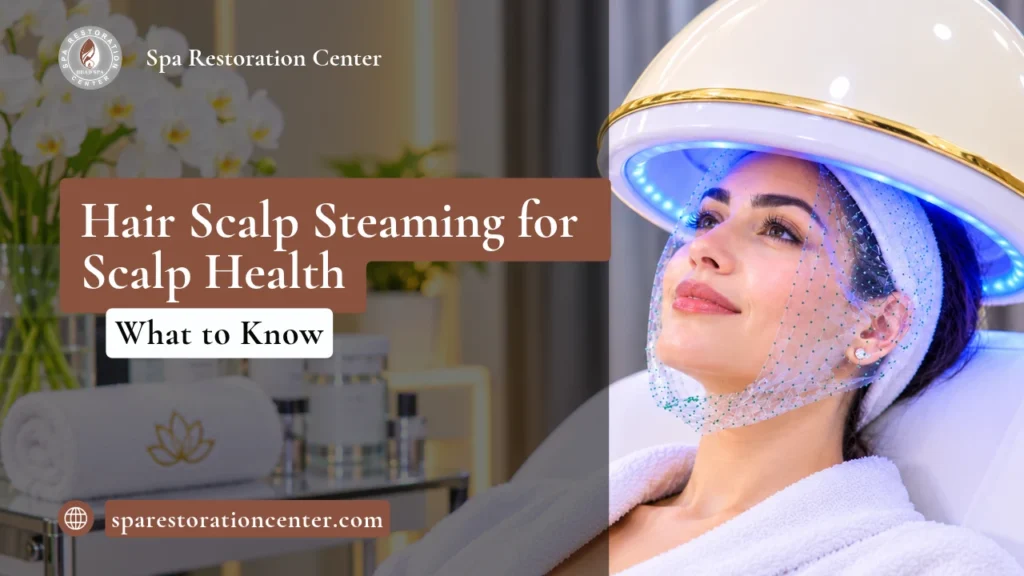
Not really. A lot hangs on your hair’s history: dye jobs, relaxers, heat styling. Your scalp matters too, and so does how hot you go. We’ve split it up by hair type below. Can’t tell where you fit? Book a hair and scalp analysis and get a pro’s take. If you want to understand the difference between steaming your hair and applying steam directly to your scalp, read our guide to scalp steaming safety and benefits.
Natural, Curly and Coily Hair
Steaming has a big following with natural hair, especially curly and coily hair and Afro-textured hair, which can lean dry. Some people love it. Plenty of others never bother and get by on a solid conditioner. Look at the AAD’s tips for Black hair and steam isn’t even on the list. Conditioner every wash, gentle hands and low heat are.
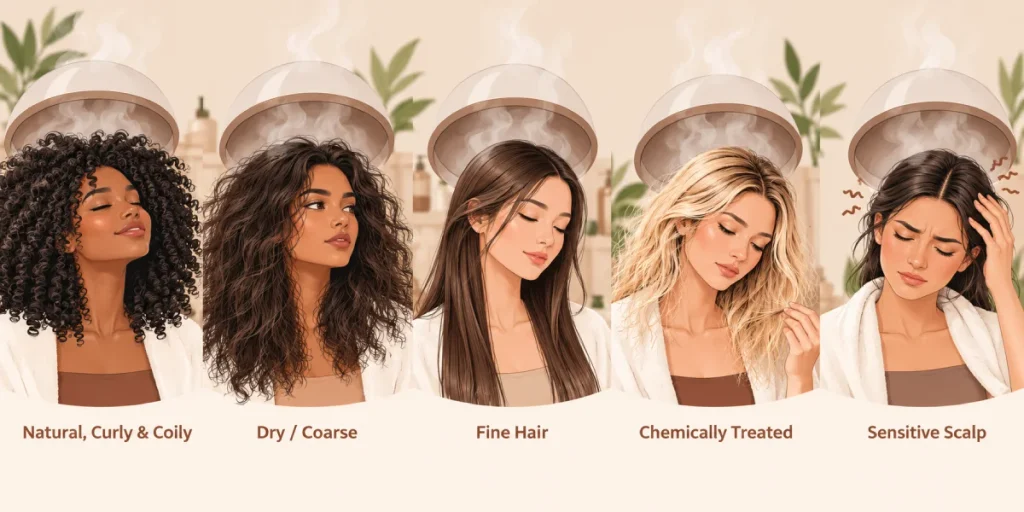
Dry or Coarse-Feeling Hair
Got dry hair that tangles if you so much as sleep on it? A thick mask under the steamer could calm it down some. Hair porosity plays a part here. That’s how easily hair takes in and loses water.
Fine or Easily Weighed-Down Hair
Fine hair can end up flat and greasy-looking with too much conditioner. Skip the roots and use something light on your ends only. Give it a couple of washes before deciding on round two.
Chemically Treated, Bleached or Fragile Hair
If you’ve bleached, colored or relaxed, your strands have been through it. Some warm moisture might make them feel less like straw, but brittle hair stays brittle. Low heat only. Snapping a lot already? Run it by your stylist before you sit under a hood.
Sensitive or Irritated Scalps
Heat can bother a touchy scalp. Dermatologist Sarita Sanke, MD, makes that point in an eMediHealth piece: steam heat can set off sensitive skin. Is your scalp red, tender or shedding flakes this week? Hold off and have it looked at. Scalp comfort comes first. Our article on scalp care and conditioning has more on looking after it.
How Does a Hair Steam Treatment Work?
Salons all have their own spin. Most places running a professional hair steam treatment hit similar beats, though.
Somebody will look at your hair and scalp and ask a few things. When did you last color? Any relaxer? Does your scalp sting easily? If you need a wash, that’s next, along with a mask chosen for your hair. You sit under the hood for as long as the treatment and machine call for. Rinse, then a blow-dry or styling to wrap up.
You’ll also hear it called steam therapy for hair. That’s just a name. It isn’t a medical treatment. Our professional hair spa treatment menu here at Spa Restoration Center has a steam hair treatment on it. Call or ask at the front desk and we’ll tell you what it includes.
Hair Steaming Before and After: What Results Can You Expect?
Right after, you might catch a bit more shine in the mirror, and the comb may stop yanking. Curls might sit more neatly. Hair that started out parched might change more. Already healthy hair, maybe less.
It won’t last, and it’s all on the surface. No new hair. No healed split ends. Seen jaw-dropping before-and-after pics? Check if one was shot under a ring light and the other in a dim bathroom. A fresh blowout can make anybody’s hair look better.
Is Hair Steaming Good for Hair Growth?
We wish. But there’s no proof steam does anything for hair growth, or that it slows hair loss. Hair that feels nicer is one thing. New hair coming in is a whole different story.
Clumps in the drain, a widening part, bald spots or a scalp that itches and aches? That’s a dermatologist visit, ideally a board-certified one. The AAD even warns that a little thinning can be how hair loss starts. Go sooner rather than later.
Risks and Precautions of Hair Steaming
Most of the time, steaming hair goes fine. There are a few things that can go sideways, though, and they mostly come down to heat. Keep an eye out for:
- Burns from hot steam
- Discomfort or overheating
- Scalp irritation
- Worse damage on fragile hair
Burns top the list. One Dublin hospital treated seven kids for scalds in six months, all from steam inhalation at home, according to a BMJ report. Six of them were burned on the face. Please don’t hunch over a pot on the stove, and don’t build a setup that could tip into your lap. Buy something made for hair. Then follow its manual on steam temperature and time.
Anything burns or hurts? Turn it off. If your scalp’s pink and itchy later, give it a break. Overdo the heat on fried hair, or use the wrong mask, and it may come out worse than it went in. Dr. Sanke warns that lots of steaming, or steaming hot, can dry hair out and damage it. People with eczema, psoriasis or real scalp sensitivity should run it past their dermatologist first.
Professional Hair Steaming vs. Steaming at Home
Some people like being pampered. Others like doing their own thing on a Sunday night. Your wallet and schedule get a vote too. Here’s the side-by-side:
| Professional service | At-home routine |
|---|---|
| Guided by a service provider | Managed by you |
| Equipment and process depend on the salon | Method and equipment vary |
| Good for people who want a salon experience | May fit into a regular home-care routine |
(This is a general comparison. Services and home methods differ, so check details before choosing.)
Planning to steam hair at home? Our guide on how to steam your hair at home walks through it, including timing and safety. If you’d rather have someone else handle it, see our professional hair steam treatment page for service details.
Frequently Asked Questions
Is Steaming Your Hair Good?
It can be, as part of a conditioning routine. Is steaming your hair good for everyone, though? Not always. If your hair breaks easily or your scalp’s touchy, go slow.
Is Steam Good for Your Hair?
A little, with a good mask, can leave hair softer. Too much, or too hot, can dry it out instead. Is steam good for your hair, then? It depends on the method, your hair’s condition and how much heat it gets.
How Do You Steam Your Hair?
Here’s how to steam hair in short: wash, apply a conditioner or mask, then sit under a steamer or a warm, damp towel for a short time before rinsing. For full steps on how to steam your hair, see our home steaming guide.
How Long Should You Steam Your Hair?
There’s no single answer. Follow the instructions for your steamer or your stylist’s guidance. Our DIY guide covers how long should you steam your hair in more detail.
How Often Should You Steam Your Hair?
We can’t hand you a schedule that works for everyone. Pay attention to how your hair reacts. Try it now and then, and back off if your strands get dry or your scalp gets cranky.
Thinking about trying a hair steam? Visit Spa Restoration Center to explore our head spa and hair care services.
Final Thoughts
Hair steaming is a nice extra. Hair may feel a touch softer after a steamed mask, and dry hair tends to notice it most. Treat it as a bonus on top of a decent hair-care routine. Damage, breakage and thinning need other fixes.
Your results will hinge on your hair, the products and how you do it. Warm, never hot. Give it a miss when your scalp’s angry, and take shedding or thinning to a dermatologist. Steam is one tool, and your hair gets the final say. If you’d like to try it in a salon, our Arlington team can talk you through it.