Red light therapy (or near-infrared light therapy in some cases) is a very low-intensity light treatment for the skin. It is available in clinics, spas, and an increasing number of home devices. It is currently being studied for a variety of skin concerns and other purposes; however, results and evidence vary greatly depending on the purpose and device.
In this article, we cover what it is, how it works, and what it can be used for, as well as safety considerations.
What Is Red Light Therapy?
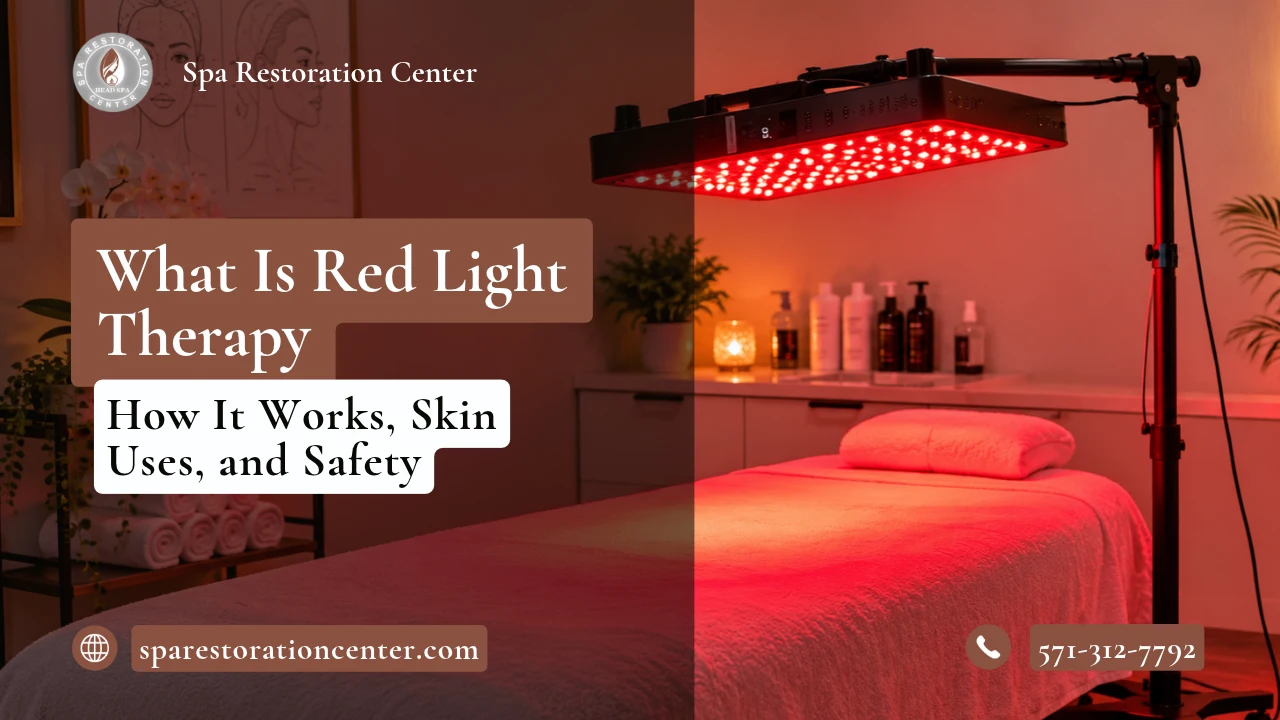
Red light therapy is a non-invasive treatment that involves exposing skin to low-intensity red light. In some devices, near-infrared light is also involved. It is described by UPMC as a “noninvasive treatment usually applied through a device emitting red light wavelengths.” It is also sometimes referred to as low-level laser therapy. It may also be referred to by its technical name, photobiomodulation.
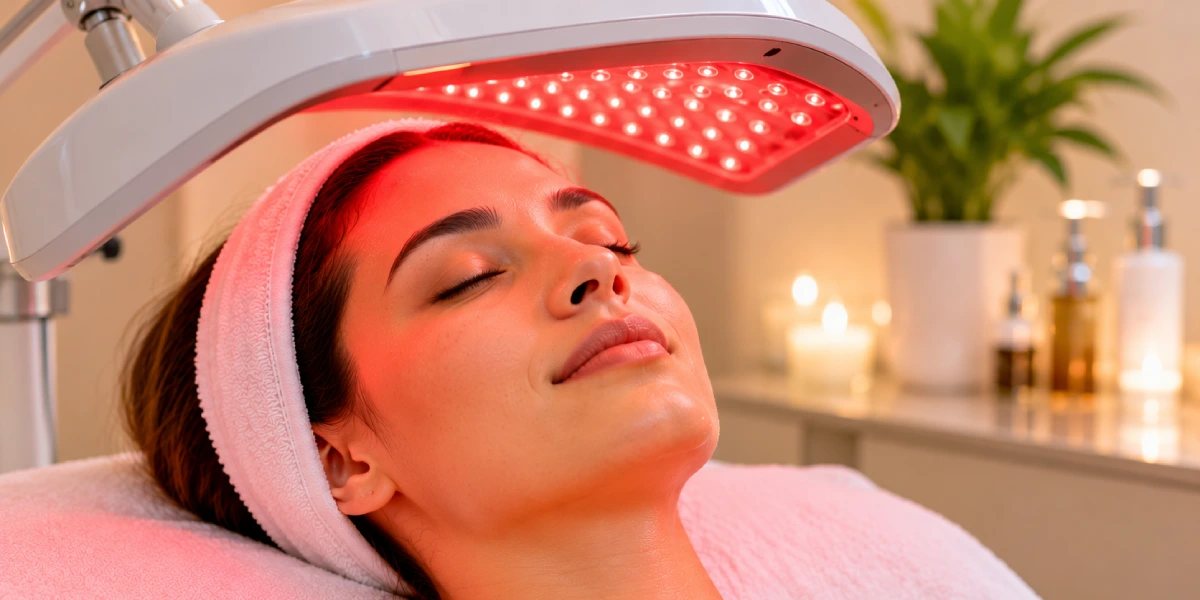
Within modern technology, red light is typically delivered via light-emitting diodes (LEDs). Therefore, this treatment is also often referred to as LED red light therapy.
Note, however, that red light therapy is not the same as tanning lamps. This treatment does not expose skin to harmful ultraviolet (UV) radiation (which causes sunburn and skin cancers). It is also different from laser resurfacing and photodynamic therapy. Due to variation in devices and treatment methods, two identical treatments with the same name may not be the same.
How Does Red Light Therapy Work?
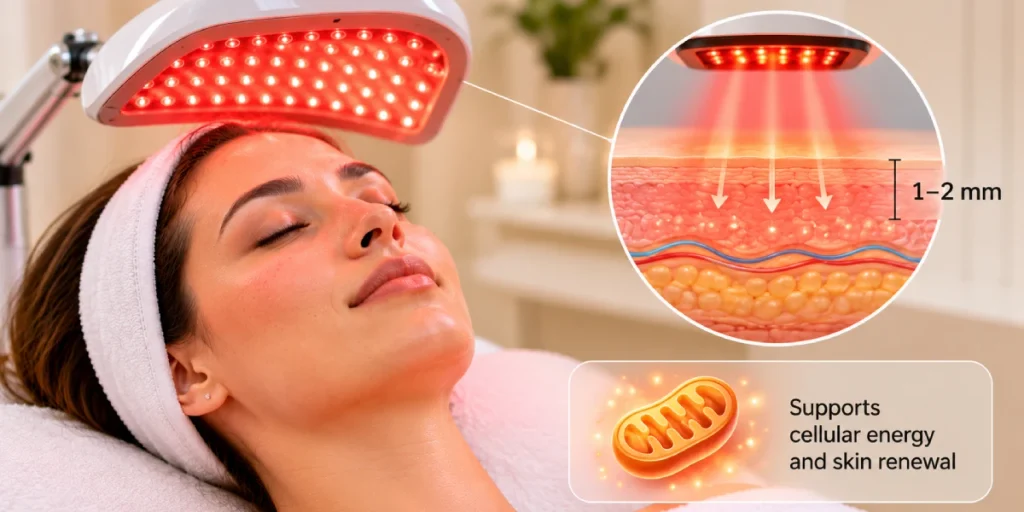
Little is known about exactly how this treatment works. However, it is believed that the light interacts with mitochondria in cells. Within these cells, energy production can increase following exposure to red light, meaning they may be able to repair damage in the skin and improve rejuvenation.
As stated in a review in the Journal of Clinical and Aesthetic Dermatology, rejuvenation of the skin by LED devices occurs via photobiomodulation. This is linked to increased activity in mitochondrial pathways in cells.
There is a wide variety of wavelengths of red light, and depending on the wavelength, it can penetrate to varying depths. Wavelengths of red light (600 to 650 nm) can penetrate 1 to 2 mm deeper than blue light in the skin. This is why red light therapy is being studied for improving collagen production and firming skin, rather than killing surface bacteria.
Despite having a proposed mechanism of action, results of red light therapy cannot be guaranteed. While cellular changes in a lab setting may occur due to red light exposure, there may be no noticeable results on the skin. Similarly, while some strong results have been found in laboratory studies, they have not all been replicated in large human trials.
What Skin Concerns Can Red Light Therapy Treat?
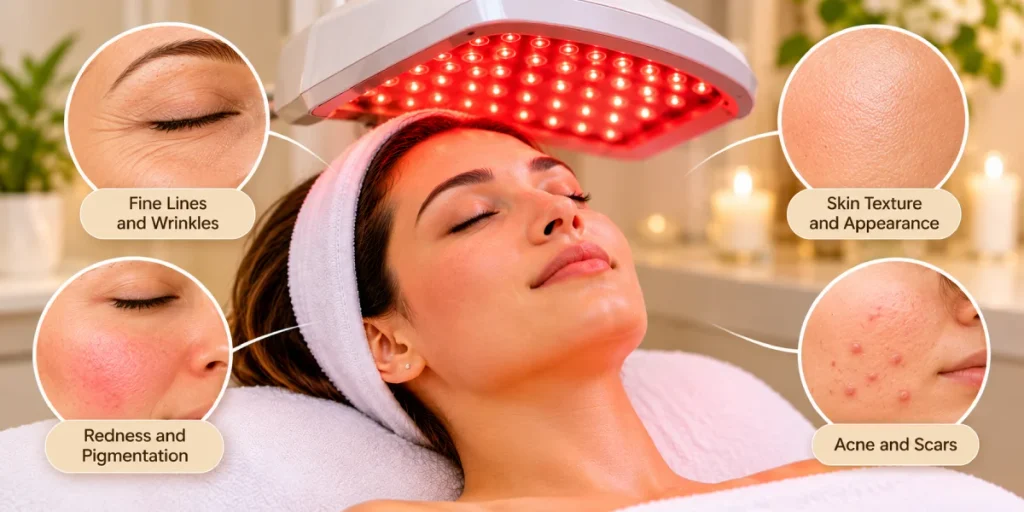
Red light therapy for skin issues covers a variety of skin concerns, including fine lines and wrinkles, uneven pigmentation, and occasional blemishes. However, evidence for effectiveness varies. For many uses, there is no conclusive evidence that red light therapy is beneficial, due to many studies being small (Medical News Today). Below are summaries of current evidence for popular concerns.
Fine Lines and Wrinkles
This is the most well-studied application of red light therapy. A review of research in 2018 found limited evidence supporting the reduction of fine lines and wrinkle severity. In a controlled trial with 76 subjects, red light therapy significantly improved wrinkle severity; however, this was not seen in the placebo group.
Therefore, red light therapy for wrinkles is a relatively well-supported aesthetic treatment. However, results are still very subtle. It will not give the same results as a surgical facelift, and honest practitioners will not guarantee a specific percentage of improvement in your skin.
Skin Texture and Appearance
Red light therapy can be useful for improving skin texture and overall skin appearance. UPMC states that red light therapy may reduce wrinkles, scarring, eczema, and acne by encouraging collagen production. However, results will vary depending on the individual and concern. While red light therapy can improve appearance, it is unlikely to fully rebuild skin structures.
Therefore, red light therapy for skin texture is often best used as one part of a regular skincare regimen, rather than as a standalone treatment.
Redness and Pigmentation
Red light therapy has been studied in relation to redness, rosacea, and eczema. Depending on the concern and treatment, results may vary. If considering red light therapy for dark spots or other pigmentation issues, results may be limited. As visible light can contribute to skin discoloration, red light therapy is not necessarily a proven treatment to lighten pigmentation.
Those with darker skin tones may also be more sensitive to visible light than people with lighter skin tones (UPMC). For this reason, it is important to perform a patch test and seek professional advice.
Acne and Scars
Red light therapy has been studied for treating blemishes; however, blue light is often the most well-known form of light therapy for this. Blue light activates porphyrins in acne bacteria, creating reactive oxygen species which can reduce breakouts (DermNet). Interest in red light therapy for acne and red light therapy for scars keeps growing too.
However, this treatment does not completely remove scarring, nor does it clear all types of acne. If this is your main aim, consider speaking with a dermatologist, who can advise you on effective treatments for your skin.
What Results Can I Expect?
Be wary of dramatic red light therapy before and after images. Setting realistic treatment expectations starts with these factors:
- Results will vary between individuals
- Just because there is a change in one image does not mean the treatment caused it
- The lighting, angle, makeup, and new products used can affect the appearance of the skin
- Real results may require multiple sessions
- You may not see any results
As everyone’s skin is slightly different, results from red light therapy will vary. Early evidence does not indicate that this treatment will work in every case (Medical News Today). Furthermore, there is no consensus in the scientific community on the benefits of red light therapy (Healthline).
If viewing before and after red light therapy images, consider whether the pictures are raw, recent, and taken under the same conditions. If results look too perfect, they likely aren’t.
Professional vs. At-Home Treatments
The intensity of red light therapy differs greatly between professional treatments and at-home devices. Device specifications vary too, including intensity, wavelength, duration, and instructions. Therefore, you cannot assume that an at-home mask will be the same as an in-clinic treatment, and different professionals may use different devices with different effects.
Many at-home devices have not been validated by controlled clinical trials in peer-reviewed journals (Journal of Clinical and Aesthetic Dermatology). If using an at-home device, learn how to use red light therapy safely and follow the instructions closely. If misused, or if there is a problem with the device, skin issues such as burns, lesions, and blistering have been reported (Healthline).
A professional LED facial also brings a trained eye that can assess your skin and adapt the treatment as it goes. If you wish to know more about what a professional red light therapy treatment includes, take a look at our face treatments page.
Is Red Light Therapy Safe?
Generally, this treatment is well tolerated for short periods of time. It has a “low risk of side effects” (Medical News Today). Similarly, DermNet states that “low-level light therapy is safe, and patients experience minimal discomfort.” Healthline also states that red light therapy is generally safe and pain-free if carried out correctly. However, this treatment may not be suitable for everyone. Consider the following:
- Mild redness and irritation may occur, and too frequent sessions may cause skin issues
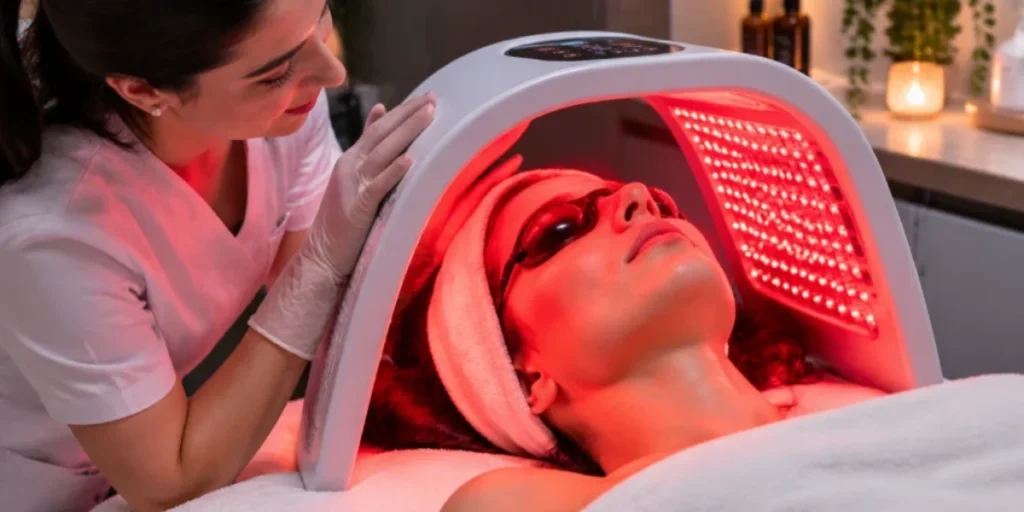
- Protect your eyes, since bright light can be damaging
- Photosensitivity from certain conditions or medications means you should speak to a doctor first
- People with darker skin tones may be more sensitive to visible light
Too frequent usage can cause skin damage, and direct eye exposure can be harmful. To prevent this, wearing eye protection is very important (UPMC). Even though LEDs are safer for the eyes than lasers, Healthline still recommends appropriate goggles. If taking medication that increases sensitivity to light, it is a good idea to consult a doctor first.
As long-term effects are still being studied, there is no need to rush this treatment. If a skin issue is persistent, it may be best to get it assessed in person rather than attempting to self-diagnose.
How Often Should You Get This Treatment?
There is no set frequency. How often you should have red light therapy depends on the device and concern. Treatment consistency tends to matter more than any single session, so getting red light therapy regularly is generally more important than getting it once.
If results are seen, they will likely be gradual. Follow the instructions included with a validated device, or a plan set by your practitioner based on an assessment of your skin. A professional will be able to tailor the frequency of treatment to your personal aims.
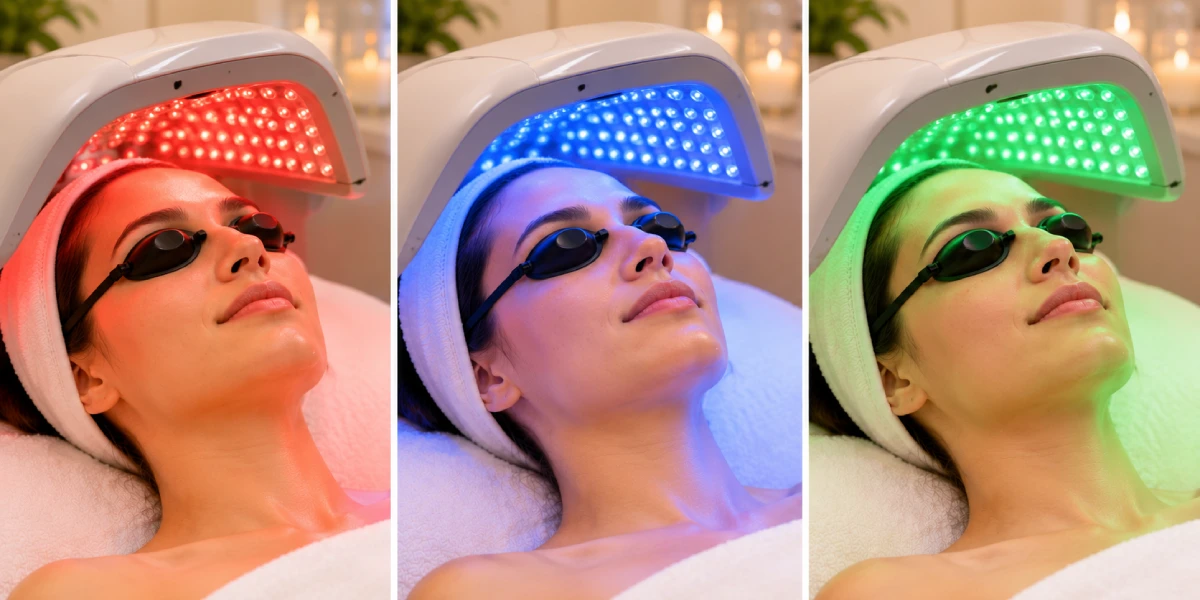
Red, Blue, and Green Light: What’s the Difference?
Depending on the color of light being used in light therapy, different wavelengths of light will be used. Based on the wavelength, the light can penetrate to different depths in the skin, and therefore commonly targets different concerns. A brief summary of differences is below. For a more detailed comparison, refer to our comparison article.
| Light color | Approximate wavelength | Typical effect on skin |
|---|---|---|
| Blue | ~415 to 545 nm | Superficial. Studied for targeting bacteria in blemishes. |
| Red | ~600 to 650 nm | Deeper in skin. Studied for improving collagen and reducing redness. |
| Green | In between | Less research, less evidence. |
(Blue light (around 415 to 545 nm) only reaches about 0.3 mm into the skin, which is not as deep as red light (DermNet). As a result, different colors are studied for different purposes. For a more detailed comparison of red, blue, and green light, view our comparison article.)
Frequently Asked Questions
Below are brief answers to frequently asked questions. Refer back to the relevant sections above for more detail.
What is red light therapy?
Low-intensity red (and sometimes near-infrared) light is applied to the skin. It does not involve UV light.
What skin concerns can red light therapy treat?
Most commonly used to target signs of aging (fine lines); however, it is also being studied for skin texture, pigmentation, blemishes, and redness. Evidence is limited for many uses.
What results can I expect from red light therapy?
Generally subtle results, if any. If results do appear, they will likely be gradual. Some people may not see any results.
How does red light therapy work?
It is thought to interact with mitochondria in cells. This may encourage collagen production and reduce inflammation. Research is ongoing.
Will red light therapy work for everyone?
No. It depends on your skin, concern, and device. Not everyone will see results.
Is red light therapy safe for skin?
For most people, red light therapy appears to be safe in the short term. However, mild skin redness and irritation may occur. If sensitive to light or on medication that increases sensitivity to light, it is a good idea to consult a doctor first.
How often should you do red light therapy?
This depends on the device and the plan given by your practitioner. There is no set frequency. Follow the instructions on validated devices.
Can red light therapy improve scarring from blemishes?
Research is ongoing. Red light therapy will not completely remove scarring. Speak to a dermatologist to consider the best treatments for scars.
Can red light therapy improve wrinkles?
It may slightly improve the appearance of fine lines. Results are very subtle, and more research is required.
What is the difference between professional and at-home red light therapy?
Professional red light therapy is generally more intense and performed by a trained professional. At-home devices are generally less intense and provide smaller results.
What is the difference between red, blue, and green light therapy?
Different wavelengths of light are used. Red light penetrates deeper into the skin and is studied to improve collagen. Blue light affects the superficial layers of the skin to target blemishes. Less research has been done on green light.
Final Thoughts
Red light therapy involves applying low-intensity red light to the skin to give a refreshed appearance. It is being studied to improve fine lines, skin texture, and a few other concerns. It may offer very subtle improvements for some people. However, results can vary greatly and may take time and multiple sessions. Not everyone will see results. Set realistic expectations and wear eye protection. If you have any health concerns, it may be a good idea to get professional advice. If you’d like to try red light therapy in a relaxed, professional environment, we offer light therapy as part of our face treatments in Arlington.
Questions about light therapy face treatments? Get in touch with Spa Restoration Center in Arlington, VA, or ask about our face treatments in Washington, DC.