Plenty of people book one of these when they really meant the other. That’s easy to do, since both use more pressure than a relaxing massage. When someone types trigger point massage vs deep tissue into Google, there’s usually one particular ache behind it. A pinch under the left shoulder blade every time they reach for the seatbelt, for instance.
Or maybe their whole back feels tight after a month of long workdays. Those two complaints get handled pretty differently on the table. We’ll explain both, and near the end there’s a short list to help you choose.
Trigger Point Massage vs. Deep Tissue: The Short Answer
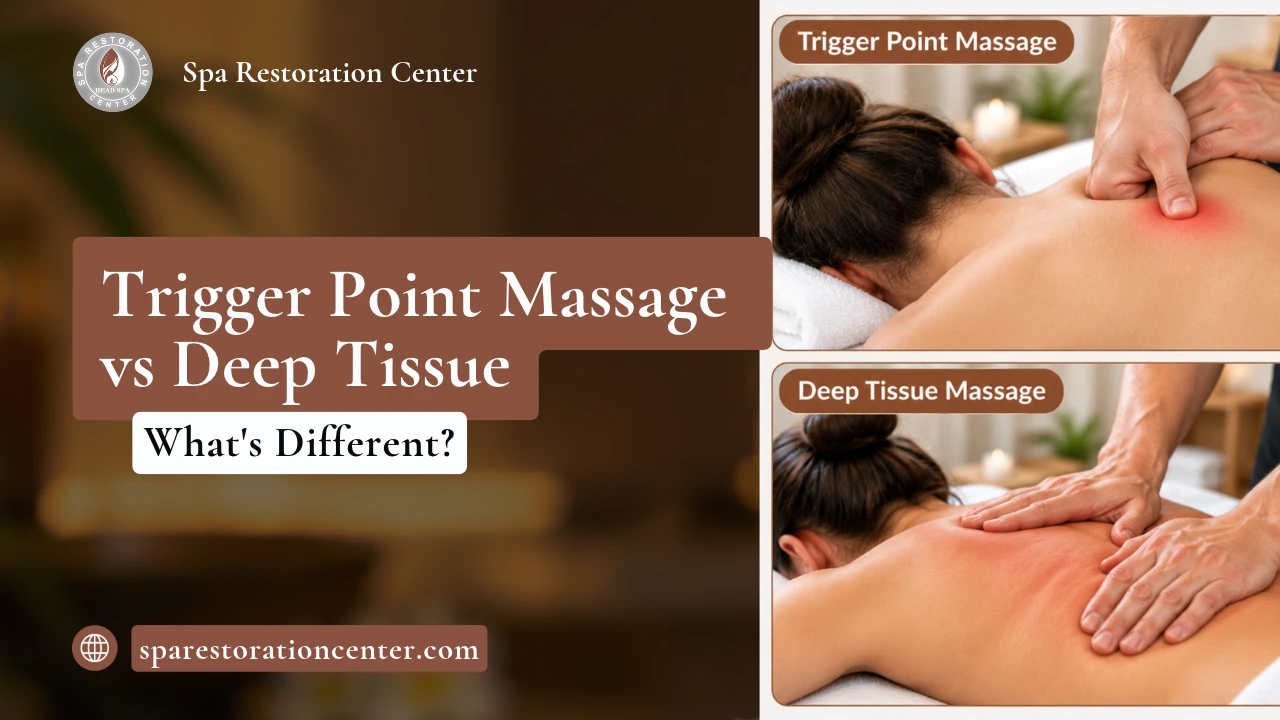
Press around your shoulders and you’ll probably find a knot or two under your fingertip. Trigger point massage stays right on that spot. Deep tissue goes for the whole muscle, and on a back, that’s a pretty big piece of real estate. One spot or a whole region? That’s most of the decision.
You won’t nap through either one. Both press harder than a Swedish massage. Don’t be surprised if you’re a little achy when you get out of bed the next day.
What Is Trigger Point Massage?
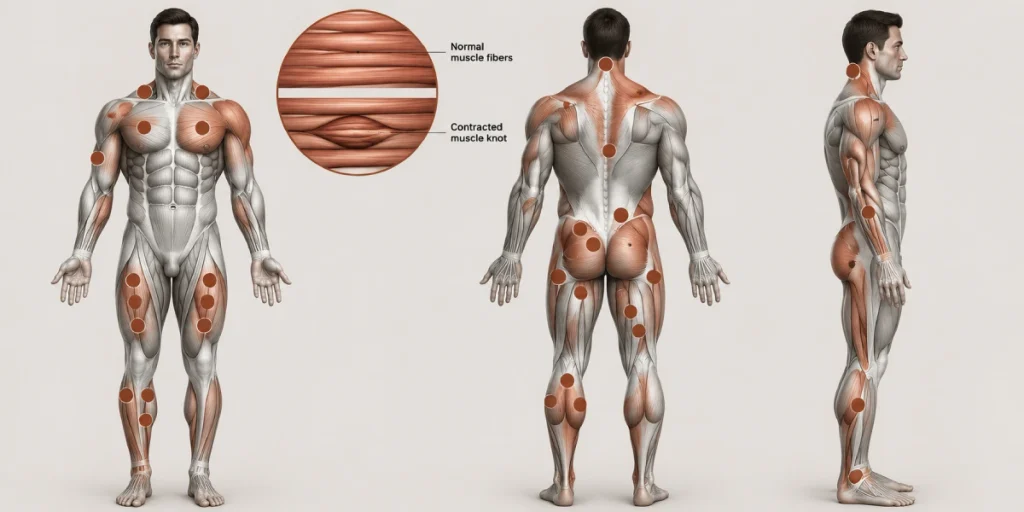
Your therapist calls it a trigger point. You probably call it a knot. Cleveland Clinic says muscle knots are tiny groups of muscle fibers that tightened up and got stuck that way. Most of them live in the neck, shoulders and back. Sitting hunched over a laptop all day is a classic way to get them.
The odd thing about trigger points is that they can hurt somewhere else. Cleveland Clinic calls this referred pain. That means the ache creeping up your neck could actually start near your shoulder blade.
Learn more about neck trigger points, including where they develop and how they may cause referred pain.
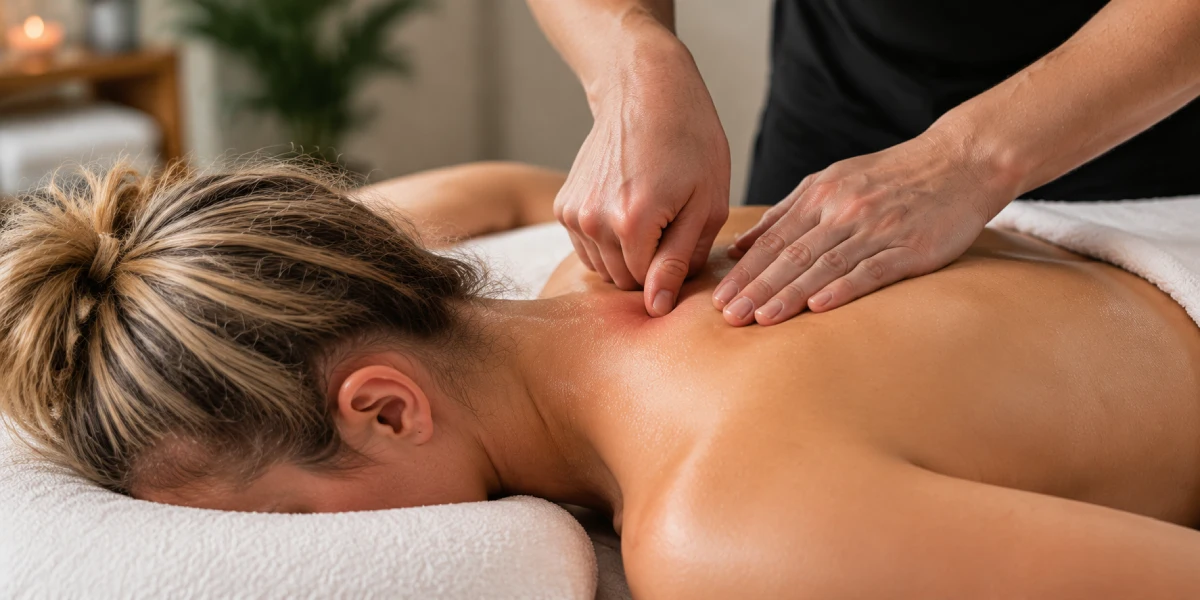
Trigger point massage therapy doesn’t involve anything fancy. Your therapist finds the spot and leans into it with a thumb. According to a chiropractor writing for Cleveland Clinic, that pressure can be held for up to a minute and a half. That’s why it counts as a targeted massage. Your therapist might sit on one patch about the size of a quarter for several minutes, just waiting for it to loosen.
The first few seconds of trigger point release can feel uncomfortable. Sharp or stabbing pain is different, so tell them right away.
What Is Deep Tissue Massage?
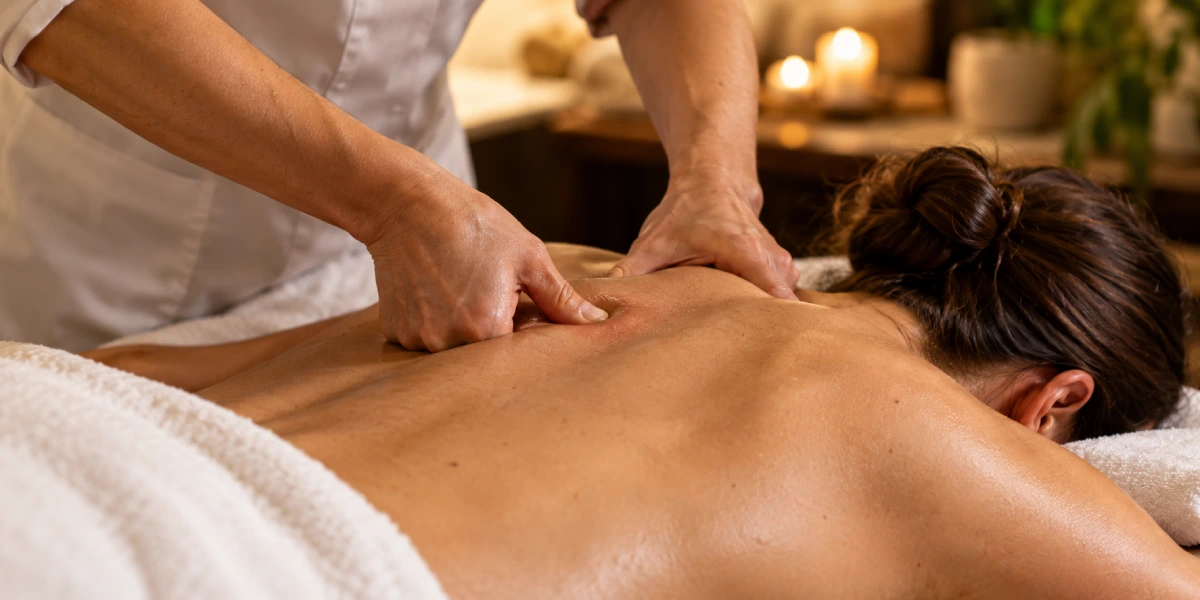
With deep tissue massage, the target is the muscle and connective tissue sitting under the top layer. Your therapist gets there with slow strokes and firm pressure. WebMD says they mostly use their fingers and thumbs, plus the occasional elbow. People usually book it for chronic pain or muscle tension, not to fall asleep.
The session usually starts lighter. The first several minutes, Healthline explains, go to warming the muscle up. Then the pressure builds, and your therapist travels down the length of each muscle rather than parking in one place. Feeling sore for a few days afterward is normal, Healthline adds.
Here at Spa Restoration Center, the pressure is your call. You pick light, moderate or deep before the session begins. Want it deep? Just let your therapist know.
Trigger Point vs. Deep Tissue Massage: Key Differences
Put them next to each other and the differences are easy to spot. Trigger point work stays parked on one point. Deep tissue keeps moving along the muscle the whole time. Here are five ways they differ, laid out in a simple table.
| Trigger Point Massage | Deep Tissue Massage | |
|---|---|---|
| Main focus | Specific tender points | Broader muscle and tissue areas |
| Pressure | Focused, held on one spot | Firm, moving along the muscle |
| Area | Small and localized | Can cover a whole back or both legs |
| Goal | Release one stubborn knot | Loosen tightness across a region |
| Session approach | Point by point | Slow strokes through deeper layers |
(This chart is a rough guide and nothing more. Recently injured, or dealing with pain that won’t go away? Talk to your doctor first.)
Which One Is Better for Muscle Knots?
Start by counting them. One sore spot you can find with your thumb is exactly what trigger point work is for. Cleveland Clinic actually suggests trigger point massage for small areas and a massage roller for bigger ones.
Knots rarely travel alone, though. If your shoulders feel bumpy from one side to the other, deep tissue usually gets further, because it loosens all the muscle around them in one go. The worst one can still get special treatment, since your therapist is free to linger there. That extra focused pressure is usually what gets it to soften.
Can Deep Tissue Massage Include Trigger Point Work?
Yes. They mix well together. Your therapist could be working down your back with long strokes, hit a knot by the spine, and pause on it for a minute before continuing. That mix is basically a deep tissue trigger point massage.
You’ll see other names for these massage techniques, too. Cleveland Clinic calls trigger point massage a type of myofascial release. Fascia is the thin layer of tissue wrapped around each of your muscles, and that’s what it works on. Some places call the same thing trigger point therapy, so don’t get confused by the labels.
If you already know the trouble spot, point at it before you lie face down. Then your therapist won’t have to hunt for it.
Which Massage Should You Choose?
Neither one is better across the board. Where it hurts matters, and so does what you want out of your session. Look through the list below, pick the one that fits you, and then read our short take on each underneath.
- One specific stubborn spot
- Tightness across a whole area
- General relaxation
- Existing pain or injury
- Not sure what you need
A single knot that won’t go away is trigger point territory. Tightness spread over your back or both legs is where deep tissue earns its keep. Just want to unwind? Then neither is a great match. Both are a lot for that, and a softer massage will be more enjoyable. If you’re deciding between a firmer treatment and a gentler session, read our guide to deep tissue vs relaxation massage to understand which style may suit your preferences.
Pain that’s hung around for weeks, or a fresh injury, belongs with a doctor before a massage therapist. Cleveland Clinic says trigger point treatment for long-term pain can include physical therapy, dry needling or injections, and a spa doesn’t offer any of those. Still not sure which one you need? Book a regular massage with deep pressure and show your therapist where it hurts. They can switch to focused work on that spot.
Frequently Asked Questions
Deep Tissue Massage vs. Trigger Point Massage: Which Is More Intense?
Hard to say, since intense can mean two things. Deep tissue keeps firm pressure on a large area for most of the hour. Trigger point work is sharper, yet it only lasts a minute or so on one small spot.
Is Trigger Point Massage the Same as Deep Tissue Massage?
No. A therapist can mix trigger point work into a deep tissue session, but they aren’t the same thing. The real difference is movement. One stays put on a single point, and the other glides down the muscle.
Does Trigger Point Massage Hurt More Than Deep Tissue Massage?
In the moment, it might, because all the pressure lands on one tender point. Cleveland Clinic says a bit of discomfort is normal, but strong pain isn’t. So if either massage gets to be too much, tell your therapist, and they’ll back off.
Is Soreness Different After Deep Tissue vs Trigger Point Massage?
Yes, mostly in how much of your body feels it. Deep tissue can leave a bigger area achy for a few days, Healthline says. After trigger point work, the soreness is usually limited to the spots that were pressed.
Got a knot that won’t quit? Book a massage at Spa Restoration Center and choose the pressure that feels right to you.
Final Thoughts
So where does trigger point massage vs deep tissue leave you? Mostly with a question of size. Trigger point work zeroes in on one knot and holds it. Deep tissue covers a whole stretch of muscle, and nothing stops a therapist from doing both in one visit. Have a spot that keeps nagging you? Mention it when you check in. If everything feels tight, ask for deep pressure. And expect a little soreness the next day with either one. Ready to book? Our Arlington team will help you pick the right pressure for how your body feels on the day.