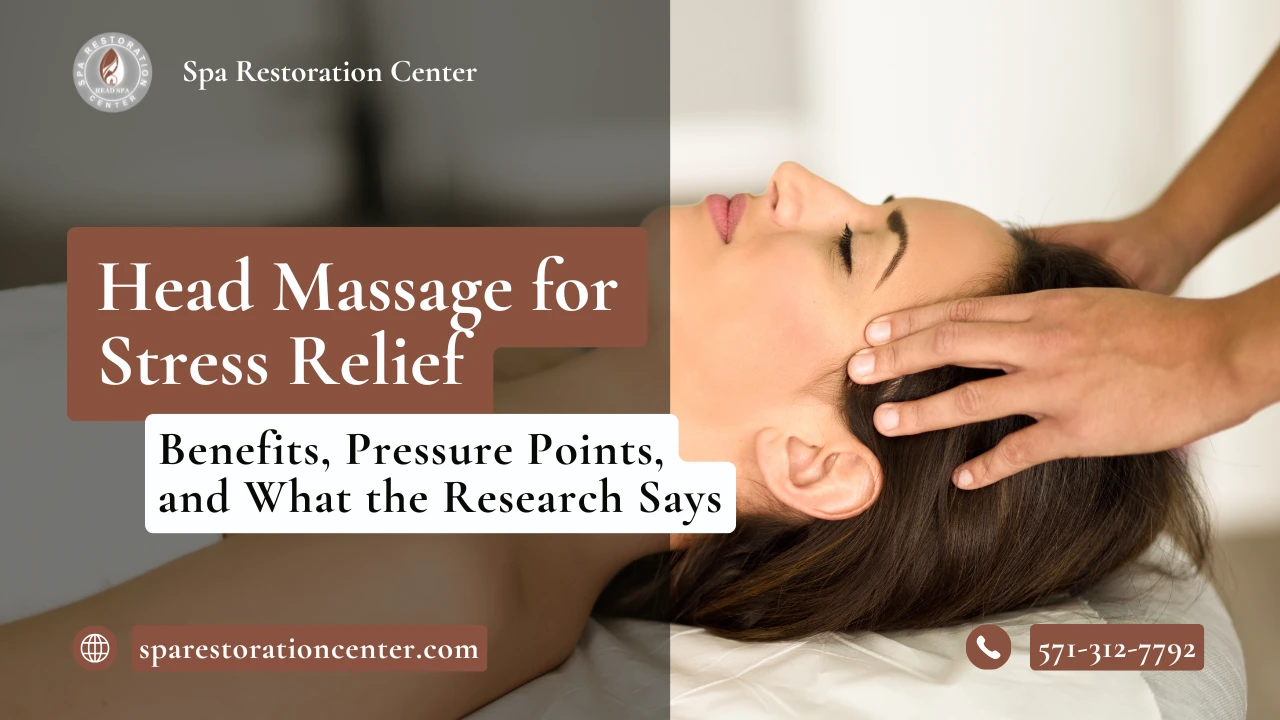
You’re sitting at your work desk midday; your head and temple will explode anytime soon from all the stress. Frustrated, you start massaging the head, above the eyebrows. Suddenly, your heavy head feels a lot better. This is not a coincidence. Head massage for stress relief has been going on for centuries. This age-old traditional technique has now become a modern-day stress-relieving routine.
How Does Head Massage Relieve Stress?
Head massage has been a traditional way to relieve stress. Many of us used to think this works because we think it works, aka the placebo effect. However, it has been proven scientifically that head massage can tap into the calming nerves of our body, relieving stress.
The Scalp’s Rich Nerve Network
Our scalp is full of nerves that run through the body. Among those, one is the trigeminal nerve that runs through the forehead and temples and also handles sensation across much of the face. Take note that these are the areas we get headaches in. We tend to massage our temples whenever stress hits us right off the workload.
Then what about the back of our head? There remain the great occipital nerves, covering the back and sides of the head. That’s why we get a sense of relief when pressure is applied to the nerves.
From Scalp to Brain: How Nerve Stimulation Influences Relaxation
Scalp massage often feels calming faster than a shoulder or back rub for a simple reason: The nerves live in the scalp, which is closer to our brain than our shoulder or back.
What Research Actually Supports
A 10-week study of female office workers found that regular scalp massage sessions changed stress hormone levels, blood pressure, and heart rate compared to a control group.
Clinical research on head and scalp massage specifically still lags behind massage therapy research overall, and a lot of what exists leans on small sample sizes or self-reported outcomes.
Evidence snapshot
- Strong evidence: general relaxation response, short-term mood improvement
- Moderate evidence: reduced perceived stress, some circulation benefits
- Emerging evidence: effects on sleep quality, headache frequency
- Anecdotal only: precise cortisol reduction figures, “curing” anxiety
Head Massage Points For Stress Relief: A TCM Guide
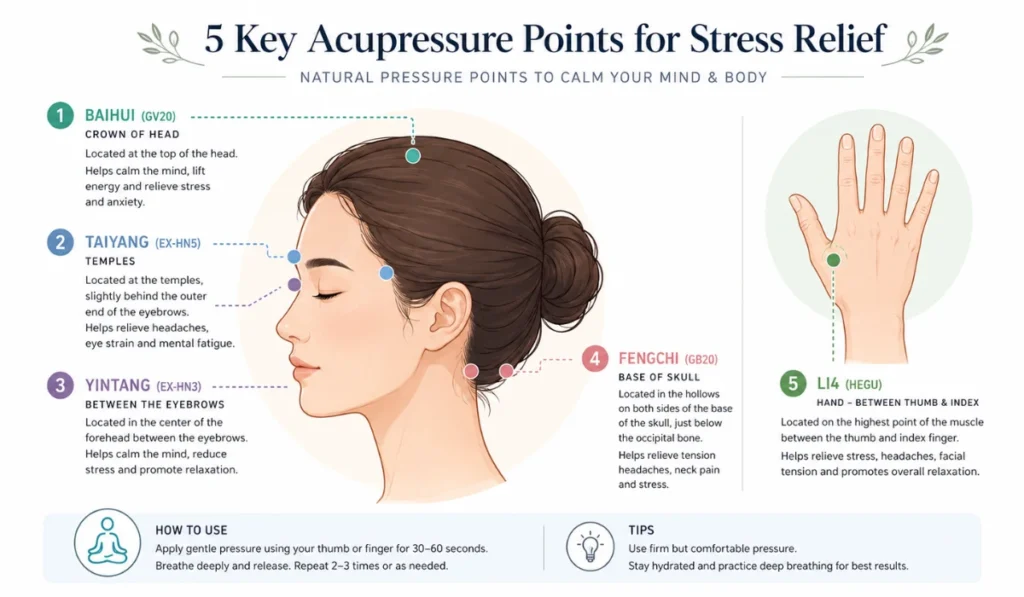
Traditional Chinese Medicine (TCM) identifies over 60 acupressure points on the scalp and head. Five of these have both traditional significance and emerging scientific support for stress-relieving head massage.
Baihui (GV20) sits at the crown of the head, roughly where a line from the top of each ear would meet. Traditional use links it to mental clarity and calm. Press gently with a fingertip for 30 seconds to a minute, and back off if the area feels tender.
Taiyang, at the temples, is one of the most commonly used points for tension headaches and eye strain. Light circular pressure for 30 to 60 seconds is standard. Go easy. The skin here is thin.
Yintang, between the eyebrows, is tied in traditional practice to easing anxiety and mental tension. A light, steady press for about a minute is typical. Heavy pressure doesn’t help here.
Fengchi (GB20), at the base of the skull on either side of the spine, has more evidence behind it than most points on this list for tension headaches and neck stiffness. Firmer pressure with both thumbs for up to a minute can feel genuinely relieving, though anyone with a neck injury should be careful.
LI4 (Hegu), on the hand between the thumb and index finger. Well, it isn’t technically on the head at all, but it’s often paired with head massage routines for stress and headaches. But it is better to skip the LI4 pressure point during pregnancy. It’s traditionally associated with inducing labor.
Self-Head Massage Routines for Beginners
We often get the question: Is there any DIY head massage that beginners can do? Of course, we listed some very easy-to-do self-head massages below. You can practice these at home or even at the office when workload is crushing you.
The 2-minute desk reset
The 2-minute desk reset is great for the middle of the day when attention begins to wander. Breathe slowly while sitting up, pressing Taiyang and Fengchi in slow circles for approximately 20 seconds. Take some time at the end to use light fingertips to tap the entire scalp.
Pre-sleep head massage
Pre-Sleep wind down is slower and longer. Reduce the light, take a few deep breaths, apply gentle and steady pressure on Yintang and Baihui for 1 minute. Here, there are no circles; only holding. Slowly close from hairline back over the crown.
Fengchi for beginners
For those suffering from a beginning tension headache, Fengchi is the first choice. Hold the thumb against the base of the skull firmly for almost a minute, accompanied by slow breathing, then proceed to Taiyang with less pressure. If the pain increases, slow down or STOP.
A fresh start
The morning refresh should not be intended to induce sleep. The tapping should be brief, 30-60 seconds across the entire scalp, and should be brisk but not overly fast, with a few normal-paced breaths.
Self-Massage vs. Professional Head Massage
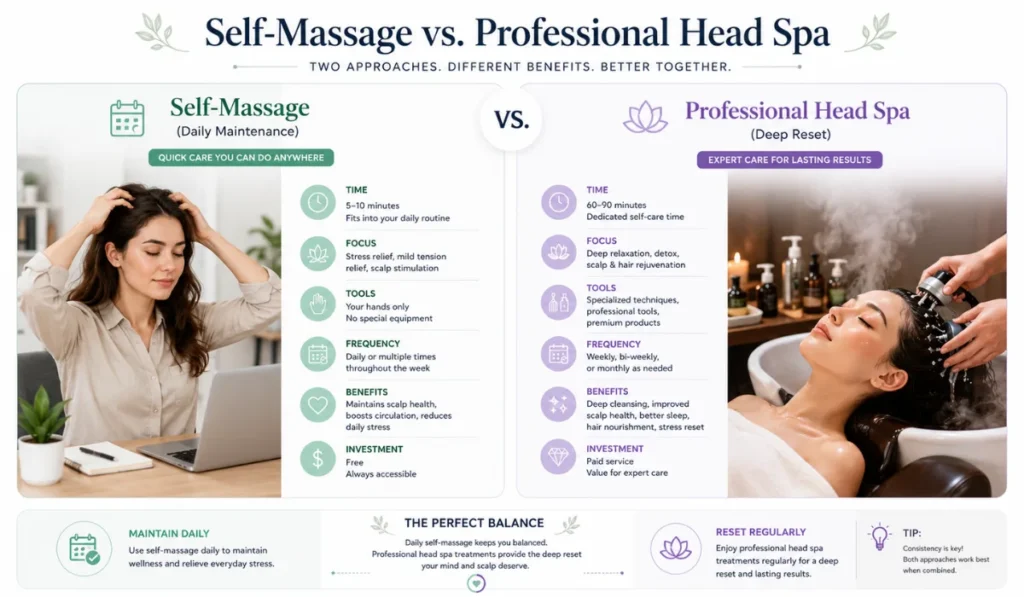
Both are suitable for a stress-management program. The key is not which wins, it’s when.
Self-massage is free, requires no equipment, and can be performed at your desk, in bed, or even standing in line. It’s easily accessible and therefore the more appropriate instrument for day-to-day maintenance.
Professional massage affords access to spots you can’t reach on your own, such as the base of the skull, and much more consistent pressure and techniques that are difficult to duplicate at home, whether steam massage, aromatherapy massage or longer kneading sessions. This should be used for deeper relaxation or when you are having trouble releasing the tension, not daily maintenance.
Self-massage is like maintenance and professional massage is like a reset. 2 minutes a day = baseline stress in check. The deeper work spills over and is accomplished in an occasional professional session.
| Self-Massage | Professional Massage | |
| Frequency | Daily | Occasional |
| Convenience | High | Requires appointment |
| Techniques | Basic | Steam, aromatherapy, extended kneading |
| Cost | Free | Paid |
| Best for | Stress maintenance | Deeper relaxation |
What Happens During a Professional Head Massage?
If you’ve not had a professional head massage or head spa before, knowing what the various elements mean (apart from the “feels nice”) can help you determine whether it will be worth your investment and what to look for.
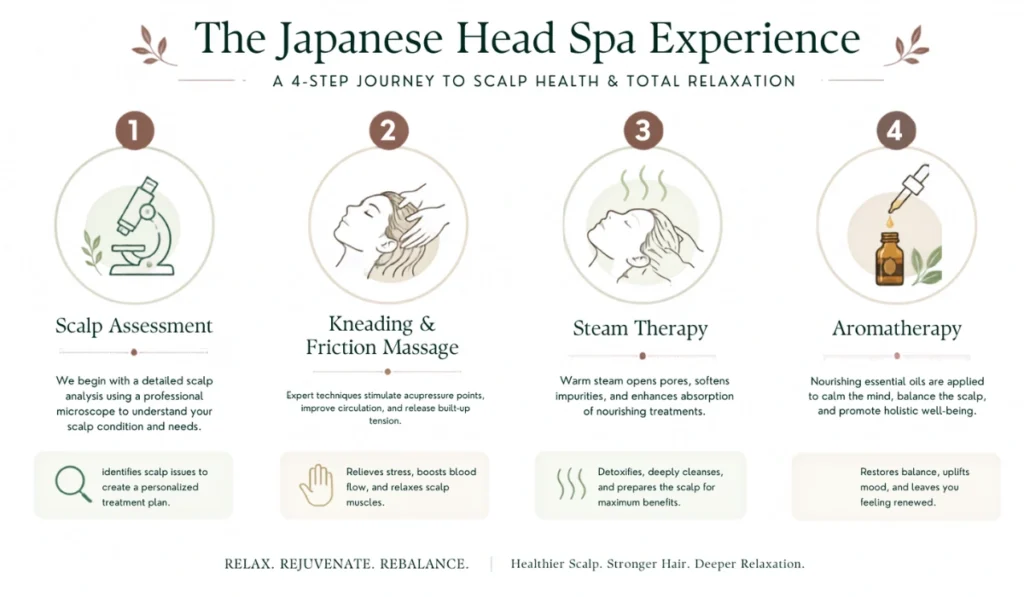
Scalp Assessment
A professional session will generally start with a scalp assessment. Your therapist does a visual and tactile examination of your scalp to identify areas of tension, oiliness, dryness, sensitivity and any dermatological issues, recent procedures, injuries etc.
Why it matters: This assessment determines the intensity of the pressure by the therapist, the type of product used, and the type of technique focus. They’ll use less pressure if you have a sensitive scalp. In the case of buildup or product residue, they will focus on the cleaning. This takes about 2-5 minutes, and has a profound influence on the rest of the session.
Massage Techniques
There are several different types of techniques used by professional therapists, all with a specific physiologic function.
Kneading: Lifting and squeezing scalp tissue with fingertips, to knead like dough. This helps to relax the tension in the scalp muscles (the galea aponeurotica, which is very thin muscle tissue underneath the skin), and promotes circulation.
Circular friction: Slow, deep pressure with fingertips and move skin not slide. It helps relieve tension knots and promotes lymphatic drainage.
Pressure holds means applying heavy pressure to certain acupressure points for 30 seconds to 2 minutes. This stimulates nerve pathways and helps tension to dissipate slowly, not all at once.
Tapping: gentle and rhythmic pressing of fingertips or the heel of the hand across the scalp. This promotes blood flow, increases nerve end stimulation, and opens up a more awakening sensation.
There’s a reason for each technique — they all deal with kneading to release muscle tension, circular friction to break stagnation, pressure to activate parasympathetic pathways, and tapping to energize circulation.
Steam Therapy
Many professional spa treatments feature the steam component. Steam is used on the scalp prior to or during the massage.
How it works: Increases blood flow to the scalp, softens buildup and dead skin, and opens pores. Warm tissues are more flexible and receptive to massage.
How warmth affects scalp tissues: Vasodilation (enlargement of blood vessels) supplies oxygen and nutrients to hair follicles and skin on scalp. Warmth also loosens constricted muscles and enhances therapeutic massage.
Aromatherapy
Essential oils and aromatherapy are often a part of professional head spas. Knowing what oils to choose and which ones are a marketing scheme is a matter of understanding.
Contrary to popular belief, essential oils for head massage are not absorbed through the skin during the session but are inhaled.
How Often Should You Get a Head Massage?
For everyday stress, a couple of minutes of self-massage daily is really helpful. It’s low-risk, and the benefit adds up over time.
For scalp and hair goals specifically, professional sessions are usually spaced further apart, often every few weeks, and that varies by individual scalp condition and what you’re trying to achieve.
A few things shift how often makes sense: current stress levels, scalp condition, your schedule, your budget, and any specific guidance from a healthcare provider.
Stress-Relieving Head Massages That Are Worth a Try
There are various types of head massage. Every technique has its own distinct advantages in relaxing muscles and inducing deep relaxation. These head massages are a must-do if you want to relax at least once.
Japanese Head Spa Massage
Japanese head spa rich treatment, including cleansing of the scalp, gentle massage, warm water treatment and aromatherapy, to soothe stress and promote scalp and hair health.
Indian Champissage
This massage, based on the Ayurvedic philosophy, targets the scalp, neck, and shoulders with rhythmic movements, which alleviate tension, ease headaches, and help to relax.
Shiatsu Scalp Massage
Shiatsu uses gentle pressure over specific points on the head and scalp to help relieve stress, enhance circulation, and restore balance, based on principles of Japanese acupressure.
Aromatherapy Head Massage
Essential oils like lavender, peppermint, or chamomile are added to the massage to improve relaxation, soothe the mind, and provide a calming sensory experience.
Hot Oil Scalp Massage
Warm and nourishing oils are applied to the scalp to ease dryness and tension, leaving the scalp and hair looking fresh and rejuvenated.
Therapeutic Scalp Massage
This massage is a firm but gentle technique to relieve tension in the scalp, neck and upper shoulders, so it is great for stress tension and computer eye strain.
All of these treatments provide a unique way of relaxation, but in each case, the treatment can help you to feel calmer, refreshed, and recharged after the treatment.
Why Japanese Head Spa Is Perfect for Stress Relief
People these days tend to be stressed out on both mental and physical levels. The constant strain of the workday, screen time, and everyday tasks can all be a factor in headaches, muscle tension, and mental fatigue. Relaxing in a Japanese head spa blends the soothing effects of a scalp massage with deep cleansing and relaxation to help you unwind from the inside out.
Unlike a traditional scalp treatment, which is primarily geared towards the health of the hair, a Japanese head spa is more of an all-sensory wellness experience. The warm water, soothing massage techniques, aromatherapy and tranquil atmosphere combine to work together to alleviate tension and create a sense of balance and relaxation.
Types of Anti-stress Japanese Head Spa
There are a variety of Japanese head spa treatments to satisfy various requirements. These are the most popular ones to relieve some stress of your body-
Relaxation Head Spa
Involving slow rhythmic massage, warm water therapy, and aromatherapy, it is focused on relieving stress. The choice is best if you want to unwind and refresh yourself.
Scalp Detox Head Spa
To thoroughly cleanse the scalp of excess oil, product buildup and impurities. It’s a great choice for maintaining a healthy scalp environment.
Hydrating Head Spa
This treatment cares for a dry or sensitive scalp by replenishing it with hydrating products and ensuring comfort and softness in the hair.
Hair & Scalp Revitalization Head Spa
This option, which is combined with nutrient-rich scalp treatments, helps promote overall scalp health and provides an ideal base to help produce stronger, healthier-looking hair.
A Japanese head spa can be customised to suit your specific requirements and provide a highly relaxing experience, whether you want to relax your mind after a day of stress or enhance your scalp health.
Who Should Avoid or Delay a Head Massage?
Head massage isn’t the right call in every situation. Hold off, or check with a doctor first, if any of these apply:
- Recent hair transplant
- Recent scalp surgery
- Open wounds
- Scalp infections
- Active eczema flare-ups
- Active psoriasis flare-ups
- Concussion
- Severe migraine disorders
- Pregnancy (check with a healthcare provider if unsure)
If you’re unsure whether massage is a good idea given any of these, ask a healthcare provider before booking or trying it at home.
How Much Does a Professional Head Massage Typically Cost?
Pricing swings widely by region and provider, but a few patterns tend to hold. Sessions usually run 15 to 60 minutes. A standard session includes an assessment and the massage itself, sometimes with steam or a hot towel thrown in.
Add-ons like aromatherapy, extra time, specialty oils, or a combo treatment paired with a facial or hair service push the price up. Location, whether you’re at a spa or a salon, therapist experience, and session length all factor into what you pay.
Instead of chasing the cheapest option or the most expensive one, match the session length and add-ons to what you’re actually after. A quick stress reset and a full spa experience call for different budgets.
Common Myths About Head Massage
“Harder pressure works better.” Not really. Too much pressure tends to cause discomfort instead of relief.
“It permanently lowers cortisol.” The relaxation response is real. Lasting hormonal change isn’t well supported.
“It cures anxiety disorders.” Massage supports relaxation. It’s not a treatment for a clinical anxiety disorder.
“More frequent sessions always produce better results.” Benefits don’t scale forever. Consistency beats frequency.
“Professional massage always beats self-massage.” They serve different purposes. One doesn’t replace the other.
Final Thoughts
Head massage isn’t a magic wand that lowers your stress level or cortisol ( stress hormone) from life. So don’t have unrealistic expectations from a massage; it can only deliver temporary relief from daily stress. Instead, utilise the God-gifted pressure points to take a break from the immense stress. Explore varieties of head massages that focus on stress relief, like Japanese head spa, or a deep scalp massage, to get some comfort out of the hectic life.
Frequently Asked Questions
How does head massage reduce stress mechanically, not just psychologically?
It stimulates nerves in the scalp that connect to relaxation pathways in the brain, which can help shift the body out of a stressed state beyond the pleasant feeling alone.
Can I massage my scalp every day?
Yes. Brief daily self-massage is generally fine for most people without contraindications.
Is stress-relief massage different from scalp-health massage?
Yes. Stress relief benefits from short, frequent sessions. Scalp-health goals are usually better served by less frequent, more thorough professional treatments.
Can I get meaningful stress relief from self-massage alone?
Yes, for everyday tension. Self-massage is well suited to daily maintenance.
When should I choose a professional massage?
Yes, for everyday tension. Self-massage is well suited to daily maintenance.
Are there situations where I shouldn’t get a head massage?
Yes. See the list above, including recent scalp procedures, infections, and certain medical conditions.
Can head massage help with tension headaches?
Many people find it eases tension-type headaches, though it’s not a guaranteed fix and shouldn’t replace medical care for headaches that keep recurring or feel severe.
What happens during steam and aromatherapy treatments?
Steam softens the scalp and can help muscles relax. Aromatherapy adds a sensory layer, with research support that varies by oil.
Do essential oils actually improve relaxation?
Some, like lavender, have moderate evidence behind a relaxation effect. Others are more anecdotal.
How long should a stress-relief head massage last?
Even two to five minutes of self-massage can help. Professional sessions typically run 15 to 60 minutes.
A note on scope: this covers general wellness and relaxation, not a substitute for medical care. If you’re dealing with a severe migraine disorder, a recent injury, or ongoing anxiety, talk to a healthcare provider before starting any new routine.