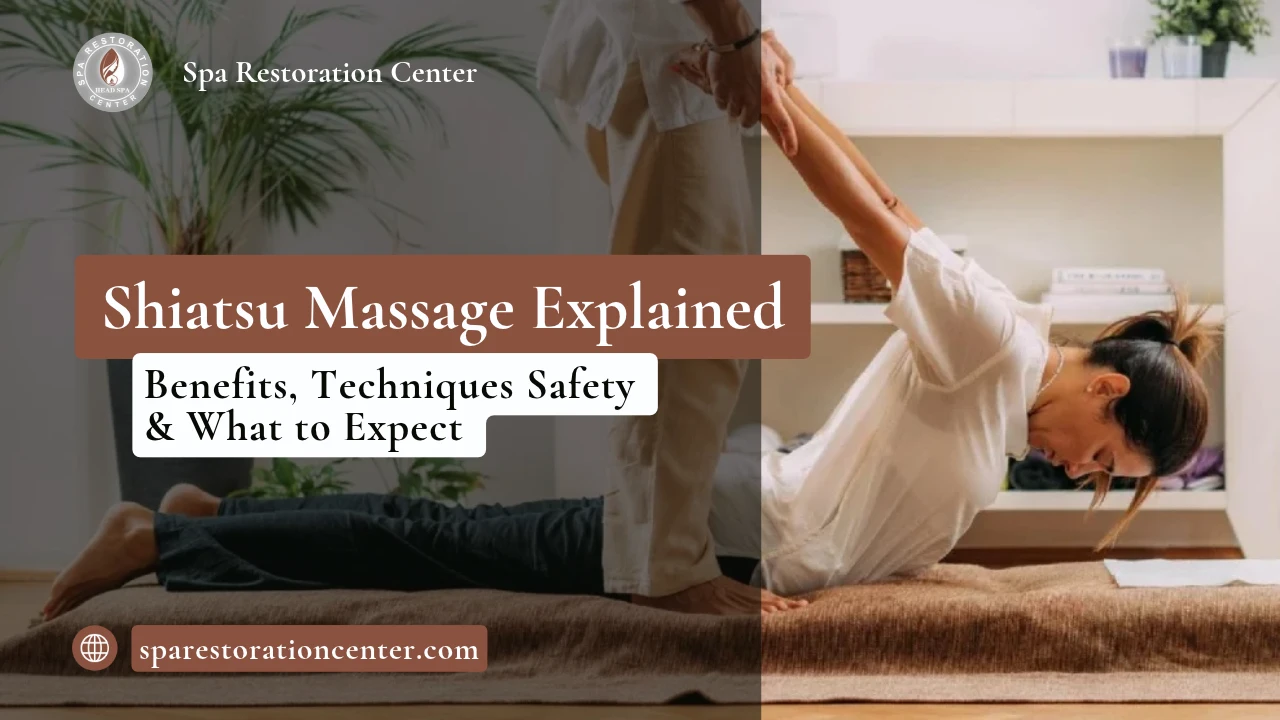
Shiatsu massage is a Japanese form of bodywork that uses finger, thumb, and palm pressure, often alongside gentle stretching and movement. It is usually performed through comfortable clothing without massage oils. People may choose Shiatsu for relaxation or to explore a different approach to hands-on bodywork.
The word Shiatsu means “finger pressure.” Although pressure is central to the practice, a session does not have to feel intense. Techniques and positioning should be adapted to your comfort, preferences, and relevant health needs.
What Is Shiatsu Massage Therapy?
Shiatsu developed in Japan and includes several styles of practice. According to the University of Minnesota’s guide to Shiatsu, it combines techniques such as pressing, kneading, tapping, and stretching and is generally performed without oils through light clothing.
Some approaches use the traditional concepts of Ki, or Qi, and meridians. Others emphasize anatomy and physical assessment. These differences mean that two practitioners may offer noticeably different sessions under the same Shiatsu name.
Shiatsu is one approach within the broader subject of Japanese massage therapy. If you are choosing between styles, ask what the practitioner actually does rather than relying on the service name alone.
How Does Shiatsu Work?
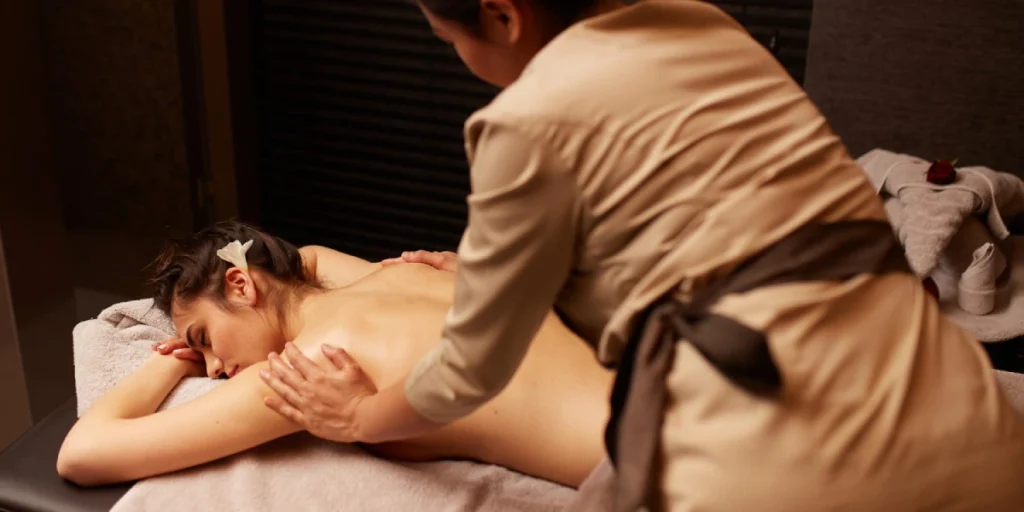
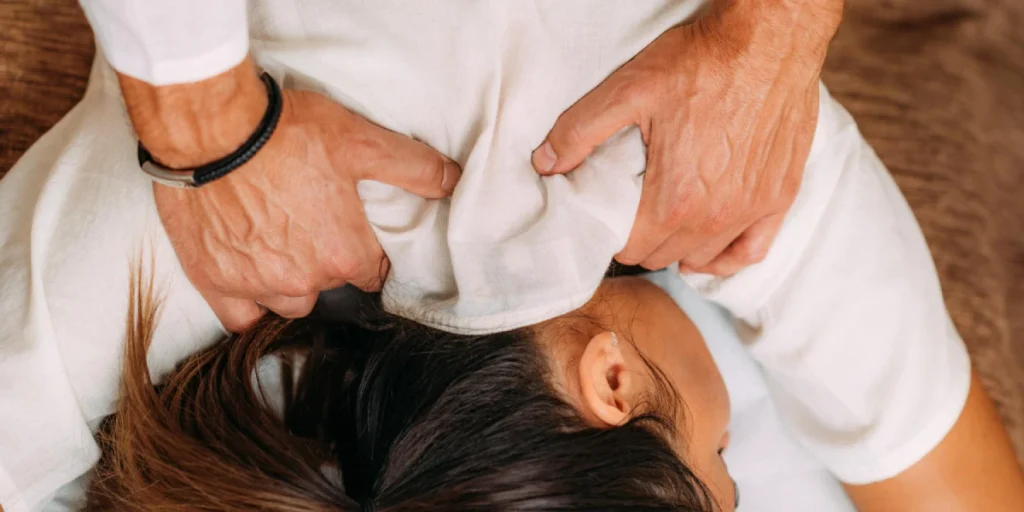
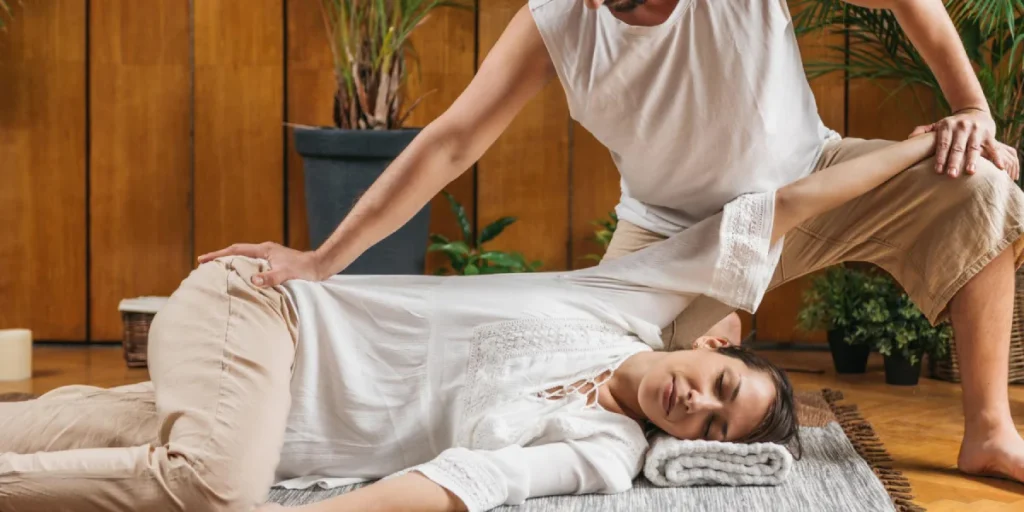
A practitioner applies pressure with their hands and may use supported stretches, gentle rocking, or joint movements. Pressure may be held in one area before moving to another, rather than continuously gliding over the skin with oil.
In traditional explanations, points along meridians are used to assess and influence Ki. These are concepts from traditional medicine, not established anatomical pathways or a proven explanation for treating disease. They should be distinguished from the physical techniques you experience during a session.
You can ask a practitioner how they explain their approach, what areas they plan to work on, and what alternatives are available if a movement feels uncomfortable.
What Techniques Are Used in a Shiatsu Session?
The combination varies by practitioner, but common techniques include:
| Technique | What you may experience |
| Finger and thumb pressure | Focused contact held or repeated over selected areas |
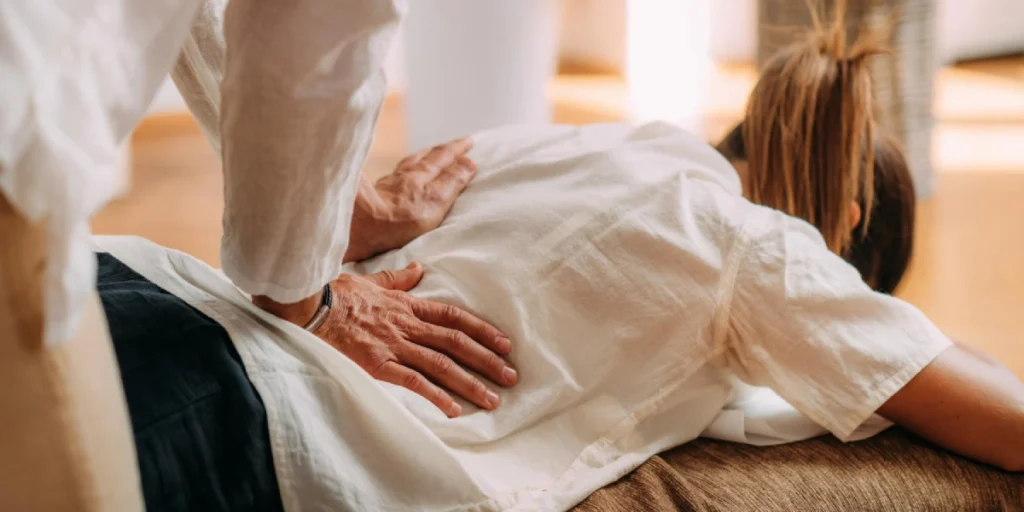
| Palm pressure | Broader contact across a larger area |
| Gentle kneading or tapping | Rhythmic work on soft tissues |
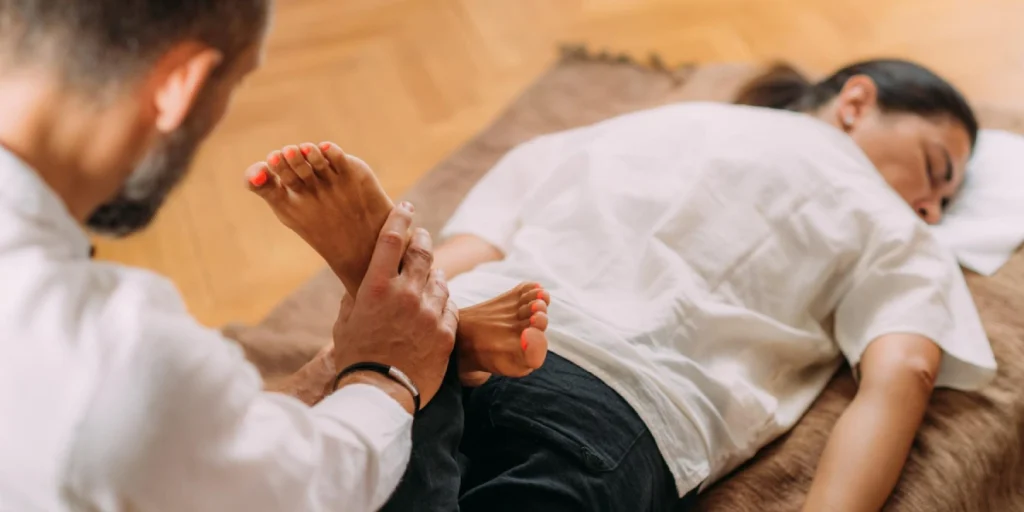
| Assisted stretching | The practitioner supports movement within a comfortable range |
| Rocking and gentle joint movement | Controlled movement adjusted to your preferences and mobility |
You do not need to tolerate pain to make a session worthwhile. Ask for lighter pressure, a different position, or a pause whenever needed. Consent to one technique does not mean you must accept every technique.
Shiatsu Massage Benefits: What Does the Evidence Say?
Relaxation, comfort, and relief from perceived tension are common reasons people seek Shiatsu. However, feeling better after a session and proving that a therapy treats a medical condition are different questions.
Stress and relaxation
Some people find Shiatsu calming. A quiet appointment and attentive touch may be appealing when you want time to unwind. Research into clinical benefits remains limited, however, and responses vary.
The Australian Government’s Shiatsu evidence evaluation, conducted for the Natural Therapies Review 2024, found low-certainty evidence of benefit for some stress-related outcomes. It did not establish high-certainty effectiveness across the conditions assessed.
Pain and muscle tension
Shiatsu should not be presented as a guaranteed treatment for back pain, headaches, or joint problems. Evidence depends on the condition and comparison being studied. The same government evaluation found low-certainty evidence of little or no difference in pain, disability, or quality of life in one chronic musculoskeletal pain trial.
Research about massage generally, or acupressure specifically, should not automatically be treated as proof for Shiatsu. If pain persists or its cause is unclear, seek medical assessment rather than relying on repeated appointments.
Shiatsu vs Swedish Massage: What Is Different?
Both can be adapted to an individual’s preferences, but the usual session format differs.
| Feature | Shiatsu | Swedish massage |
| Main approach | Pressure, holds, and assisted movement | Gliding strokes, kneading, and other manual techniques |
| Clothing | Usually received through loose clothing | Commonly involves work directly on skin with appropriate draping |
| Oils or lotion | Usually unnecessary | Commonly used |
| Setting | May use a floor mat, chair, or table | Commonly uses a massage table |
| Pressure | Adapted to the individual | Also adapted to the individual |
Neither style is automatically better or more effective. Choose based on the experience you prefer, the practitioner’s training, and whether the approach is suitable for you.
What to Expect at Your First Shiatsu Appointment
Before the session
Discuss your goals, current symptoms, relevant medical history, medications, injuries, and any recent surgery. Tell the practitioner if you are pregnant or have been advised to avoid particular pressure or movements.
Confirm the appointment length, total price, positioning options, and areas included. Mention any preferences about touch and identify areas you want left alone.
During the session
You usually remain clothed. Depending on the setting, you may lie on a mat or table or receive work in a seated position. The practitioner applies pressure and may introduce supported movement or stretching.
Give feedback throughout. You can decline abdominal work, request a position change, or end the session. Ask the practitioner to explain anything unfamiliar before it begins.
After the session
Notice how you feel before scheduling another appointment. Cancer Research UK notes that mild effects such as tiredness, headache, or muscle stiffness can occur. Seek advice if symptoms persist; new, severe, or worsening symptoms need medical attention.
Is Shiatsu Massage Safe for Everyone?
No. Your health history can affect whether pressure and stretching are appropriate. The National Center for Complementary and Integrative Health reports that serious harm from massage is uncommon, but rare injuries have occurred. This guidance concerns massage broadly rather than Shiatsu alone.
Discuss suitability with your healthcare professional and practitioner if you have a bleeding or clotting condition, weakened bones, cancer treatment, recent surgery, or another condition affecting your care. Tell them about skin injuries or infection and any restrictions you have been given. Pregnancy also calls for a practitioner with relevant training and appropriate adaptations.
Frequently Asked Questions About Shiatsu Massage
How long does a Shiatsu massage last?
Cancer Research UK describes a session as usually lasting about an hour. Appointment lengths vary, so confirm the provider’s options and whether consultation time is included.
What should I wear for Shiatsu?
Wear loose, comfortable clothes that allow easy movement. Stretchable trousers and a comfortable top are practical choices. Ask the provider about any specific requirements.
How often should I get a Shiatsu massage?
There is no single evidence-based schedule that suits everyone. Base repeat visits on your goals, response, health needs, and budget. Reassess whether sessions are helping instead of assuming a weekly or monthly plan is necessary.
Can Shiatsu help with burnout?
A session may feel relaxing, but Shiatsu should not be presented as a proven treatment for burnout. Persistent exhaustion or difficulty functioning deserves appropriate support; massage should not replace assessment or changes to the circumstances contributing to it.
Does Shiatsu use needles or oils?
Shiatsu itself uses manual techniques rather than acupuncture needles. It is generally performed through clothing without oils. Ask about any additional treatments separately.
Explore Massage Options in Arlington, VA
Explore Spa Restoration Center’s massage services and contact the team to discuss your preferences. If you specifically want Shiatsu, confirm current availability, practitioner training, appointment length, and pricing before booking.