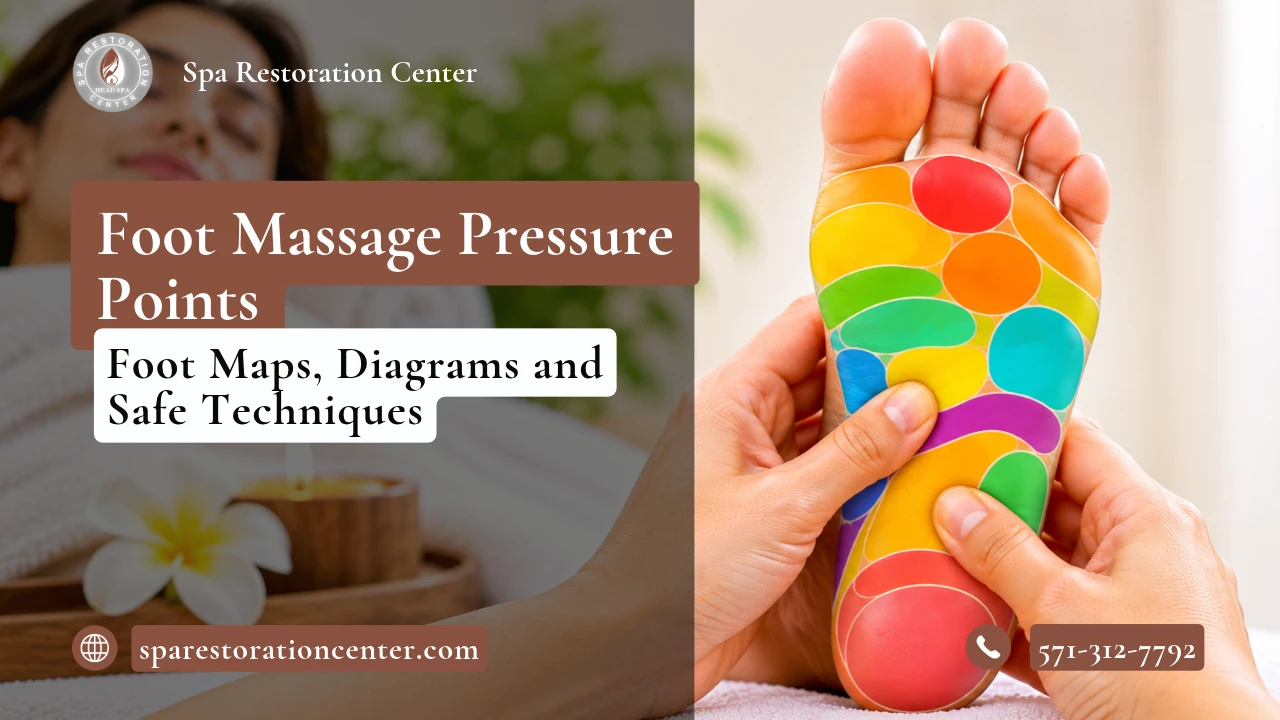
If you’ve searched for a foot chart online before, you may have noticed that the soles of the feet are split into color-coded sections with organs listed. This can be confusing. This guide will explain foot massage pressure points in easy-to-understand language!
You’ll learn how to find common pressure points, how to read a foot chart, and how to apply light pressure safely. We’ll also explain what pressure points can and can’t do. The aim of a relaxing foot massage isn’t to treat pain or internal issues.
What Are Foot Massage Pressure Points?
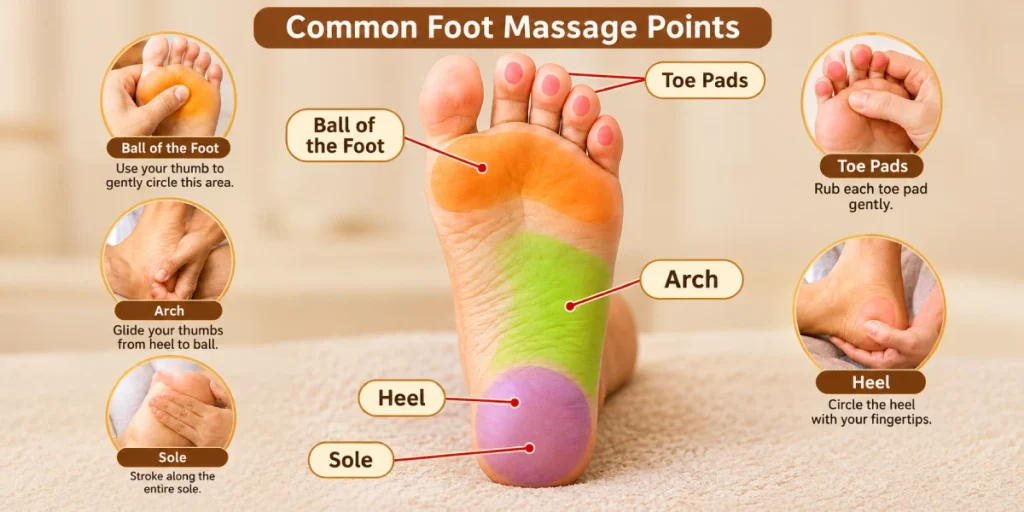
There are two different meanings of the term, so we’ll explain what each one means. The first meaning relates to common foot massage points. The ball of the foot, the arch, and the soft tissue around the heel are all areas that commonly feel nice when massaged. These are actual muscles, tendons, and padding.
The second meaning relates to acupressure and reflexology. These are both traditional methods, and they teach that certain points or zones on the feet relate to other parts of the body. According to the National Center for Complementary and Integrative Health (NCCIH), reflexology points are believed to relate to other parts of the body, but there’s no proof that this has healing benefits.
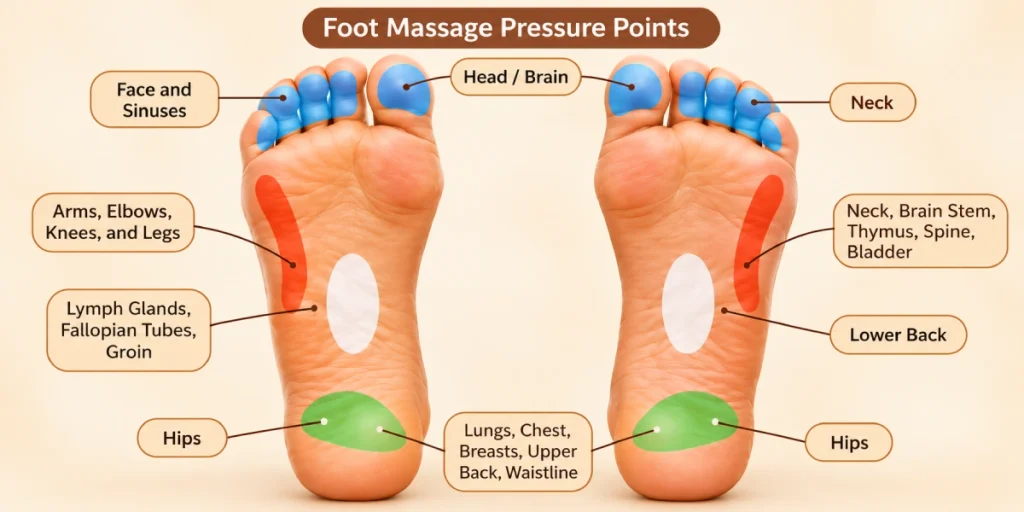
You may also come across foot massage trigger points. These are knots in a muscle that are tight and tender. This is a muscular idea and isn’t part of reflexology.
Foot Massage Pressure Points Chart
The foot massage chart below shows the left foot. The darker areas are actual massage areas. The two dots are traditional acupressure points and are labeled separately so they aren’t confused with the anatomy.
Any foot diagram for massage is just a general guideline. Everyone’s feet are different, and the pressure points won’t be in exactly the same places due to varying lengths, widths, and arch heights. You may also look for female foot massage pressure points, but the anatomy is the same for women and men. The size and shape may differ, but the parts stay in the same places.
Common Foot Massage Points and Where to Find Them
Most people will think of the five main massage areas of the foot when talking about pressure points. Below you’ll find information on where these are, how to massage them easily, and what to avoid. Take it slow and make sure the pressure feels comfortable.
Ball of the Foot
This is the padding below the toes. Use your thumb to gently circle this area, moving from the inner edge to the outer edge. Avoid any areas that feel painful, burning, or numb.
Arch
The arch is the curved middle area on the inner side of the foot. Gently glide your thumbs from the heel to the ball of the foot, or use gentle circles. Avoid applying too much pressure.
Heel
The heel is the hard, round area at the back of the foot. Cup the heel in your hand and gently circle around the soft edges with your fingertips. If you’re experiencing pain in your heels for longer than a few days, it’s better to see a doctor.
Toe Pads
These are the small pads on the bottom of each toe. Take one toe at a time and gently rub the pad with your thumb. Avoid pulling, twisting, or bending the toe.
Sole
This is the entire bottom of the foot, including the outer edge on the little toe side. Use your thumbs or the heel of your hand to gently stroke along the sole from the toes to the heel. Avoid any areas that have blisters, cuts, or irritation.
Foot Massage Acupressure Points
Acupressure comes from traditional Chinese medicine. This method uses finger pressure on the same points as acupuncture, but without needles. Many versions of a Chinese foot massage chart are based on this tradition. We’ve included two foot massage acupressure points on our chart. These points were sourced from published clinical study protocols:
- SP4 (Gongsun)
A study protocol published in Trials places SP4 “on the medial aspect of the foot, anteroinferior to the base of the first metatarsal bone.” This is a simple way of saying it’s located on the inner edge of the arch, where the smooth skin of the sole meets the skin on the side of your foot.
- KI3 (Taixi)
Another protocol published in Trials describes KI3 as being “on the posteromedial aspect of the ankle,” in the dip between the inner ankle bone and the Achilles tendon.
We’re only providing information on where these points are. Traditional claims that these points benefit organs or health haven’t been proven.
How to Read a Foot Massage Map
Not every foot massage map is the same, and there are two main types, which can cause confusion. An anatomical foot massage diagram will only contain areas you can feel. This includes your toes, ball, arch, heel, and ankle. Our chart is an example of this.
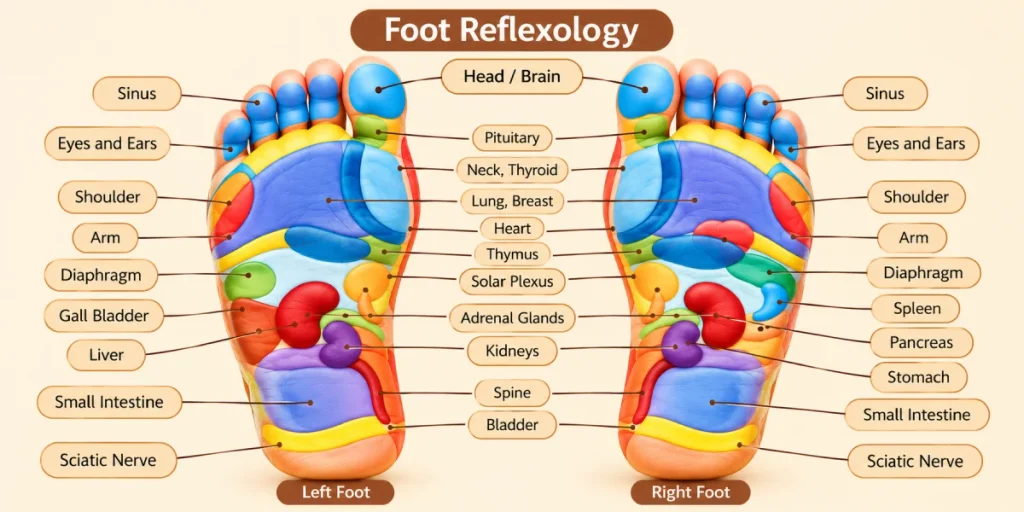
Reflexology charts are sometimes referred to as a foot massage map of the feet. These divide the soles into zones and give them names of organs such as the liver, kidney, or stomach. In the reflexology tradition, pressing a zone is believed to affect the corresponding organ. As this is a belief and not actual anatomy, if you see a foot massage points chart with organs named on it, treat it as a traditional chart and don’t use it to diagnose any health issues.
How to Apply Gentle Pressure to Foot Massage Points
The pressure and movement you use can make a difference in how comfortable the massage feels. Different foot massage techniques can help you adjust your approach based on the area you’re massaging.
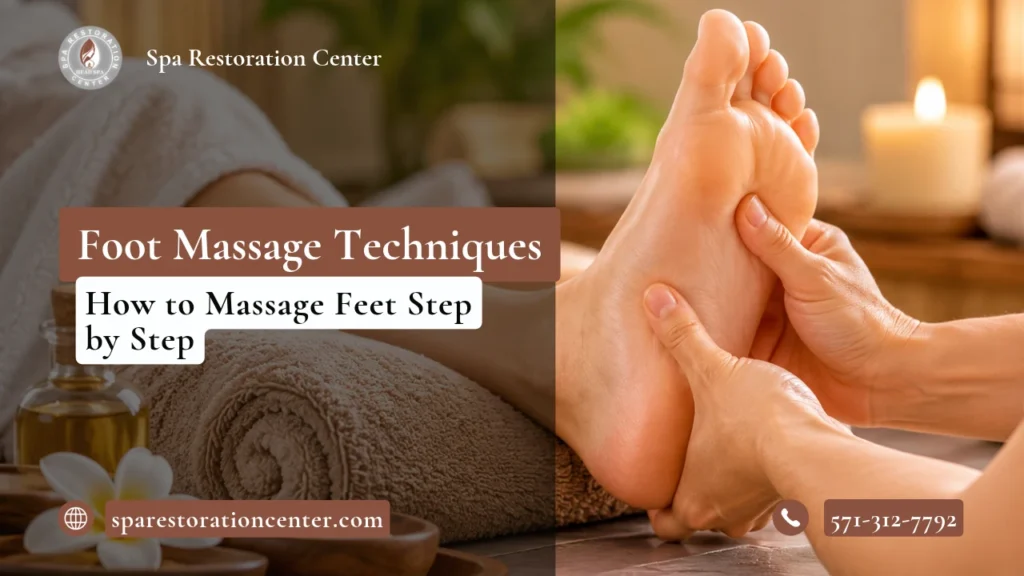
There’s no need to have a specific routine. Most people will find it relaxing to gently massage foot pressure points this way:
- Sit comfortably and place your foot on a cushion or over your lap.
- Pick one area to focus on, for example, the ball of the foot or the arch.
- Use the soft pad of your thumb.
- Gently press and make small, slow circles for a few breaths.
- Release the pressure and move on to the next area.
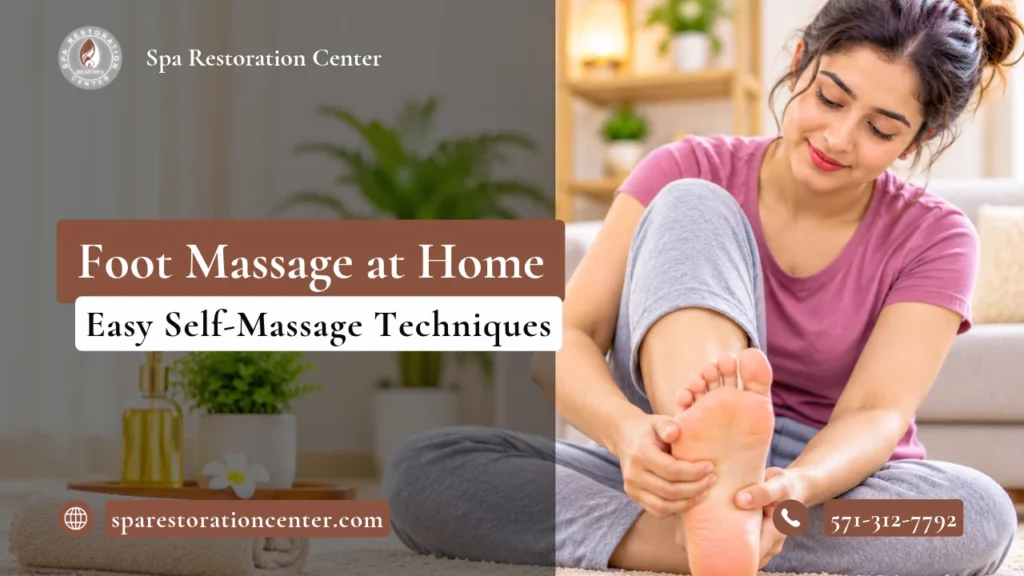
Make sure the pressure is firm but comfortable. You may feel a slight amount of tenderness, but if you feel any sharp pain, reduce the pressure immediately. There’s no specific order you need to follow, so start with whichever area feels best. If you’d like to try self foot massage pressure points, place one foot on the opposite knee and massage with slow circles.
Do Foot Massage Pressure Points Actually Work?
It depends on what you’re looking for. Many people find working on pressure points in foot massage relaxing, and many say their feet feel more comfortable afterward. This is a realistic goal.
However, claims that these points can treat organs or cure diseases haven’t been proven. Research on reflexology is limited. According to the NCIH, one study showed people with advanced breast cancer had improved shortness of breath, but it didn’t improve pain or nausea.
There is also not enough evidence to show it helps most symptoms of multiple sclerosis. A foot chart isn’t a diagnostic tool. A sore arch is most likely just a sore arch, not a sign of an organ problem, and if you’re concerned about your health, speak to your doctor.
Safety Precautions Before Massaging Pressure Points
Most healthy adults can safely apply light pressure. However, in some cases, caution should be taken, or you should speak to a doctor:
- Loss of feeling in the feet
According to the NIDDK, people who have lost feeling in their feet may not realize they have a blister or a pebble in their sock. They also may not feel if too much pressure is being applied. If you have any foot issues related to diabetes, speak to your doctor before massaging pressure points.
- Cuts, blisters, infections, or recent sprains
Avoid applying pressure to any cuts, blisters, infected skin, or recent sprains.
- Unexplained swelling or increased pain
Speak to a doctor. Stop immediately if you feel increased pain, tingling, or numbness.
Final Thoughts on Foot Massage Pressure Points
Once you understand the difference between anatomy and tradition, foot massage pressure points become much easier to understand. The ball, arch, heel, toe pads, and sole are all real foot massage areas you can feel. Applying gentle, slow circles to them can be very relaxing.
Acupressure points such as SP4 and KI3 are traditional, and mapping out organs is a belief, not proven science. Be gentle and avoid any sore or injured areas. If you have diabetes or numbness, speak to a doctor first. If you’d prefer someone else to take care of your feet, our team at Spa Restoration Center is here to help!
Frequently Asked Questions
Foot charts raise lots of questions. Here are a few quick answers to some common ones.
Is There a Foot Massage Pressure Points Chart?
Yes! The chart in this article shows the main areas of the sole and the inner side of the foot. The two traditional acupressure points are labeled separately.
What Are Foot Massage Acupressure Points?
These are specific points used in traditional Chinese medicine. They are pressed with the fingers rather than needles. Regular massage focuses on the muscles and soft tissue more generally.
Can Foot Massage Pressure Points Relieve Pain?
Applying light pressure may help your feet feel more comfortable, but it is not a proven treatment for pain. If you’re experiencing sharp, constant, or increasing pain, speak to a doctor.
How Do You Massage Foot Pressure Points Safely?
Use the pad of your thumb and apply gentle pressure. Stop if you feel any sharp pain, tingling, or numbness.
Can You Massage Your Own Foot Pressure Points?
Yes! Sit with one foot on the opposite knee and gently make circles with your thumb on the ball, arch, and sole.
Would you like a relaxing foot massage? Book a session with our massage services team at Spa Restoration Center in Arlington.