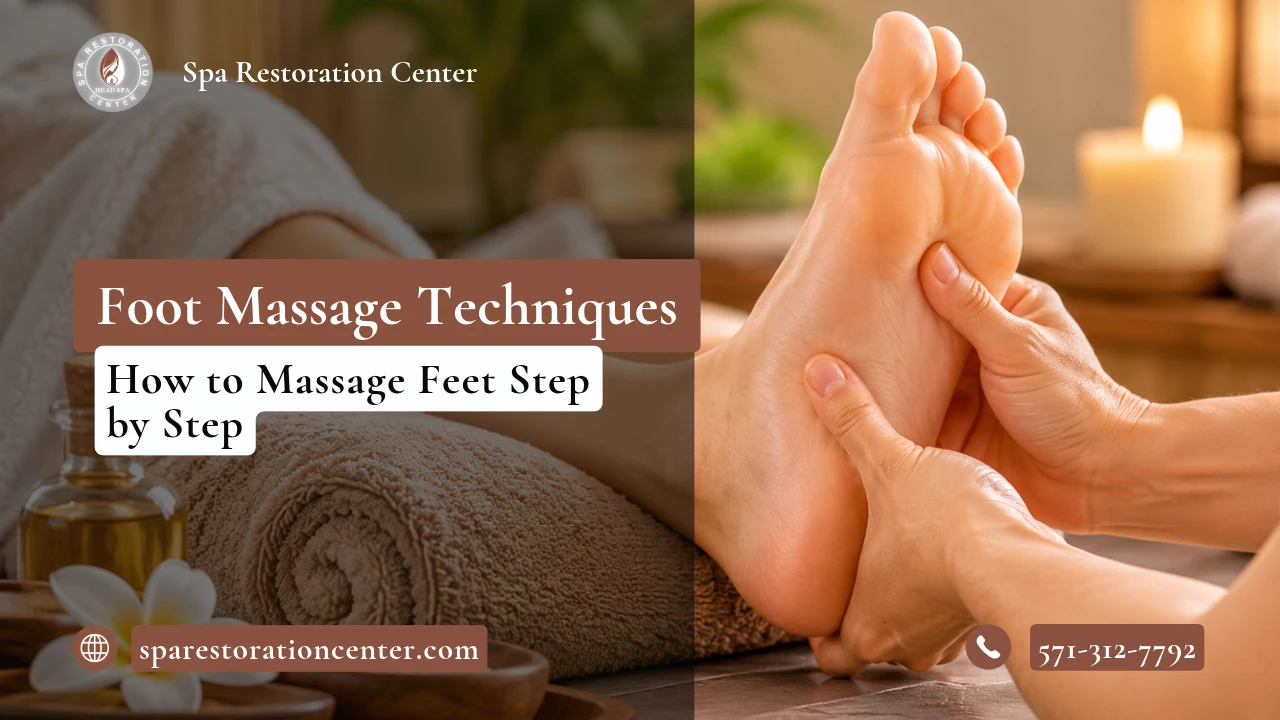
A good foot massage should be gentle, slow, and done with plenty of communication. Many people think a foot massage should be firm, but feet can be very sensitive, and too much pressure could cause any relaxing massage to feel uncomfortable.
Below we’ve outlined some simple foot massage techniques. We’ve included how to prepare, how to massage foot muscles in a calm order, how much pressure to use, and when to stop. This should not be used for any injuries or medical issues.
What You Need Before Starting a Foot Massage
You won’t need much to perform a foot massage. First, you’ll need to make sure your hands are clean, and the recipient’s feet are clean. Make sure they’re in a comfortable position so they can lean back or lie down with their legs supported. This could be on a couch or bed with a pillow under their knees.
You may also want a towel to place their foot on. A foot massage with lotion or a little bit of oil will help reduce friction on their skin. This is optional. If their skin is sensitive, you should use an unscented product.
Before starting, you should ask a few questions. Do they have any sore areas, recent injuries, or areas you should avoid? What sort of pressure do they usually enjoy? Avoid any cuts, blisters, open wounds, rashes, or signs of infection. Avoid any swollen or very painful areas, as well as any problem area that hasn’t been checked by a doctor.
How to Give a Foot Massage Step by Step
To perform a simple step by step foot massage, keep things nice and relaxed. If you’ve been wondering how to give a foot massage that feels relaxing, the main thing to remember is to go gently and communicate with them. The following foot massage steps can be repeated on the other foot.
Step 1: Get the Foot Comfortable
Make sure they’re sitting or lying back with their leg on a pillow or on your lap. Place one hand underneath their heel and one on top of their foot. This will give support to their ankle so they can relax. Ask if they have any sore or sensitive areas. They should feel comfortable and not have to lift their leg.
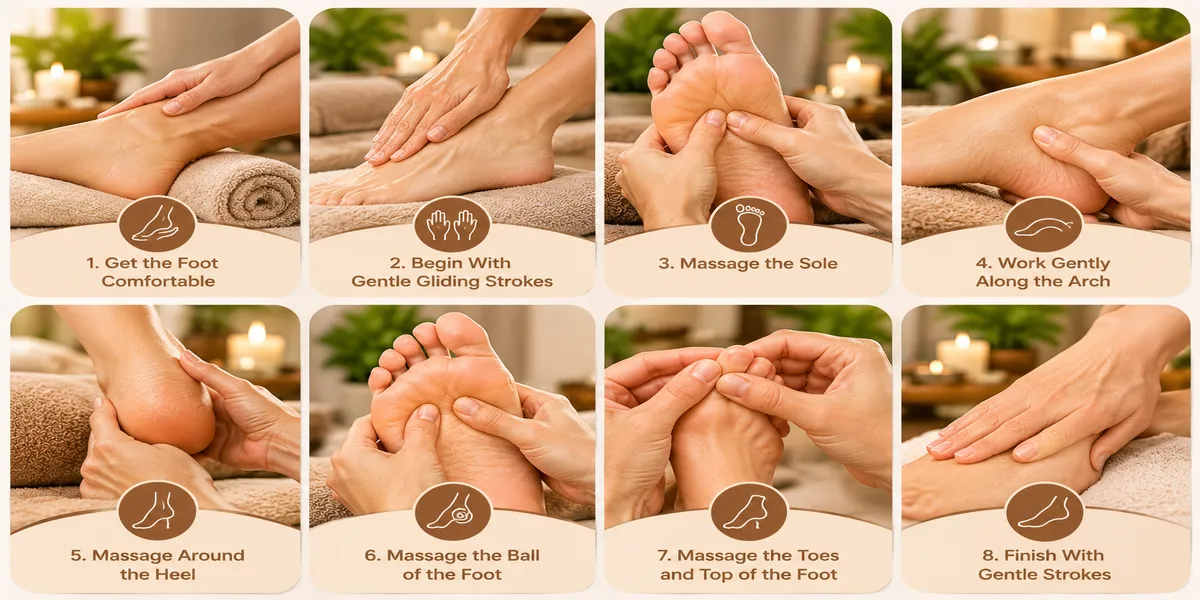
Step 2: Begin With Gentle Gliding Strokes
If using a lotion, warm it up a little bit in your hands. Glide your palms over their foot from their toes to their ankle. Do this on the top and bottom of their foot. Perform this a couple of times. This will help them get used to the massage, and it should feel smooth and relaxing.
Step 3: Massage the Sole
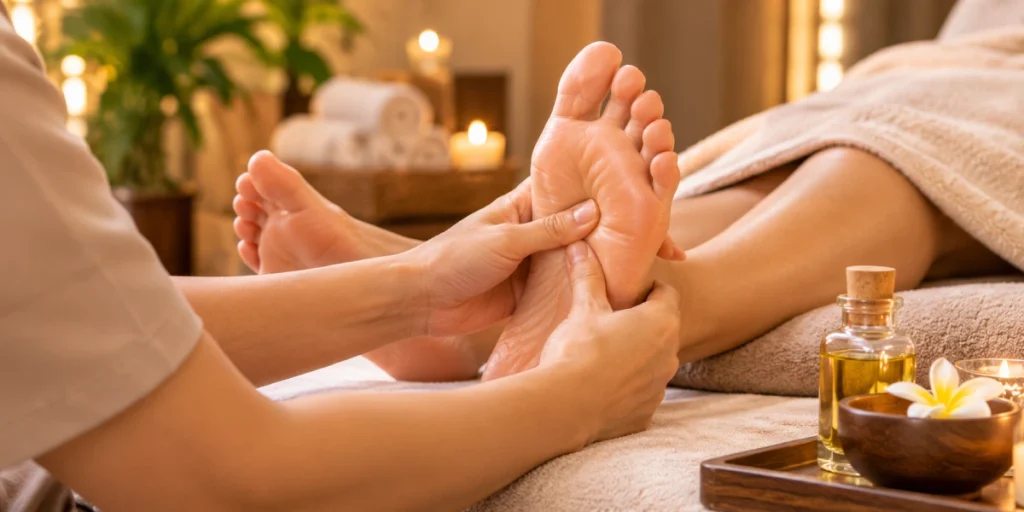
For the bottom of foot massage, place both hands on their foot. Use your thumbs to glide gently over the sole of their foot. Go slowly and in small sections, rather than pressing hard into one spot. Ask them to tell you if they start to feel any discomfort with the pressure, and reduce the pressure if they do.
Step 4: Work Gently Along the Arch
A foot arch massage is usually one of the most relaxing parts. Using your thumbs or fingertips, gently massage in small circles along the inside of their arch, from their heel to the ball of their foot. Use even pressure and don’t dig in. If one area is causing them pain, move away from this area.
Step 5: Massage Around the Heel
Cup your hand around their heel. Use your fingers to gently glide over the softer areas on the side and back of their heel. As the heel is firm, you won’t need to press hard. If they feel any sharp pain, stop massaging this area instead of trying to work through it.
Step 6: Massage the Ball of the Foot
Move on to the ball of their foot. This is the pad just below their toes. Use your thumbs to gently circle, or gently knead between your thumb and fingers. Depending on what they say, adjust the pressure. Some people will enjoy a bit more pressure here, and others may find it ticklish.
Step 7: Massage the Toes and Top of the Foot
Gently hold each toe and glide from the base of the toe to the tip. Don’t pull, twist, or bend their toes or joints harshly. Glide your fingers over the top of their foot. This area is less padded, so it will need to be handled with more care.
Step 8: Finish With Gentle Strokes
Finish with the same long strokes as you did at the beginning. Slowly ease off the pressure. Ask how they’re feeling. If they mention any pain, tingling, numbness, or anything out of the ordinary, stop the massage. Wrap their foot in the towel and move on to the other foot.
What Are the Best Foot Massage Techniques?
There isn’t really a list of the best foot massage techniques, as everyone’s feet are different and everyone likes different things. Most relaxation routines will include some of the three simple foot massage methods below. Simply combine these techniques for foot massage as you like, based on what feels good to them.
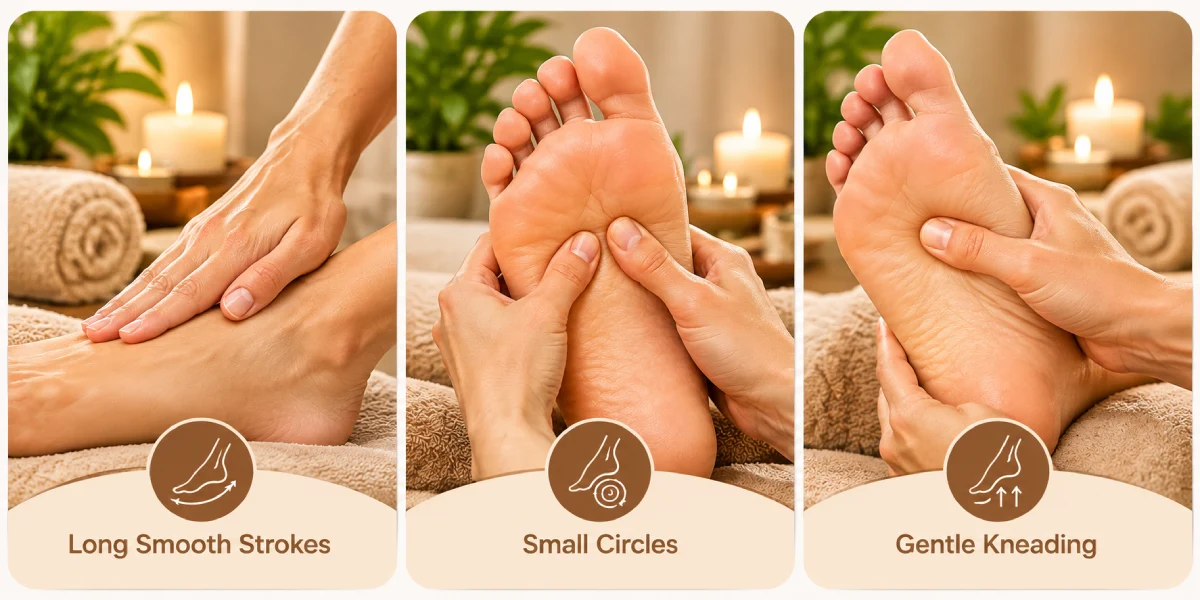
- Long smooth strokes
Use long, smooth strokes with your palms or fingers. This is a good technique to start and finish with. It is also good to use on the top of their foot, as too much pressure there can cause discomfort.
- Small circles
Use your thumbs or fingertips to make small circles. This allows you to focus on a particular area, such as the arch or ball of their foot. Go slowly and stay in control.
- Gentle kneading
Gently squeeze and release the softer areas between your thumb and fingers. This can be nice on the sole and ball of their foot. Never pinch.
In the end, good foot massage techniques are the ones that make them feel comfortable. No single technique is right for every person or every condition.
How Much Pressure Should You Use?
Pressure should be comfortable. Don’t assume more pressure is better. Start gently and build up slowly. Throughout the massage, ask how they’re feeling. Some areas will be ticklish, and some will be sensitive, so you’ll probably need to adjust.
Some people should see a doctor before having a foot massage. According to the NIDDK, if someone has lost sensation in their feet, they may not feel a blister or a pebble in their sock. This means they may not feel if you’re putting too much pressure on. If they have any foot issues relating to diabetes, neuropathy, circulation issues, or recent injuries, they should talk to their doctor first.
Common Foot Massage Mistakes to Avoid
In addition to knowing how to give a good foot massage, it’s also important to know what not to do. Even a gentle massage can cause issues if you rush it. Below are some simple foot massage guidelines and foot massage tips that you can follow to avoid the most common mistakes.
- Too much pressure
Too much pressure can cause soreness and bruising. Keep the pressure comfortable.
- Not listening to feedback
If they flinch, tense up, or say anything is hurting, reduce the pressure. Pain isn’t a good sign.
- Massaging over irritated areas
Don’t massage over any cuts, blisters, rashes, or signs of infection.
- Twisting or pulling their toes
This can cause strain on their small joints. Be gentle.
Severe side effects are rare, according to the NCCIH, but some cases have involved vigorous massages. If they continue to have pain in their feet or have an ongoing issue such as heel pain, they should see a doctor.
How Long Should a Foot Massage Last?
There is no set time. Aim for around 5 to 10 minutes per foot for a simple relaxation routine. This will give you enough time to go through each step without rushing, which keeps it relaxing for both of you.
Depending on how they’re feeling, you may want to keep it shorter. If they feel uncomfortable or aren’t enjoying it, there’s no need to keep going. A shorter massage can still feel relaxing. This is not a medical rule but simply an example to help you plan a comfortable routine.
Foot Massage at Home vs. a Professional Session
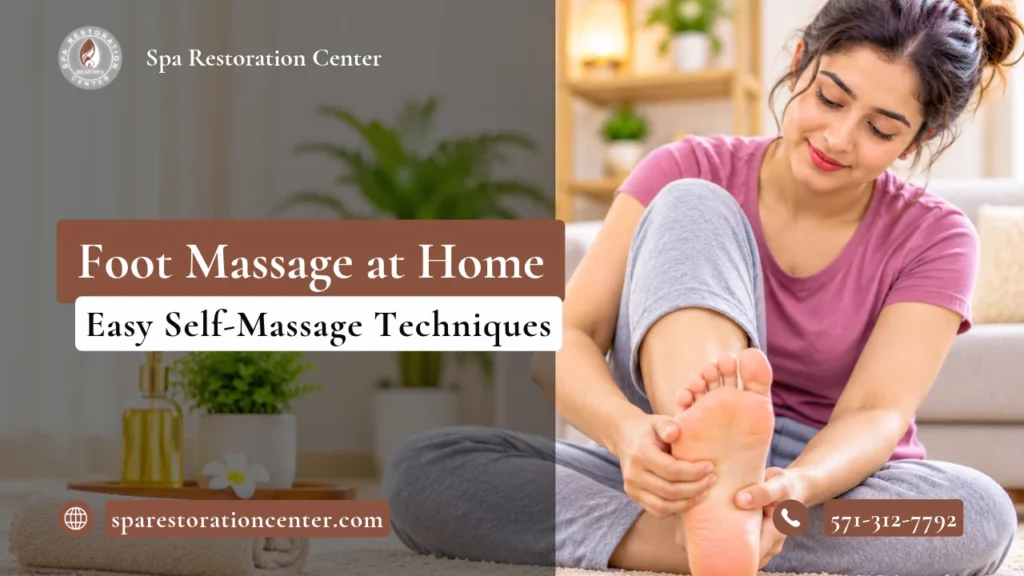
Getting a foot massage at home is convenient. You can take your time, and it’s easy to learn how to give your partner a foot massage, which is a nice way to help them unwind after a long day. If you’d prefer to learn how to massage your own foot, the basic movements are similar. It will take a bit of practice to reach the sole and heel comfortably.
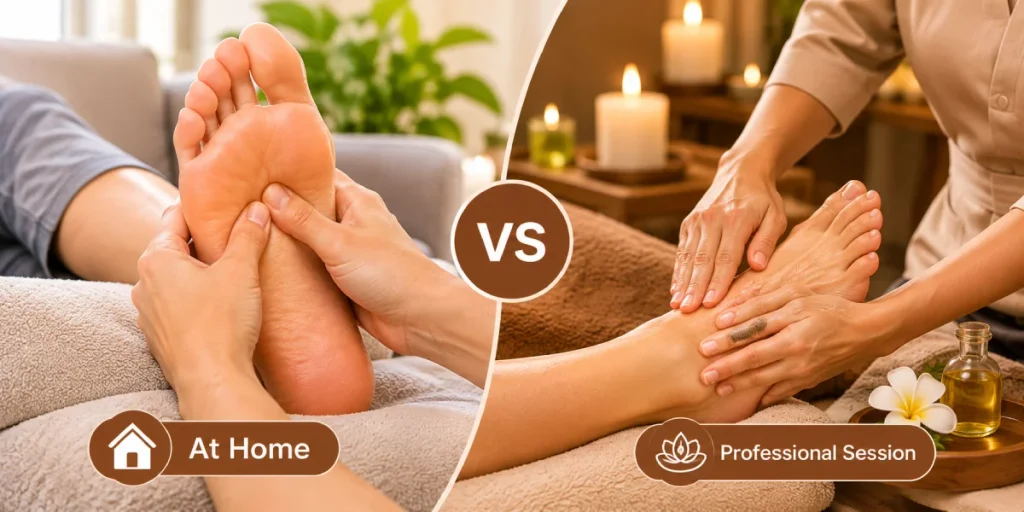
If you decide to have a professional massage, we’ll do all the hard work! Our massage services at Spa Restoration Center include foot massage for tired, sore feet. Neither option is right for everyone, so it comes down to what you prefer.
Final Thoughts on Foot Massage Techniques
There isn’t any secret to how to give the best foot massage. Using simple foot massage techniques can make a big difference. Start gently and go slowly. Work your way around their sole, arch, heel, ball, and toes. Always ask how they’re feeling. Avoid any areas with wounds or pain. If they have reduced sensation in their feet, they should see a doctor before having a massage. If you’d prefer to leave it to a professional, our team is happy to help you relax at Spa Restoration Center in Arlington.
Frequently Asked Questions
If you’re still wondering how do you give a foot massage without pressing too hard, you’re not alone! Below are some quick answers to the most common questions.
How Do You Give a Good Foot Massage?
Start gently, take your time to go through each section, and ask how they’re feeling. Comfort is key, and it matters more than how firmly you press.
Should You Use Lotion for a Foot Massage?
This is optional. Using a lotion or oil will reduce friction, making your strokes smoother. If they have sensitive skin, use an unscented product.
Can You Give a Foot Massage if Someone’s Feet Hurt?
A gentle foot massage for tired feet can feel nice, but if they have any sharp, ongoing, or unexplained pain, they should see their doctor first. Don’t massage through the pain.
Is a Foot Massage the Same as Reflexology?
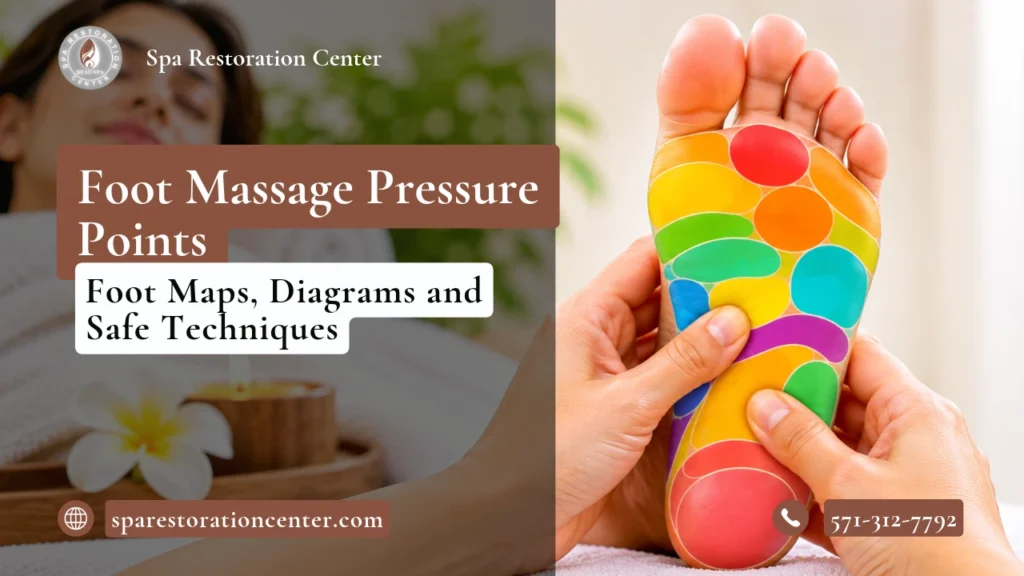
No. A general foot massage will be focused on relaxing the muscles and soft tissues. Reflexology is a different practice that uses specific points on the feet based on its own system.
How Do You Massage Your Own Foot?
Sit with one foot on your opposite knee. Use your thumbs to gently stroke over the sole and arch. Keep the pressure comfortable, just like you would for someone else.
Book a session at Spa Restoration Center in Arlington for a relaxing foot massage.