Clock-out time. Laptop shut. And your shoulders? Somewhere up around your earlobes. When did that happen? Stress and tight muscles tend to show up together, though they aren’t the whole story. Hours of sitting, a phone in your hand, and the same motions all day add to it too.
Will a shoulder and neck massage for stress relief clear your inbox? Sadly no. You do get a little quiet, and somebody else gets to dig into the knots. We’ll cover how stress and tight muscles connect, which styles fit, what the table part is like, and a home version you can try on a partner.
Can Stress Cause Neck and Shoulder Tension?
It can play a part. “When the body is stressed, muscles tense up,” the American Psychological Association (APA) says. Kind of like flinching before a hit that never comes. Bad week ends, shoulders come back down. Mostly. If stress-related neck tension drags on for weeks, though, those muscles can stay locked. The APA connects that kind of ongoing tightness to tension-type headaches, too.
Ever caught yourself with shoulder tension from stress? Yeah, us too. A deadline lands and up go the shoulders. You hang up after an awkward phone call and notice your jaw’s been locked the whole time.

Stress isn’t behind every sore neck, though. Long stretches at a desk, looking down at a screen, carrying a heavy bag on one side, or a lumpy pillow can all cause the same feeling. Usually it’s a mix. And if pain came on after an injury, that’s a different conversation altogether.
How Can Shoulder and Neck Massage Help With Stress Relief?
Mostly by giving you a break. Nobody’s emailing you on the massage table. Your phone’s out of reach. Your one job is to lie there. The APA notes that relaxation techniques can ease muscle tension. That’s why a neck and shoulder massage for stress fits. Massage for stress and muscle tension boils down to permission to stop for a while.
Some people notice their shoulders sit lower when they get up. Others just feel calmer, a bit sleepy even. That tight band across the upper back fades into the background for a while.
Just keep expectations honest. Anxiety and chronic stress need more than a massage, and the “flushing toxins” idea is a myth. It’s a pleasant, temporary reset. If stress is flattening you most days, a massage alone won’t cover it. Talk to a doctor or counselor too.
What Type of Massage Is Best for Stress-Related Neck and Shoulder Tension?
Stressed muscles want kindness, not a beating. No style wins for everybody. We’ll walk through the ones that usually suit stress, then quickly compare relaxation and deep tissue. Your therapist can help you pick on the day.
Gentle Neck and Shoulder Massage
Plain and simple can be lovely. Sometimes a shoulder massage for stress relief is nothing fancy. Slow hands on the shoulders, along the shoulder blades, up the back of the neck. If it doesn’t feel good, it isn’t working. Too much here, not enough there? Say so, and your therapist changes it. No gritting your teeth required.
Swedish Massage
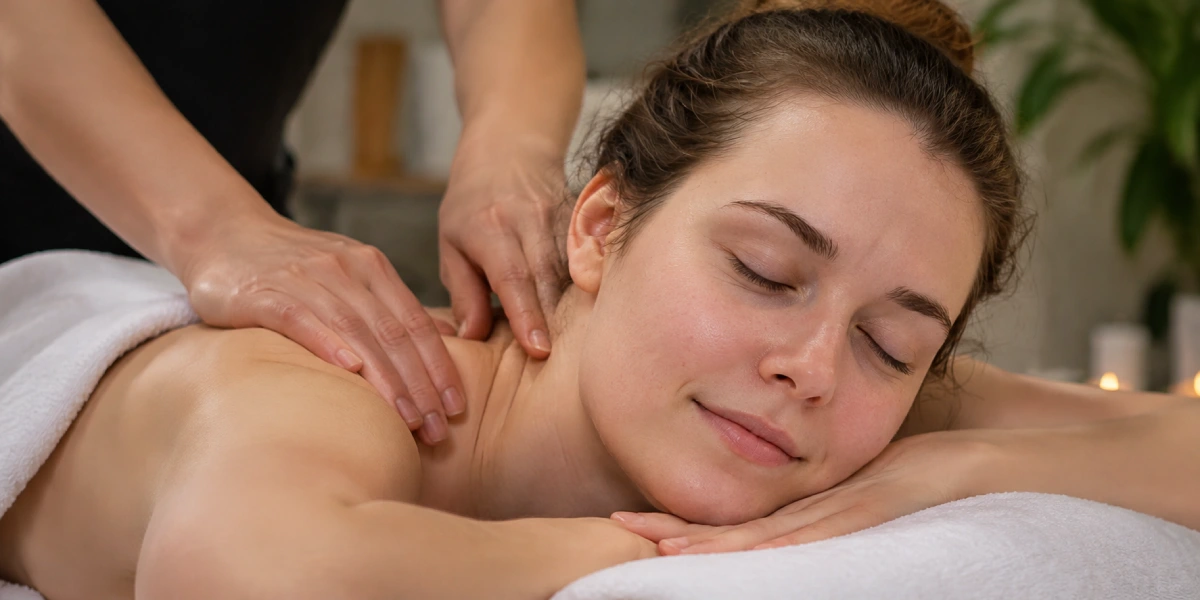
This is the go-to for relaxation. Expect long, sweeping strokes (therapists call them effleurage) and some kneading. Healthdirect Australia says lots of people book it just to relax. The steady rhythm helps. Same stroke, again and again. Somewhere around minute five, your to-do list goes fuzzy.

Relaxing Neck and Shoulder Massage
Your relaxing neck and shoulder massage won’t look like your coworker’s. It should match you. Light on the neck but firmer on the shoulders? Fine. Your left side’s worse, or the base of your skull aches? Tell your therapist before you start. Same goes for any spot you’d like them to skip.
Relaxation Massage vs. Deep Tissue Massage
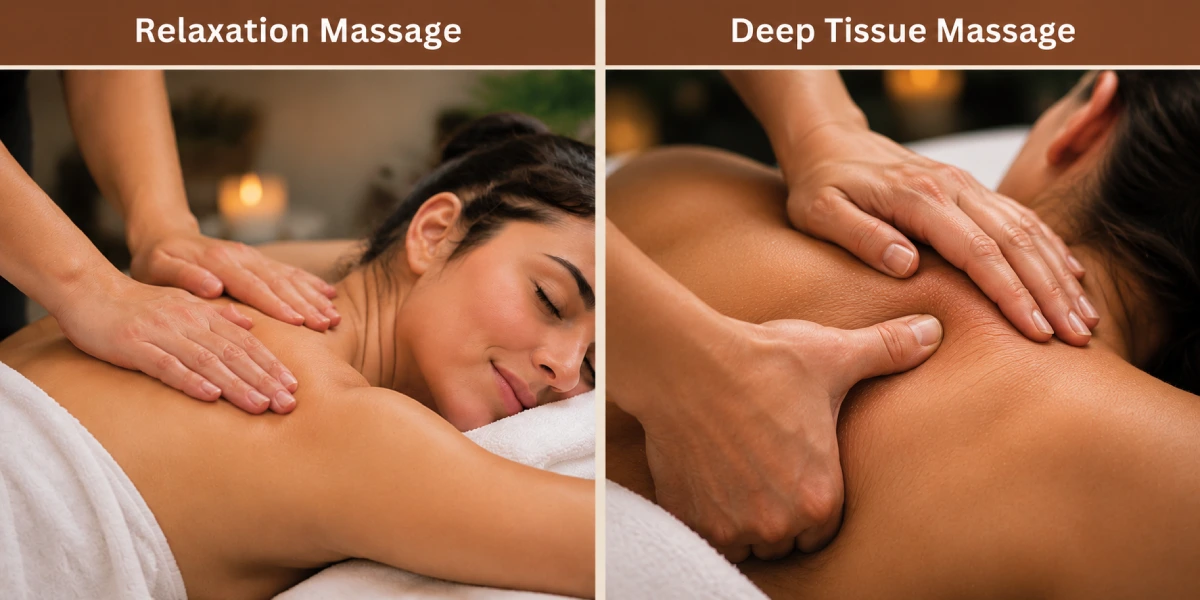
For massage for neck tension and stress, softer usually does the trick. A relaxation massage flows, with medium pressure. Deep tissue goes slower and presses harder into deeper muscle, and it can be pretty intense. Harder doesn’t mean better here. Bracing against firm pressure kind of defeats the purpose. Some people still prefer it, and that’s fine.
If you’re dealing with stubborn spots, our article on massage therapy for muscle knots covers those at a high level. For broader options that aren’t about stress, see massage for neck and shoulder pain relief.
What to Expect During a Shoulder and Neck Massage for Stress Relief
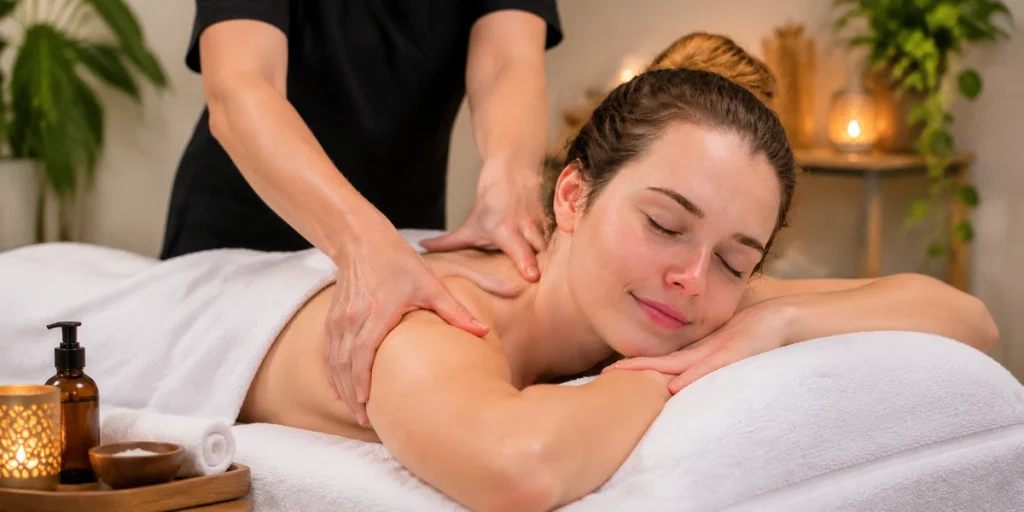
First time? Nothing about it is complicated. A session for stress usually goes something like this, though every therapist works a little differently. These are the main things to expect from start to finish:
- A quick chat first
- Pressure and comfort check
- Getting into position
- Massage of the agreed areas
- Talking during the session
- Changes whenever you need them
A quick chat first. Where’s it tight? Any injuries or health stuff? Your therapist will want to know both.
Pressure and comfort check. You’ll talk about light, medium, or firm pressure. Not sure? Start medium.
Getting into position. Most of the time, you’ll be face down on the table. Wiggle around till it feels right. Need a pillow? Just ask.
Massage of the agreed areas. Your therapist works on the neck, shoulders, and upper back, or whatever you agreed on.
Talking during the session. Quiet is totally fine. Too hard, too soft? Say it.
Changes whenever you need them. One word, “lighter,” and it gets lighter. Mid-stroke is fine. A good therapist will be glad you did.
How to Give a Gentle Neck and Shoulder Massage at Home
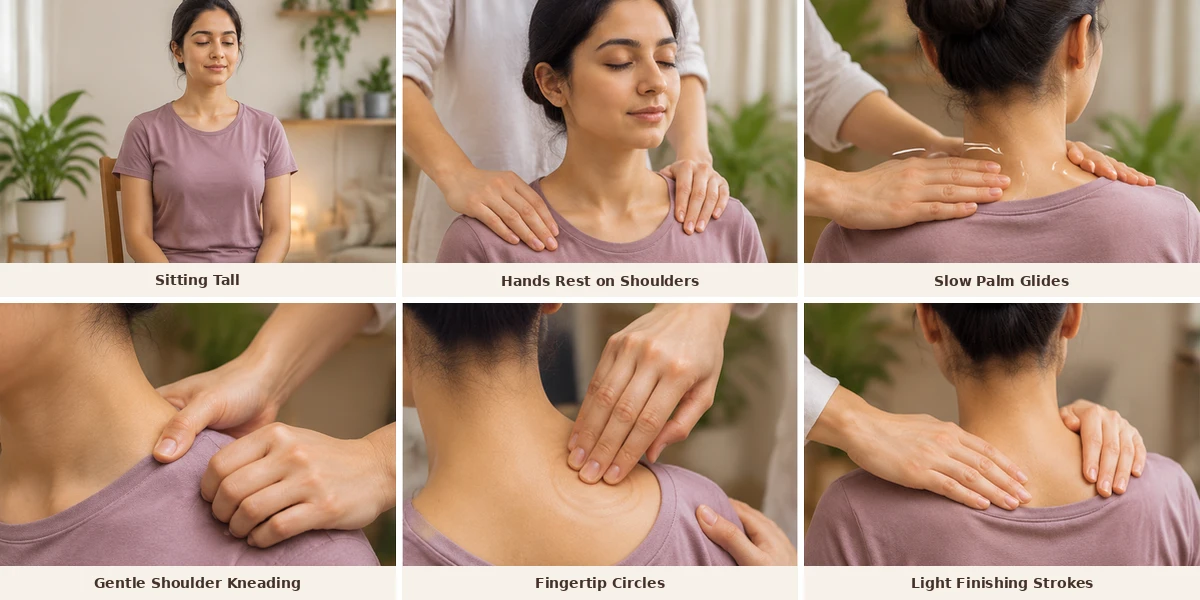
Got a partner who’s wound tight after work? Or maybe it’s you. Home rubs are fine if you go easy. Shoulders and upper back only. Medium pressure at most. And ask how it feels, a lot. Here’s a simple routine:
- Pop them on a kitchen chair, sitting tall, arms hanging.
- Lay your hands on their shoulders and just leave them there a moment. Nobody likes a surprise grab.
- Slide your palms from where the neck meets the back, out toward the shoulder points. Slowly.
- Pinch up that thick ridge on top of each shoulder, thumb in back, fingers in front, and roll it a bit.
- Do little fingertip circles along the top of each shoulder blade, like you’re rubbing out a smudge.
- Finish with a couple of barely-there sweeps. Then step away and let them enjoy it.
The front and sides of the neck are off-limits. So is the spine itself. Sharp pain under your thumb? Move on. Numbness, tingling, or dizziness means you stop, full stop. Massaging your own shoulders? Same idea, just slower. Reach over and knead the top of your opposite shoulder.
Feel a tender spot that refers ache elsewhere? That may be a trigger point. Our guide to trigger points in the neck goes through those in detail.
How Long Should a Neck and Shoulder Massage Last?
That depends on what you book and how much of you needs work. Looking at our Arlington booking menu, the Back Massage and the head massage are 30 minutes each. Body Restoration Massage? 60 or 90. There’s a Neck and Shoulder Massage on our list too. Give us a call to check its current length. A shorter session can work well for a quick reset. A longer one gives you more time to settle in before it’s over.
How Often Should You Get a Neck and Shoulder Massage for Stress?
No magic number here. Busy month or calm one? Tight budget? How’d your body feel last time? Ask your therapist, too. Some people book during busy seasons at work. Plenty of others keep a standing appointment. Try one. Count how many days you feel looser. That’s your clue.
When Should You Avoid Neck Massage?
Regular tight-shoulder days? Book away. Some symptoms need a doctor first. Skip the massage and get checked if you have:
- A recent significant injury
- Pain that’s bad or getting worse
- Pins and needles or numb patches
- Weakness in an arm or hand
- Dizziness, vision changes or other unusual symptoms
Hoping massage will help a health problem or an injury? Healthdirect says to run it by your doctor first. And if your neck feels like more than stress, read our article on massage for cervical pain for the safety side of things.
Frequently Asked Questions
Got a question we didn’t cover? First massages come with plenty of them. So here’s the short version of what people ask.
Can Stress Cause Neck and Shoulder Tension?
It can add to it. The APA says muscles tighten up under stress. Your desk, your phone and repeating the same moves can do it too, so stress may be just one piece.
Can Neck and Shoulder Massage Help With Stress?
It can calm you down and loosen things for a while. Real anxiety? That needs proper help. But as a breather, it’s lovely.
How Long Should a Neck and Shoulder Massage Last?
Thirty minutes works for a focused session. Want everything worked on? Book 60 or 90. Your call.
How Often Should I Get a Neck and Shoulder Massage for Stress?
No set rule. If you feel good for two weeks, maybe that’s your gap. Money matters too.
Is a Relaxing Massage Better Than Deep Tissue for Stress?
For lots of people, yes. Lighter pressure is easier to relax into. Love firm pressure? Then sure, try deep tissue.
Should Neck Massage Hurt?
No. A bit tender is okay. Sharp pain? Say something right then.
What Type of Massage Is Best for Stress in the Neck and Shoulders?
Start gentle, or try Swedish. Pick the one where you nearly doze off.
Can I Massage My Neck and Shoulders at Home for Stress?
Yes, gently. Stick to the tops of your shoulders. Skip the throat area and the spine. Hurts or goes numb? Quit.
Shoulders up by your ears again? Come see us at Spa Restoration Center in Arlington, VA.
Final Thoughts
Stress has a favorite seat. Right between your shoulder blades. A massage can coax it out for a while, at least until the next deadline. A shoulder and neck massage for stress relief should feel nice, start to finish. Go gentle, and speak up if anything feels off. Trying it at home?
Shoulders only, and go easy. Just don’t massage your way past numbness, weakness or pain from an injury. That’s a doctor visit. Shoulders ready to come down? Our massage services in Arlington page is a good place to start.