Foot massage is a hands-on rub that focuses on your feet. Your feet carry you all day, so they deserve some care. Many people add a foot rub to their wellness routine to unwind after work, calm their mind, and get ready for bed.
The benefits of foot massage are mostly about comfort. People turn to it for stress, sleep, circulation, tired feet, a heavy or puffy feeling, and daily foot comfort.
This guide covers the main foot massage benefits in simple terms. You will read about bedtime routines, circulation, and reflexology. You will learn how to massage your feet at home and how often to do it. You will see how oil fits in, and how a foot spa and a foot massager differ from a hands-on session.
What Are the Benefits of Foot Massage?
People often ask what the benefits are. The answer is a mix of calm, comfort, and care-also common themes in the benefits of therapeutic massage. Here are the main ones. Results differ for each person, and a foot rub is not a replacement for health care.
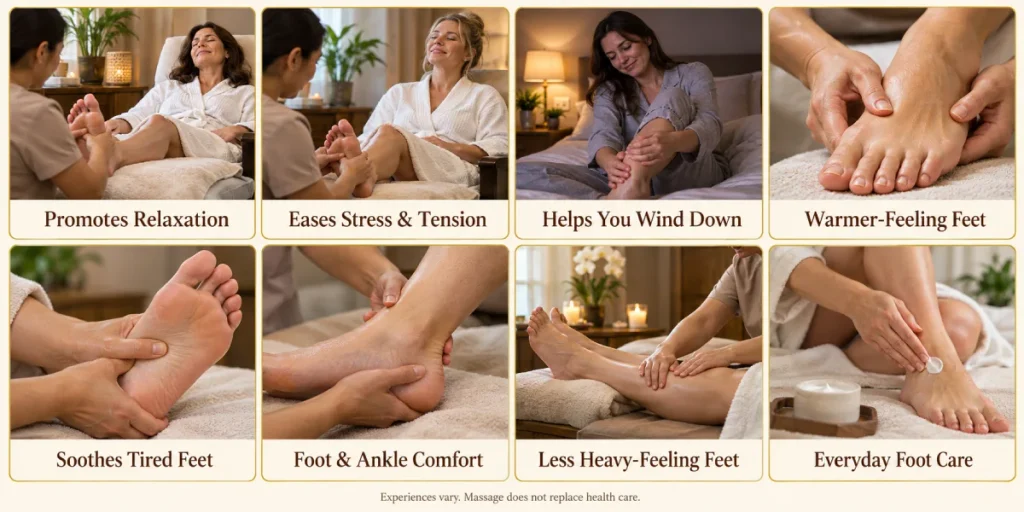
1. Promotes Relaxation and a Sense of Well-Being
Relaxation comes first on the list. Slow, steady touch tells your body it can slow down. Many people feel their shoulders drop and their breathing deepen within a few minutes. That is why a foot massage for relaxation is a favorite spa choice.
Your feet work hard all day. When someone finally rubs them, the relief is easy to notice. For most people, the health benefits of foot massage come down to calm, comfort, and a lighter mood.
2. Helps Relieve Stress and Tension
A foot massage for stress relief is a simple way to end a long day. Stress often shows up as tight shoulders, a clenched jaw, and a busy mind. A slow foot rub gives your body a reason to let go of that tight feeling. For attention to the upper body, a neck and shoulder massage is another option.
Think of it as a mini break. You sit down, put the phone away, and focus on touch. The calm comes from that pause as much as from the rub. Ten minutes can be enough.
3. Supports Better Sleep
Many people say it helps them wind down. A foot massage before bed is a calm habit that tells your body the day is over. Soft lights, warm hands, and slow strokes can make bedtime easier.
That is why people ask why foot massage makes you sleepy. Calm touch can slow your breathing, and a slow body tends to feel drowsy. A foot rub is not a sleep fix, but it can be a kind part of a night routine. We cover bedtime steps in a later section.
4. Supports Blood Circulation
Rubbing and pressing the feet moves the skin and muscles, and many people notice a warm glow afterward. That warm feeling is why people link foot massage for circulation with improved blood flow.
It may leave your feet feeling warmer and less stiff. People often pair a rub with walking and stretching. A foot rub is a wellness habit, not a fix for circulation problems.
5. Helps Soothe Tired and Aching Feet
Standing, walking, and tight shoes leave feet worn out. A foot massage for tired feet is a classic fix at the end of a shift. It works the sole, arch, and heel with firm but kind pressure.
The sole takes the most weight, so it often feels the most tired. Do foot massages help sore feet? Many people say a rub takes the edge off everyday soreness. If pain is sharp, strong, or does not go away, ask a healthcare professional.
6. Supports Foot and Ankle Comfort
Your feet do not work alone. Ankles and lower legs share the load. That is why ankle massage benefits and heel massage benefits often come up together.
A foot and ankle massage can loosen tight spots and make each step feel lighter. Add the calves, and it becomes a foot and leg massage. It leaves you feeling loose from the knee down, which suits people who stand, walk, or sit for long hours.
7. Helps With the Feeling of Swollen or Heavy Feet
Feet can feel puffy or heavy after a long day, a flight, or hot weather. Does foot massage help with swelling? Many people say light, upward strokes leave swollen ankles and tired feet feeling less heavy. Results differ, and there is no sure answer.
Some people try a foot massager or reflexology for swollen feet as a soothing way to end the day. Treat it as a comfort habit. Swelling that shows up fast, appears on one side, hurts, or does not go away should be checked by a healthcare professional.
8. Supports General Foot Wellness
A weekly rub helps you spot dry skin, tight spots, or tender areas early. Healthy habits include clean feet, soft pressure, and a little lotion.
The gains add up over a few weeks. When you care for your feet, you tend to keep caring for them. That steady habit is a big part of foot health.
Foot Massage Before Bed: Can It Support Better Sleep?
Many people say yes. A calm foot rub makes bedtime feel easier. It is not a fix for sleep trouble, but it fits well into a night routine.
People massage their feet before bed for a few reasons. Feet are tired at the end of the day. Slow touch tells your mind to slow down. Warm lotion and quiet light turn a plain evening into a small spa moment.
The benefits of massaging feet before bed are simple: a calmer mind, looser feet, and an easier shift into rest. It works best when it becomes a habit. Here is an easy bedtime routine:
- Dim the lights and sit on your bed or a chair.
- Warm a little lotion between your hands.
- Massage each foot for five to ten minutes with slow strokes.
- Add ankle circles to finish. This loosens the whole area.
- Wipe your hands, slip on clean socks, and head to bed.
Five to ten minutes per foot is plenty. If you want to massage feet before sleep, keep your touch light and your breathing slow. A hard, fast rub wakes you up instead of calming you.
Foot Massage and Circulation
Foot massage and circulation is a topic people search again and again. Your feet are the farthest point from your heart, so they often feel cold or stiff. Gentle rubbing may leave them warmer and looser.
Soft movements work best. Use long strokes up toward the ankle, light kneading in the arch, and slow ankle circles. Add the calves for a full foot and lower-leg massage. A few minutes a day can fit into a simple wellness routine.
A rub is only one piece. If you want to know how to increase blood circulation in feet, try these habits too:
- Walk often.
- Stretch your calves and toes.
- Change positions if you sit for long hours.
- Keep your feet warm.
Foot massagers can give a similar warm, kneading feel. Treat any boost as a comfort, not a medical result.
Foot Massage for Stress and Relaxation
Part of the appeal is simple. You stop moving, someone cares for you, and your feet finally get attention. After a long day, that pause feels like a treat.
A relaxation-focused foot rub uses slow, even pressure and no rush. A gentle sole massage with your thumbs can feel like smoothing out a crumpled sheet. Many people feel their minds quiet as their feet soften.
This routine works well after work, after a workout, or on a rough day. Keep the room calm. Play soft music or sit in silence. If you do it at night, the same rub carries right into bedtime relaxation.
What Is Foot Reflexology?
Foot reflexology is a type of foot rub that uses pressure on set spots of the feet. People who practice it believe each spot links to a part of the body. Science has not proven that link, so reflexology is best seen as a relaxation practice.
Foot Massage vs. Foot Reflexology
A general foot massage kneads and strokes the whole foot to ease tension and tired muscles. Reflexology uses steady pressure on set zones, often guided by a chart. Pressure-point massage sits between the two. It uses thumb pressure on certain spots but does not follow a full chart.
Most reflexology benefits people describe are calm and stress relief. Reflexology vs massage comes down to style. Massage is broad and flowing. Reflexology is focused and steady.
Common Foot Reflexology Pressure Points
A reflexology foot chart is a map of zones a therapist works on. You do not need a chart to enjoy the practice. Here are the areas people press most:
- Toes: small, slow circles on each toe.
- Ball of the foot: firm thumb strokes across the pad.
- Arch: steady pressure along the curve of the foot.
- Heel: a firm palm rub and small circles.
These are the zones you will see in most foot massage pressure points guides. Keep the pressure firm but kind. Pain is a sign to ease off.
Benefits and Limitations of Reflexology
The gains are mostly calm and comfort. People mention relaxation, stress relief, sleep-related wellness, and general foot comfort. These are real wellness gains for many.
Reflexology has limits. It cannot find or fix health problems. Claims that foot zones fix organs are not proven. When people ask about reflexology benefits and risks, the main risk is soreness from too much pressure. People who are pregnant or have health concerns should ask a healthcare professional first. Skip any area with open skin or bruises. Reflexology is a wellness practice, not a replacement for health care.
How to Massage Your Feet at Home
A simple foot massage can be an easy way to relax tired feet and add a calming moment to your daily routine. With gentle pressure and a few basic techniques, you can massage your feet at home before bed, after a long day, or whenever your feet need some extra care.
Simple Foot Massage Technique
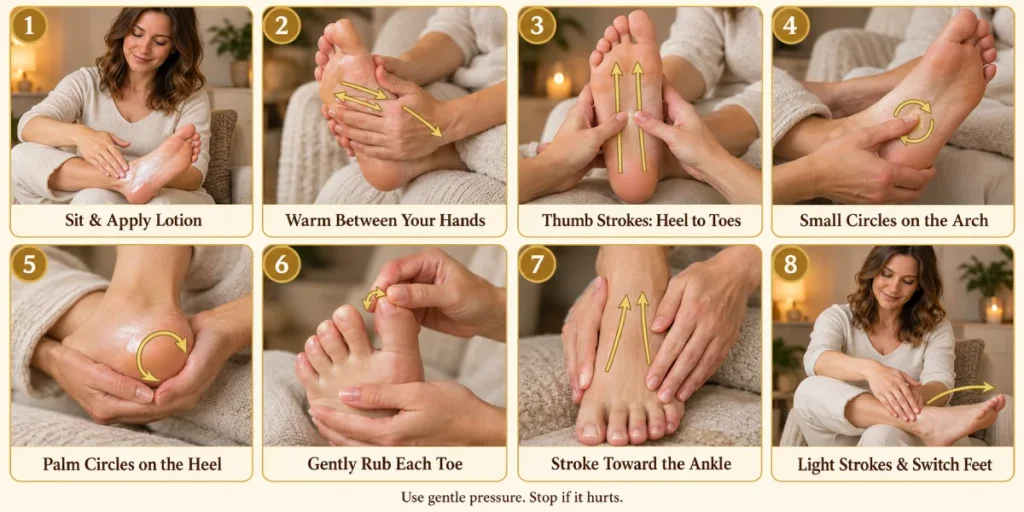
Here is how to massage feet in eight easy steps. It is a good answer to how to give yourself a foot massage, and it works just as well if you are rubbing someone else’s feet.
- Sit comfortably and rest one foot on your knee or a pillow. Add a little lotion.
- Warm the foot by rubbing it between your hands.
- Massage the sole with your thumbs. Use long strokes from the heel to the toes.
- Work across the arch with small thumb circles.
- Massage the heel with your palm and slow circles.
- Hold each toe. Rub it, then give it a soft turn.
- Stroke the top of the foot up to the ankle.
- Finish with long, light strokes. Then switch feet.
Spend about five to ten minutes per foot.
How to Massage Your Feet Before Sleep
If you want to know how to massage your feet before sleeping, keep it slow. Dim the lights, warm your lotion, and use less pressure than usual. Finish with a few ankle circles.
Pace matters most. Slow, soft strokes are the heart of relaxing foot massage techniques. Stop when your feet feel heavy and warm, then go straight to bed.
How to Massage Feet for Circulation
To massage feet for blood circulation, use long strokes that run up from the toes to the ankle. Add light kneading on the arch and slow ankle circles. Move up to the calf if you like.
It should feel warm, not sore. Add a short walk afterward to keep the glow going.
How Often Should You Get a Foot Massage?
There is no fixed rule for how often you should get a foot massage. Many people book a professional foot massage once or twice a month. If you want to explore another professional option, consider restoration massage. Between visits, a short self-massage a few times a week can help keep your feet feeling cared for.
For most people, a short, gentle foot massage every day is fine. The benefits often come from the relaxing routine itself, helping you feel calm and comfortable while giving you a chance to notice how your feet feel.
However, it is possible to overdo it. Pressing too hard or massaging for too long can leave your feet sore. At home, five to ten minutes per foot is a reasonable guide, while a professional session often lasts 30 to 60 minutes. Let your comfort guide the duration and pressure.
Ease off or take a rest day if you notice soreness the next day, bruising, sharp pain, or dizziness.
Foot Massage With Oil
Oil helps your hands glide over the skin. It cuts friction, so strokes feel smooth. It also gives you a softer touch, a nicer scent, and a longer, calmer rub.
Many people like the benefits of applying oil on feet at night. The soles feel soft, and the rub becomes part of the bedtime routine. A mild oil used in a slow, quiet session can make that routine feel even more peaceful.
Foot Massage, Foot Spa, and Foot Massagers: What’s the Difference?
Foot massage, foot spas, and foot massagers can all help you relax and care for tired feet, but they work in different ways. Understanding the differences can help you choose the option that best fits your routine, comfort, and preferences.
Foot Massage
A foot massage is a hands-on rub. A therapist or you press, stroke, and knead the feet and ankles. In a spa, you get a quiet room, trained hands, and time just for you. The benefits stay the same whether you do it at home or book a visit.
Foot Spa
A foot spa is a soaking and relaxing experience for your feet. It often starts with a warm soak, then adds a scrub, a mask, and a rub. Foot spa benefits include warmth, soft skin, and a calm break.
What does a foot spa do? It gives your feet a pause and a bit of pampering. Is foot spa good for you? For most people it is a relaxing way to care for their feet. The gains are about comfort, not health fixes.
Foot Massager
A foot massager is a machine made to rub or press your feet. Types include rollers, mats, and heated or shiatsu-style units. Foot massager benefits include ease of use at home and steady pressure with no effort.
Foot roller benefits are simple: roll the arch back and forth for a quick rub. Do foot massagers help circulation? Many give a warm kneading feel that people link with better blood flow. A machine cannot replace walking or a hands-on session, and some settings press too hard. Start on low.
Frequently Asked Questions About Foot Massage
Here are quick answers to the questions people ask most about foot massage. Each one is short, so you can find what you need fast.
Is Foot Massage Good for You?
For most people, yes. It is a calm, low-risk habit that can soothe tired feet and quiet the mind. It is a wellness habit, not a replacement for health care. Skip areas with open skin, bruises, or new swelling.
Is It Good to Massage Your Feet Every Day?
Yes, for most people, if the touch stays light and short. Five to ten minutes per foot is plenty. Take a rest day if your feet feel sore.
How Often Should You Get a Foot Massage?
Many people book a professional session once or twice a month. A short self rub a few times a week fills the gaps.
How Long Should a Foot Massage Last?
A professional session often runs 30 to 60 minutes. At home, five to ten minutes per foot works well.
Does Foot Massage Help With Circulation?
It may leave your feet feeling warmer and looser. It is not a fix for circulation problems. Walking and stretching help too.
Does Foot Massage Help You Sleep?
Many people say a slow foot rub helps them wind down. Try five to ten minutes before bed.
Does Foot Massage Help With Swelling?
For some people, light upward strokes leave feet feeling less heavy. If swelling is new, on one side, or painful, check with a healthcare professional.
Why Does Foot Massage Feel So Good?
Your feet work hard all day. Slow, warm touch gives them a break, and the pause calms your mind.
Can You Overdo a Foot Massage?
Yes. Pressing too hard or for too long can leave your feet sore. Ease off, and stop if you feel sharp pain or dizziness.
What Is the Difference Between Foot Massage and Reflexology?
A foot massage rubs and kneads the whole foot for comfort. Reflexology uses steady pressure on set zones, often guided by a chart. Both can be very relaxing.
Final Thoughts on the Benefits of Foot Massage
The benefits of foot massage come down to calm, comfort, and care. A slow foot rub can quiet stress, ease you into sleep, leave your feet warm, and make tired feet feel lighter. It is a simple habit that keeps your feet in good shape.
Pick the style that fits your goal. Choose a hands-on foot massage for deep calm, reflexology for focused pressure, a foot spa for a warm soak, or a foot massager for a quick home session.
If you want a professional touch, explore the massage services at Spa Restoration Center & Head Spa in Arlington, VA. Our massage therapists use slow, caring strokes and adjust the pressure to what feels good to you.