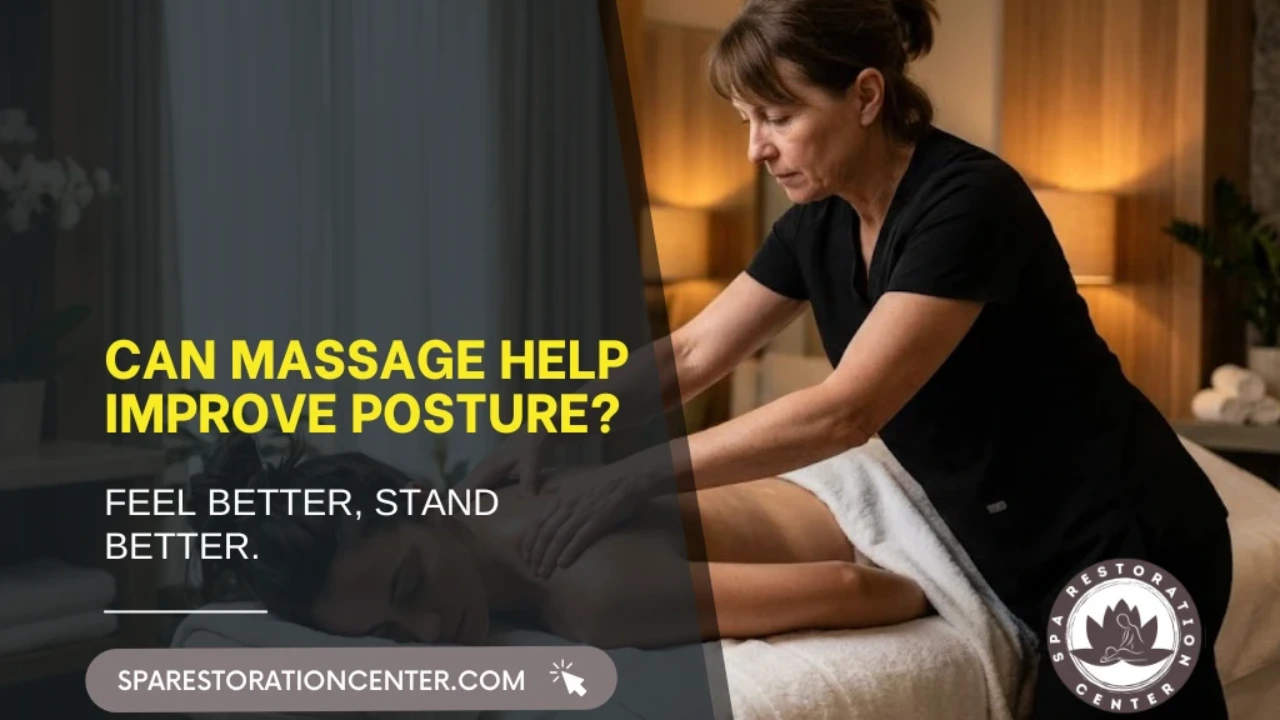
Short answer: Yes, massage is a meaningful tool for posture, but it works best as part of a wider strategy.
“Most of us have been told to “sit up straight” our whole lives. But good posture is not just about trying hard. It depends more on your muscles, and that is where massage therapy can help.”
Poor posture is very common today. Many people sit for long hours. Looking down at phones is also common. Lack of movement adds to the problem.
These habits can cause a lot of problems:
- The spine can lose its natural shape
- Chest muscles can get tight
- Aches can become constant
Just trying to sit up straight won’t fix things. The real problem is in the muscles.
Massage can help. It doesn’t replace exercise or a better desk setup, but it works directly on the muscles. Over time, posture can get better.
Why bad posture is a muscle problem, not a habit problem
Before we look at how massage can help, it’s good to understand what actually happens in your body when posture gets worse. The main problem is called muscle imbalance. Some muscles get tight and short, while the muscles on the other side get weak and stretched out.
You can see this in common posture problems like:
- Forward head posture
- Rounded shoulders
- Kyphosis (too much rounding in the upper back)
- Lower back curves
In all these cases, the same thing happens. Some muscles stay tight all the time, while others hardly work at all.
| Chronically Tight / Short | Overstretched / Weakened |
| Pectorals (chest) | Rhomboids |
| Upper trapezius | Middle & lower trapezius |
| Sternocleidomastoid (neck) | Deep cervical flexors |
| Suboccipitals (base of skull) | Erector spinae |
| Levator scapulae | Glutes |
| Hip flexors | Core stabilizers |
| Scalenes | Shoulder blade retractors |
Tight muscles can pull your skeleton out of place. Even if you try to sit or stand up straight, it might not work. Your posture won’t get better until the muscles loosen and change. Massage can help by working on those muscles directly.
How massage actually changes your posture
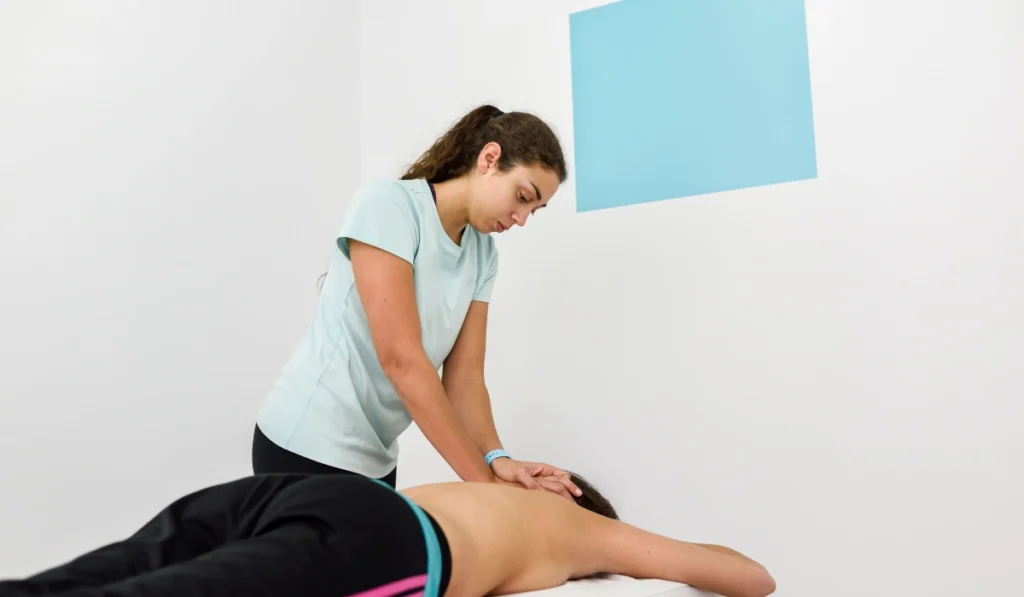
Massage helps posture in several ways. Each way targets a different part of the body that affects alignment.
It works on muscles, joints, and the nervous system. Some muscles relax, joints move better, and your brain learns to notice posture. All of this helps the body stack correctly and move without strain.
Releasing tight muscles
Massage works directly on muscles that are too tight, like:
- Chest
- Upper back
- Neck
Techniques like deep tissue or myofascial release loosen these muscles and the surrounding fascia. Once the muscles relax, the skeleton can start to line up properly.
Restoring joint movement
Tight or stiff joints make it hard to move naturally, which can worsen posture. Massage helps joints move better by reducing restrictions in the surrounding tissue. After a session, it’s easier to hold a good posture.
Improving body awareness
Massage stimulates nerves in the muscles and fascia, helping the brain know where the body is in space.
Some people don’t notice when they are slouching. Regular massage helps the body “remember” better posture naturally.
Breaking the pain-posture cycle
Pain from poor posture makes people shift into positions that feel safer. But those positions can make other areas worse.
Massage can help reduce back pain, helping the body stop compensating and move more naturally.
Reducing overall tension and stress
Stress makes the body tighten up:
- Shoulders go up
- Jaw gets tense
- Breathing becomes shallow
This can mess up posture. Massage helps the body relax and reduces stress, fixing a problem that exercise alone can’t.
What the research actually says
Studies show that massage can help posture in several ways, but it’s not a complete cure. Here’s what the research finds:
- Head, shoulder & pelvic alignment
A small study found that a series of massage sessions improved head, shoulder, and pelvic positions in healthy adults. These areas are linked to common posture problems. - Office workers
A 2021 study on office workers found that massage reduced postural imbalance. Office workers often have posture-related complaints from sitting a lot (Elements Massage summary). - Thoracic kyphosis
An 8-week study compared manual therapy and mechanical massage. Both helped reduce upper back rounding, improve extension, and strengthen back muscles. Neither method was better than the other. - Neck and shoulder pain
A 2013 review showed that massage temporarily eased neck and shoulder pain. Reducing pain is important for improving posture. - Joint mobility & flexibility
Research shows massage increases joint range of motion, making it easier to hold better posture. - Posture and psychology
Studies found that sitting upright can improve confidence and positive thinking, while slouching may reinforce negative feelings. Massage can help the body support better posture and mental state. - Tech neck & smartphone use
Research shows prolonged phone use changes posture: the head leans forward and shoulders round. Targeted massage can help counteract these effects.
What the research doesn’t yet prove
- Most studies are small or short-term.
- There isn’t clear data on how often or how long sessions should be.
- Massage helps posture, but it works best with exercise and other healthy habits.
- It is a supportive tool, not a cure, especially for long-term or structural problems.
The specific conditions massage can help
Massage can help muscles that cause posture problems. It relaxes tight muscles and makes it easier for the body to move and align correctly.
- Forward head posture: The head leans forward, putting extra weight on the neck. Massage works on tight neck muscles like the sternocleidomastoid, suboccipitals, and scalenes to help correct this.
- Kyphosis (rounded upper back): Tight chest muscles and weak upper back muscles cause too much rounding. Massage and manual therapy can reduce rounding and improve upper back movement.
- Upper crossed syndrome: Tight chest and upper back muscles cross with weak neck and mid-back muscles. This causes rounded shoulders, forward head, and neck pain. Massage relaxes the tight muscles.
- Lower crossed syndrome & lordosis: Tight hip flexors and lower back muscles can contribute to lower back pain. Massage and strengthening exercises can help relieve tension and improve mobility.
- Tech neck: Lots of phone or screen use strains the back of the neck. Massage on the posterior neck, upper traps, and SCM can reduce strain.
- Shallow breathing & chest tightness: Rounded shoulders and kyphosis compress the chest. Massage on the chest muscles and intercostals can open the chest and help breathing.
Which massage technique works best for posture?
Not all massages are the same for improving posture. The best technique depends on the muscles and patterns causing the problem.
Deep tissue massage – High relevance
Works on the deep layers of muscles and connective tissue.
Releases chronic tension in muscles like:
- Chest
- Upper back
- Lower back
Best for: constant muscle tightness and long-term posture problems
Myofascial release – High relevance
Focuses on fascia, the tissue that connects muscles. Helps with posture problems that remain even after muscles are relaxed.
Best for: widespread posture issues and structural restrictions
Neuromuscular therapy (NMT) – High relevance
Targets trigger points, tight bands of muscle that cause pain and shorten muscles.
Works well on neck muscles, including:
- Scalenes
- Sternocleidomastoid (SCM)
- Suboccipitals
Best for: trigger points, referred pain, forward head posture
Sports / remedial massage – Good fit
Uses multiple techniques, including:
- Muscle energy
- Soft tissue release
- Kneading
Can both relax tight muscles and strengthen weak ones.
Best for: active people, specific posture issues, combined approach.
Swedish / relaxation massage – Supportive
Less focused, but helps reduce overall tension and stress. Often used at the start of a session to warm up muscles.
Best for: stress-related tension and general maintenance
Craniosacral therapy – Supportive
Light touch on the skull, neck, and sacrum. Helps with head and neck tension and can calm stress that tightens muscles.
Best for: neck/head tension and stress relief
What massage cannot do, and what it needs alongside it
Massage can release tight muscles that pull the skeleton out of alignment. It cannot strengthen weak muscles needed to hold posture.
Massage opens the door, but exercise and movement habits walk through it. Releasing tight chest and upper back muscles allows better posture, but without strengthening rhomboids and deep neck muscles, old patterns return.
Program guide:
- Minimum for structural change: 8 weeks
- Sessions for chronic issues: 1–2 per week
- Maintenance once improved: every 3–4 weeks
The best approach combines:
- Massage to release tight muscles
- Exercises to strengthen weak muscles
- Ergonomic adjustments
- Movement changes to stop bad posture habits
Postural problems do not fix themselves. Combining massage, exercise, and environment changes can produce lasting improvement.
Getting the most from massage for posture
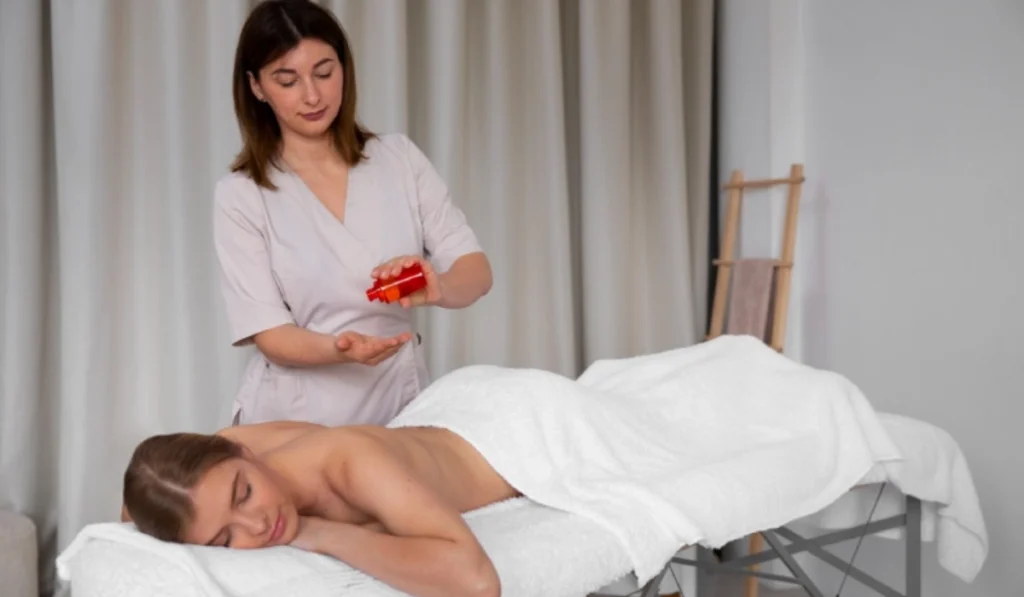
Massage can help posture, but only if done the right way and over time. Using massage with exercises, better work setup, and stress relief gives the best results. One session may feel good, but lasting change takes a plan.
Book with a remedial or sports massage therapist
Tell the therapist about your posture problems. A trained therapist will check your posture, find tight and weak muscles, and focus on them. A regular relaxation massage does not fix posture problems.
Do a multi-week program
One massage may make you feel better, but 8 weeks of regular sessions can actually change posture. Weekly or every other week works best for ongoing problems, then reduces to maintenance once improved.
Do exercises with massage
Ask for 2–3 exercises to match the massage. Common targets include upper back muscles, deep neck muscles, and hip flexors. Massage loosens tight muscles; exercises strengthen weak ones.
Fix your work or phone setup
Sitting badly or looking down at phones can undo massage work. Adjust screen height, chair, and keyboard. Small changes help keep posture better.
Think about stress
Think about stress
Tension in the neck and shoulders can make posture worse. Tell your therapist about any discomfort so they can include appropriate relaxation techniques.
Be patient and keep at it
Posture habits built over years don’t change in one or two sessions. Studies show most improvement happens after at least 8 weeks. You may feel pain relief quickly, which makes sticking with it worth it.
Frequently Asked Questions
Can massage fix bad posture permanently?
Massage can help posture last, but only with a consistent program. It must be paired with exercises and better work or movement habits. Massage alone will not keep posture changes long-term. Think of it as one part of a system, not a cure by itself.
How soon will I notice a difference?
Many people feel less pain and tension, and may feel taller, after one session if muscles are very tight. Actual structural posture change usually appears after 6–8 weeks of regular sessions combined with exercises.
Does massage help “tech neck” specifically?
Yes. Tech neck causes tight front neck muscles and weak back neck muscles. Massage that focuses on the SCM, scalenes, and suboccipitals eases these tight muscles and gives relief.
Is deep tissue massage better than relaxation massage for posture?
Yes, for posture correction. Deep tissue, myofascial release, and neuromuscular techniques target the muscles causing posture problems. Relaxation massage helps with stress and general tension but is less effective for posture.
Can massage help scoliosis or spinal deformities?
Massage can reduce pain, tension, and muscle compensation in scoliosis. It cannot change the spine’s structure. For serious spinal conditions, massage should complement medical care, not replace it.
How often should I get a massage for posture improvement?
For ongoing posture problems, weekly or every-other-week 60-minute sessions for 6–8 weeks are best. After improvement, sessions can reduce to every 3–4 weeks. Frequency depends on the problem’s severity and how your body responds.
Ready to Improve Your Posture? Book Your Session at Spa Restoration Center in Arlington
Massage can help posture when used the right way. At Spa Restoration Center in Arlington, our remedial and massage therapists focus on the tight and weak muscles that cause poor posture. Paired with simple exercises, a better desk setup, and stress relief, massage can help you stand taller, reduce aches, and feel more comfortable.
If you have a neck, rounded shoulders, or general postural tension, our team will make a plan that fits you. Lasting results usually come from a multi-week program, not just one session. Start today to improve posture and feel better in your body.