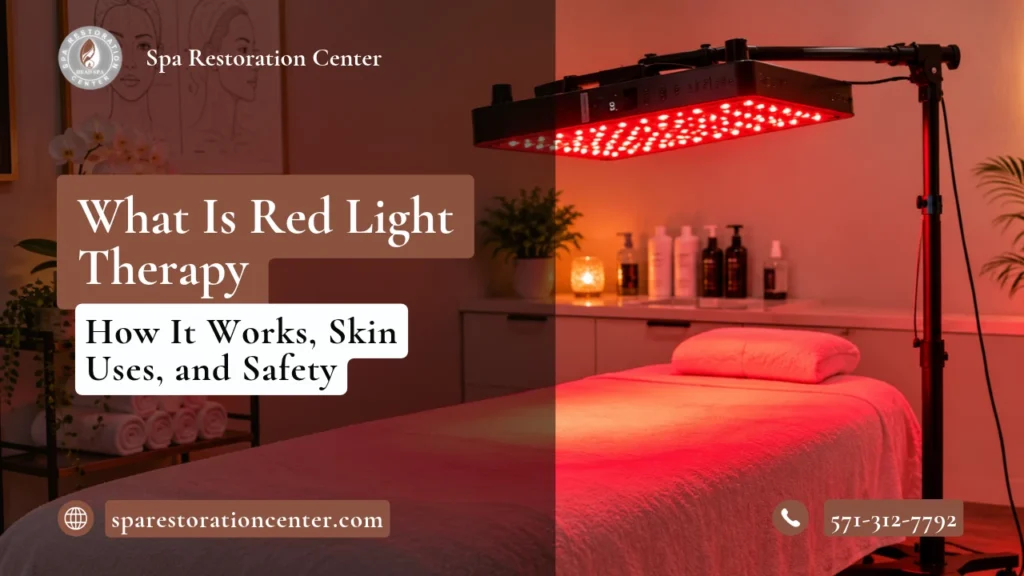
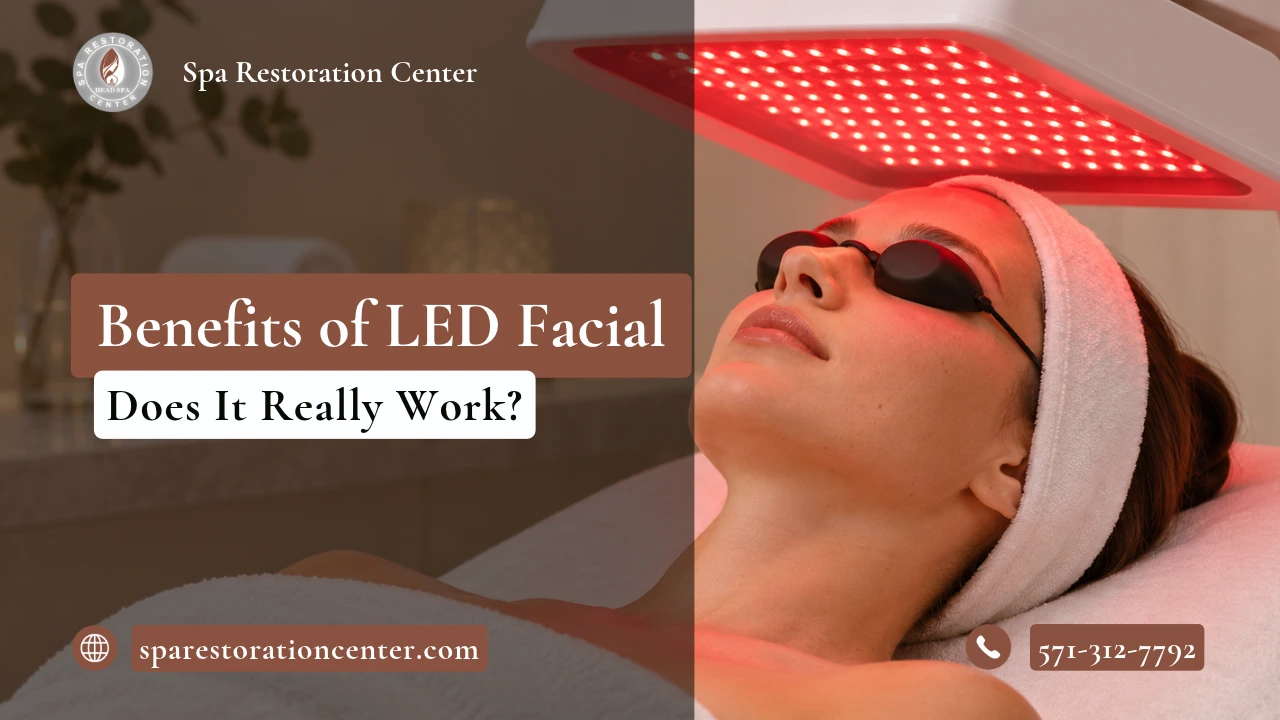
LED facials involve shining specific wavelengths of light from light-emitting diodes (LEDs) onto the skin. They may be used to improve fine lines, uneven texture, redness, and acne, and the benefits of LED facial sessions depend on which light is used and what skin concern is being targeted. Red and blue light have different penetration depths and are studied for different effects.
There is promising evidence for some uses of LED therapy. However, the strength of that evidence and the benefits can vary depending on the device, protocol, and skin concern. This article covers the potential benefits of LED facials, which light is used, what is involved in a professional treatment, what outcomes to expect, how often you should have this treatment, and safety considerations.
What Is an LED Light Therapy Facial?
An LED light therapy facial is a form of skincare treatment in which specific wavelengths of light from LEDs penetrate the skin. LED stands for “light-emitting diode,” the energy-efficient lights used in many electronic devices. As Cleveland Clinic describes it, LED light therapy is “a non-invasive treatment that enters the skin’s layers to improve the skin.” Depending on where you receive this treatment, the LED may be the sole treatment or part of a larger one.
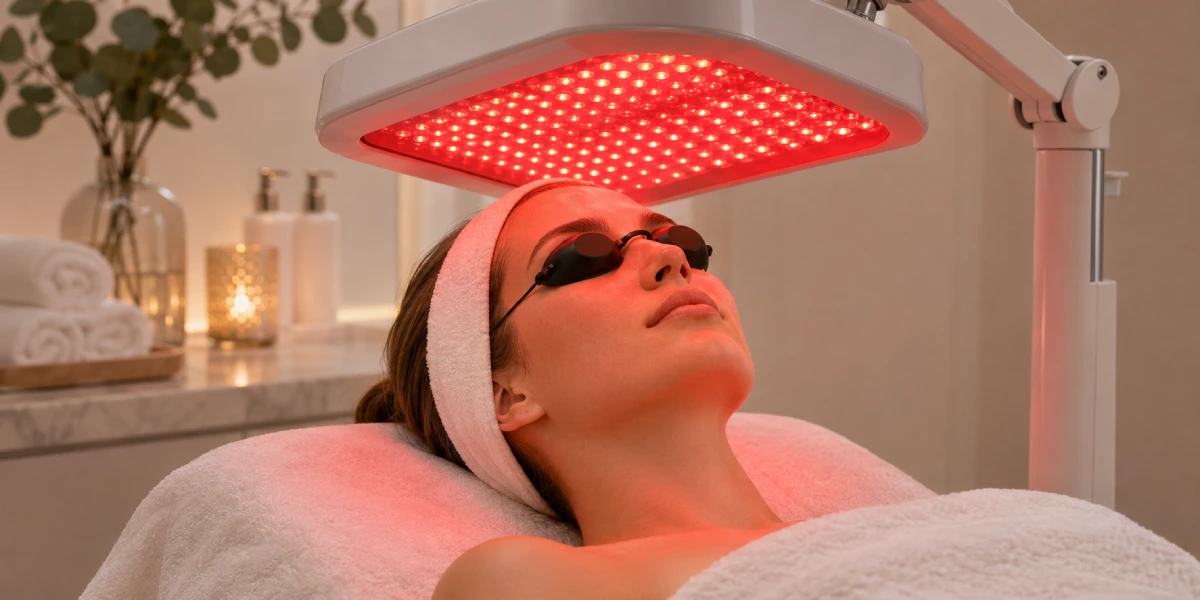
It is important to note that receiving LED treatment professionally is not the same as buying an LED mask from the drugstore. Different devices may produce different outputs, wavelengths, durations, and instructions. Red light therapy and LED light therapy are also not directly synonymous: LED refers to the light delivery, and red light therapy refers to the purpose. Depending on your skin concern and the specific treatment, different benefits may be seen.
What Are the Potential Benefits of an LED Facial?
So, what does light therapy do for your face? It depends on which light is used. When you weigh the benefits of LED facial treatment, it helps to separate what research has studied from what any one device can promise. Below is a summary of the benefits that have been studied, along with their limitations.
Red Light and the Appearance of Fine Lines
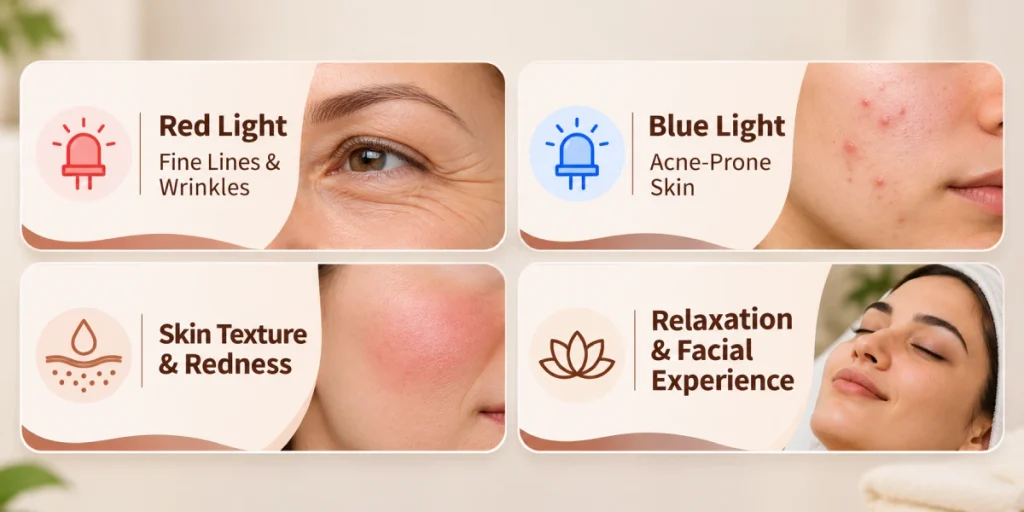
Most research on red light therapy for face benefits focuses on reducing fine lines and wrinkles, and improving skin texture. Red light is believed to reduce inflammation in the skin and stimulate increased collagen production (Harvard Health). Red LED devices may produce “subtle to noticeable results on the face” (American Academy of Dermatology).
Subtle is the key word here: there may be visible improvements in your skin, but they are not guaranteed. Evidence from one clinical trial does not necessarily mean the same results will be seen in a facial at a clinic, or from a device used at home. An LED facial will not completely eliminate wrinkles, turn back the clock, or provide a long-lasting lifting effect. For more on the evidence around lines, see our article on wrinkles.
Blue Light and Acne-Prone Skin
Blue LED light therapy may kill the bacteria in the skin that cause acne (Cleveland Clinic). However, this treatment is not suitable for all types of acne. According to the American Academy of Dermatology, “visible light is not effective against blackheads, whiteheads, acne cysts, or nodules,” and it “can only treat pimples.”
So blue light cannot be used as a cure for every acne issue, and the AAD notes these treatments rarely clear acne completely on their own. Consider it an aid alongside proper acne treatment, rather than a standalone fix.
Skin Texture, Redness, and Overall Appearance
Beyond fine lines and acne, red light has been studied to improve skin texture and redness. It has been studied to smooth skin texture (Harvard Health) and to diminish redness (American Academy of Dermatology). Benefits may vary from person to person. LED therapy may also not reduce all pigmentation, which can come from a variety of causes, so no LED facial will clear every type of discolored patch.
In fact, because people with darker skin tones are more sensitive to visible light, the AAD notes this “can lead to hyperpigmentation.” It is therefore wise to perform a patch test and seek professional advice.
Relaxation and the Professional Facial Experience
While the light itself may not produce clinical improvements, an LED facial can be very relaxing. Having the treatment in a calm environment with a qualified professional can be a pleasant experience. That said, if your skin looks fresh and glowing right afterward, that may be down to other parts of the treatment, such as cleansing and moisturizing. Feeling relaxed is a genuine benefit, but it is not proof of an improvement in the skin itself.
How Does LED Light Therapy Work on Facial Skin?
Different wavelengths of light are used in LED devices to provide different benefits. As Cleveland Clinic explains, “each color penetrates the skin at different depths.” Blue light has shallower penetration, while red light reaches deeper. This is why blue and red light cannot be used interchangeably. Device specifications and the protocol used shape how the light is delivered, so the intended benefits of a treatment depend on the device being used.
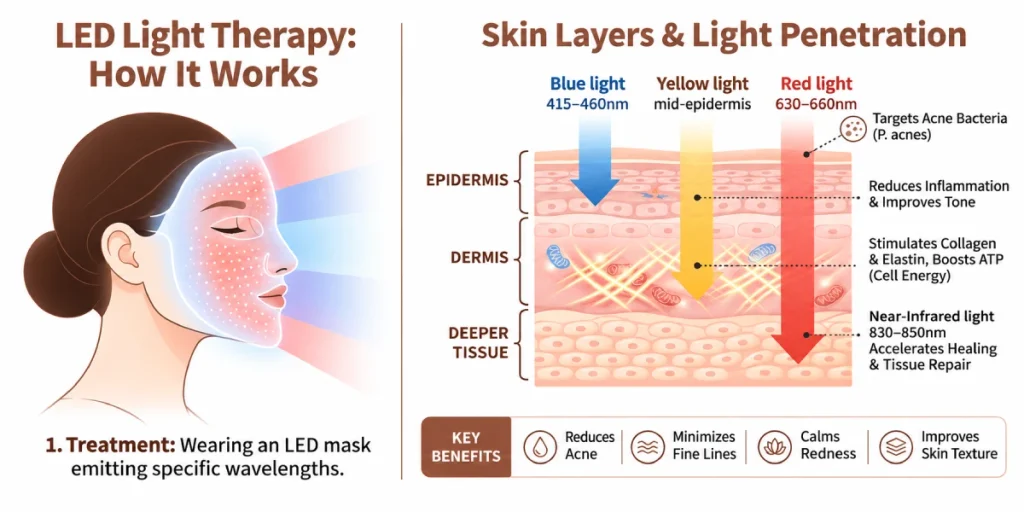
When referring to red and near-infrared light, you may see the term photobiomodulation. This is the idea that light can alter cell activity within the skin. It is only a proposed explanation for how benefits may occur, though, and researchers do not fully understand the process. For a full comparison of different light wavelengths, see our comparison article.
Red and blue are the two colors most commonly used in LED facial treatments. To tell their purposes apart easily, see the table below. For more detail on red and blue light, see our comparison article.
| Light color | Penetration depth | Commonly studied for |
|---|---|---|
| Red | Deeper in skin | Fine lines, increased collagen production, and redness |
| Blue | Shallower in skin | Acne-causing bacteria within pimples |
What Happens During a Professional LED Light Therapy Facial?
This can vary depending on the clinic and whether LED therapy is a primary or secondary treatment. In general, an LED facial follows three simple steps.
Prior to the treatment, practitioners may ask about your desired results and check for anything in your skin that could affect suitability. This may include sensitivities, photosensitive conditions, or medications that cause increased sensitivity to light.
During treatment, the LED device is used following manufacturer guidelines and protocols. After treatment, practitioners may give some basic aftercare advice. Because treatments vary, make sure you know exactly what is included in yours. It may not include cleansing, exfoliation, a mask, or massage.
What Results Can You Expect From an LED Facial?
Results from LED facials vary between individuals. As stated by the American Academy of Dermatology, “it takes time to see the results and not everyone sees them.” The results you may see depend on:
- The skin concern being treated
- The device and wavelengths used
- The length and frequency of treatment
- The total number of treatments
- Other products and treatments being used
- Your skin type, and how it reacts
It is worth noting that you may be left looking particularly glowing right after treatment, thanks to the cleansing and hydration in the session rather than the LED alone. On top of that, since study results depend on the specific device and treatment times, you may not get the same outcome from LED treatment at a different clinic.
Avoid making specific claims, such as “glowing skin after one session” or “visible results in seven days.” If you would like to know how results can build over time with LED therapy, see our article on image comparisons.
How Often Should You Get an LED Light Therapy Facial?
This depends on a few things, so how often should you get a facial is best answered by your practitioner. How frequently LED treatments should be performed depends on the device, the intention of treatment, the protocol, and the individual. Do not assume home devices and professional treatments should run at the same frequency.
The same goes for how often should you do red light therapy: follow the guidance that comes with the device, or your practitioner’s plan for your skin. For a treatment at Spa Restoration Center, simply ask your practitioner what frequency will get you the results you want.
Is LED Light Therapy Safe for Everyone?
Short sessions of LED light therapy are generally very safe. Cleveland Clinic calls it “a safe, relatively risk-free treatment,” and the American Academy of Dermatology says “the most common side effects are mild.” Still, some cases call for extra care. Consider the following:
- Mild redness or irritation may occur
- If you have a photosensitive condition such as lupus, it could trigger a flare-up, so ask a professional first
- If you are on a medication that increases photosensitivity, tell your practitioner and, if necessary, a health professional
- Follow the device’s eye protection guidance, and wear proper goggles rather than sunglasses
- If visible light has irritated your skin before, or you are concerned about pigmentation, consult a clinician first
As Cleveland Clinic mentions, little is known about the long-term safety of LED light therapy, so it is best not to overdo it. Not all light treatments are the same, either. Some medical treatments use additional ingredients or higher intensity protocols than a basic LED facial. If you experience ongoing, unusual, or worsening changes to your skin, consult someone in person.
How to Prepare for an LED Light Therapy Facial
To prepare for an LED light therapy facial, consider the following.
- Check what treatments will be provided
- Inform your practitioner if you have sensitive skin, are on medications, or have photosensitivity
- Ask if you need to prepare in a certain way for your specific device or treatment
- Follow advice on what to apply or avoid
- Make sure you are aware of eye protection measures and any other precautions
Do not change or stop any prescribed medication or any treatment in your skincare routine without consulting the relevant professionals. If you believe a medication or condition may be relevant, speak to those professionals first.
LED Light Therapy Facial vs. At-Home LED Devices
Professional LED facials may not be directly comparable to home LED devices. Differences may exist in the device used, the light intensity, the wavelengths, the instructions, the frequency, and supervision. As the American Academy of Dermatology states, “the red light that dermatologists offer is more powerful than that found in devices sold for at-home use.”
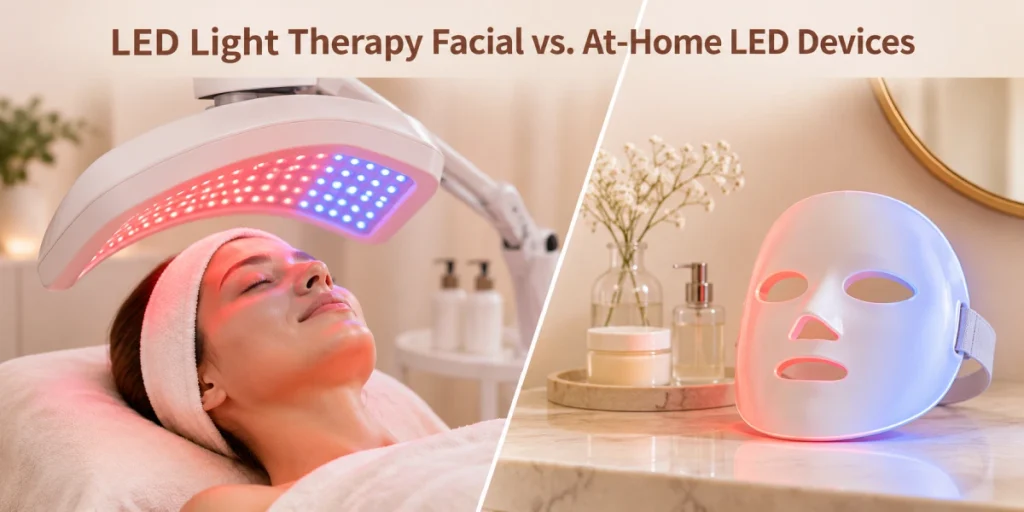
Cleveland Clinic adds that masks and handheld devices are unlikely to produce “dramatic” results. Even so, home devices can still have benefits, and not all professional devices are the same, so follow the instructions for whichever device you are using. If you are choosing a device for personal use, make sure it is FDA-cleared.
Frequently Asked Questions About LED Facial Benefits
Below are some common questions about the benefits of LED facials. Scroll up to find more information on each one.
What does red light therapy do for your face?
Red light therapy has been studied to improve fine lines, wrinkles, skin texture, and redness. Depending on the device and protocol used, results may vary. As results are not guaranteed, think of these as potential benefits.
What does LED light therapy do for your face?
It depends on the light used, as different lights bring different benefits. The benefits come down to the light wavelength, the device, your skin concern, and how often you have treatment.
Does facial light therapy work?
Promising evidence exists for certain uses. However, the strength of that evidence varies by skin concern and device, and results from one study will not guarantee the same results somewhere else.
How often should you get a facial?
This depends on the treatment, your skin concern, and your practitioner’s recommendations. There is no universal rule for how often to get one, so ask what suits your skin.
How often should you do red light therapy?
Follow the guidelines from your device or practitioner. The frequency of red light therapy for home devices and professional treatments will not be the same.
Can an LED facial remove acne scars or dark spots?
No. Active acne, post-acne marks, and raised or pitted scars are all different skin concerns, and an LED facial will not remove scarring caused by acne. It also may not improve all pigmentation. If you have scarring, a dermatologist can recommend suitable treatments.
Conclusion
Within skincare, LED light therapy can offer real benefits. However, the benefits of LED light therapy depend on the type of light, the device, the protocol, and the skin concern. Red and blue light offer different benefits; improvements from LED treatments are generally very subtle, and they vary from person to person. Claims made about LED treatments may not apply to every device or treatment. Keep your expectations realistic and wear eye protection, and if any of these factors affect your skin, consult a professional.
To see how LED light therapy is delivered professionally, visit our facial treatments page and read about our Light Therapy Facial.